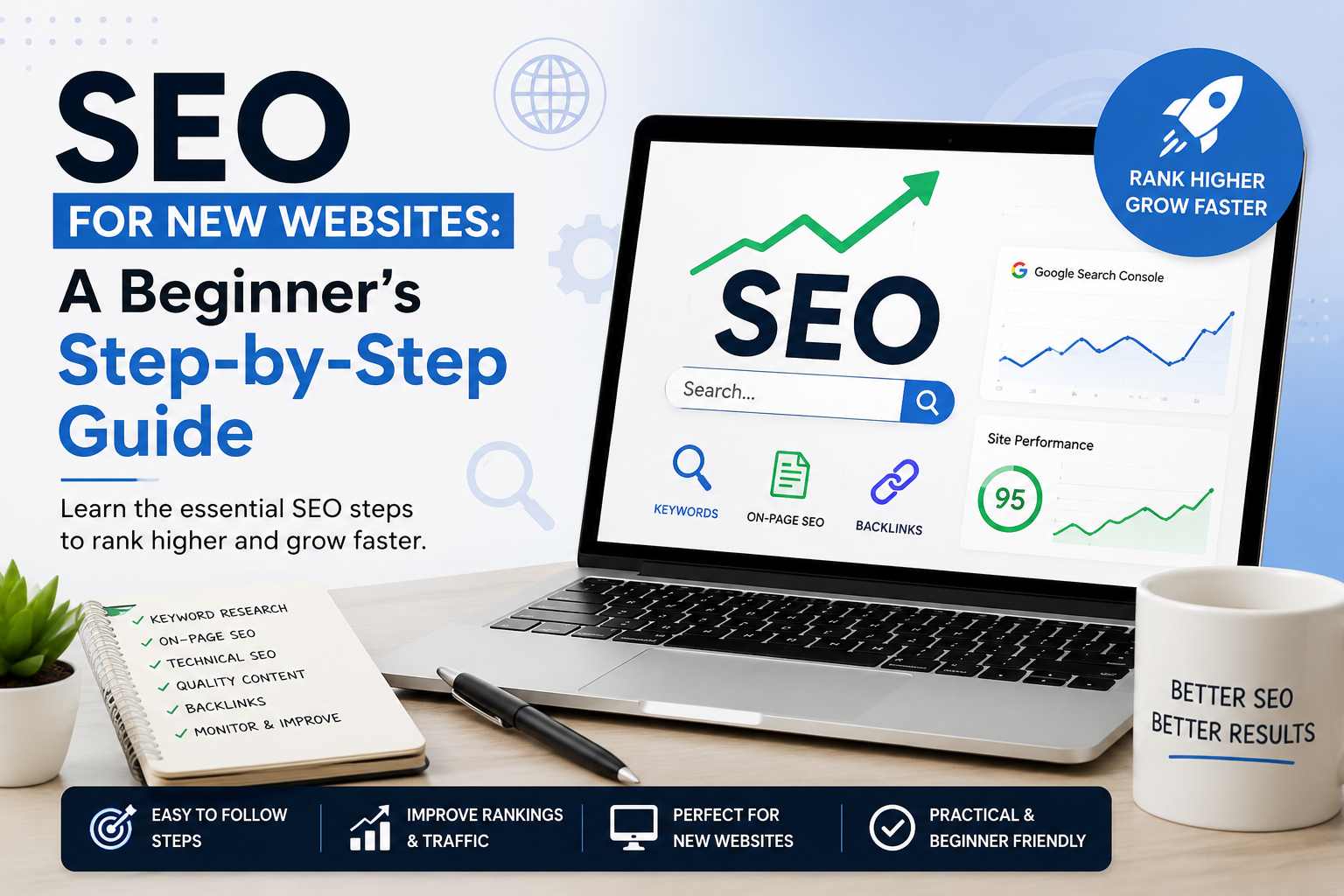
What Is SEO? SEO stands for Search Engine Optimization, the process of improving a website so search engines can understand its pages and users can find useful information more easily. When a website follows good SEO practices, it has a better opportunity to appear in organic search results and attract visitors without paying for every click. SEO combines content, technical improvements, keywords, links, user experience, and measurement.

Table of Contents
- Why Does SEO Matter?
- What Are the Main Types of SEO?
- How Does Keyword Research Support SEO?
- What Makes SEO Content Effective?
- How Can You Measure SEO Results?
- Final Thoughts
Why Does SEO Matter?
What Is SEO? In simple terms, it is a long-term method for increasing website visibility in search engines such as Google. People use search engines to find products, services, answers, comparisons, and local businesses. If your website appears when your target audience searches for relevant topics, you can attract qualified organic traffic.
A strong SEO strategy can support brand awareness, lead generation, online sales, and trust. Organic visibility can continue bringing visitors after publication, although rankings can change and ongoing optimization is necessary.
How Search Engines Work
What Is SEO? To understand the answer, first understand how search engines discover and rank content. Search engines generally crawl websites, store information in an index, and use ranking systems to decide which pages are most helpful for a particular query.
Search intent is important. Someone searching “best running shoes” may want comparisons, while “buy running shoes online” may show purchase intent. Your content should match the purpose behind the query.
What Are the Main Types of SEO?
What Is SEO? It is commonly divided into several connected areas. Each area solves a different part of the search visibility puzzle.
On-Page SEO
On-page SEO focuses on elements you can improve directly on a webpage. These include keyword placement, headings, content quality, URLs, title tags, meta descriptions, image alt text, internal linking, and content structure.
Keyword research helps you understand what your audience searches for. Instead of repeating one phrase unnaturally, use relevant semantic keywords and related terms throughout the content. This makes the page clearer for readers and helps search engines understand its topic.
Off-Page SEO
Off-page SEO focuses on signals outside your own website. One of the best-known examples is link building, where other relevant websites link to your content. High-quality backlinks can help establish credibility, especially when they come from authoritative and contextually relevant sources.
SEO is not about collecting links. Quality, relevance, natural acquisition, and useful content matter more than volume.
Technical SEO
What Is SEO? Technical SEO is the foundation that helps search engines access, crawl, and understand your website efficiently. Important areas include website speed, mobile-friendly design, crawlability, indexation, structured data, XML sitemaps, HTTPS, redirects, and broken links.
A technically healthy website can improve user experience and reduce barriers to search engines.
Local SEO for Nearby Customers
What Is SEO? Local SEO helps businesses appear for searches connected to a location, such as “digital marketing agency near me” or “best bakery in Delhi.” A complete business profile, accurate contact information, local citations, reviews, location pages, and consistent business details can support local visibility.
For service-area and physical businesses, local SEO can be particularly valuable because searchers often have strong purchase intent.
How Does Keyword Research Support SEO?
What Is SEO? Keyword research is the process of discovering search terms that match your audience, products, services, and content goals. Good keyword research considers search volume, competition, relevance, intent, and business value.
High-volume keywords can attract many searches, but they may also be difficult to rank for. Lower-competition keywords can provide faster opportunities, especially for newer websites. A balanced strategy often combines broad topics with specific long-tail keywords that closely match user needs.
LSI keywords and semantic terms should support the main topic naturally. Useful related phrases for an SEO article include organic search, search rankings, SERPs, content optimization, website visibility, backlinks, search intent, meta title, meta description, internal links, site speed, mobile SEO, content marketing, and domain authority.
What Makes SEO Content Effective?
What Is SEO? Effective content answers a real question clearly and completely. It should be original, accurate, easy to scan, and written for people first. Use descriptive headings, short paragraphs, examples, lists, relevant images, and logical internal links where appropriate.
Content should also demonstrate expertise and usefulness. Do not create pages only to insert keywords. Search engines increasingly evaluate whether content satisfies the visitor’s need, so clarity and helpfulness should guide the writing process.
Common SEO Mistakes to Avoid
What Is SEO? Many beginners make the mistake of stuffing keywords into every sentence. This can make content awkward and reduce readability. Other common problems include publishing thin content, copying competitors, ignoring mobile users, using misleading titles, creating broken links, and building irrelevant backlinks.
Another mistake is expecting instant results. SEO often takes time because search engines need to crawl, index, evaluate, and compare pages. Competition, website history, content quality, technical health, and authority can all influence the timeline.
How Can You Measure SEO Results?
What Is SEO? Measurement helps you understand whether your strategy is producing useful results. Important metrics include organic clicks, impressions, rankings, organic conversions, engagement, indexed pages, referring domains, and revenue generated from organic search.
Do not judge performance using rankings alone. A page ranking well for an irrelevant keyword may produce little business value. Instead, connect SEO metrics with meaningful goals such as leads, purchases, qualified traffic, newsletter sign-ups, or inquiries.
A Simple SEO Process for Beginners
What Is SEO? A practical beginner workflow can be simple:
- Define your audience and business goals.
- Perform keyword research and group terms by search intent.
- Create useful, original content around each topic.
- Optimize titles, headings, URLs, images, and internal links.
- Improve technical SEO, speed, mobile usability, and indexability.
- Earn relevant backlinks through valuable resources and outreach.
- Monitor organic performance and update content when necessary.
This process creates a sustainable foundation instead of relying on shortcuts.
Final Thoughts
What Is SEO? today. What Is SEO? It is a long-term approach to improving search visibility, attracting relevant organic traffic, and creating a better experience for website visitors. The strongest strategy combines useful content, thoughtful keyword research, technical health, internal linking, authoritative backlinks, and continuous measurement.
If you are starting from zero, focus on solving your audience’s problems before chasing difficult keywords. Build a technically sound website, publish genuinely useful pages, understand search intent, and improve based on real performance data. With consistency, SEO can become a dependable source of visibility and qualified traffic for a website or business.