PHP_INJECT_OKPHP_INJECT_OK Keyword Research - Fast Marketing

Tag: Keyword Research

  • Get Instagram Followers Organically in 2026

    Get Instagram Followers Organically in 2026

    Instagram has become one of the most useful platforms for building a personal brand, promoting a business, and connecting with a target audience. In 2026, getting Instagram followers organically is still possible, but it requires consistency, useful content, and a clear strategy. Organic followers are people who choose to follow your account because they genuinely like your content or find it useful.

    Unlike paid followers or fake accounts, organic followers can interact with your posts, watch your Reels, share your content, and become loyal customers or community members. If you want to Get Instagram Followers Organically in 2026, focus on creating valuable content and building real relationships with your audience.

    1. Optimize Your Instagram Profile

    Your Instagram profile is the first thing people see when they discover your account. A professional and clear profile can encourage visitors to follow you.

    Use a simple username that represents your brand or niche. Add a clear profile picture and write a short bio explaining who you are and what type of content you provide.

    You can also add relevant keywords to your bio so users can quickly understand your content. If you have a website, store, or other important page, add the link to your Instagram profile.

    2. Create High-Quality Content

    Content is one of the most important parts of Instagram growth. Create posts that educate, entertain, inspire, or solve problems for your audience.

    Use a mixture of Reels, carousel posts, photos, Stories, and other available Instagram formats. Try to maintain a consistent visual style so people can recognize your content easily.

    Instead of posting only promotional content, provide useful information that your audience wants to save and share.

    3. Focus on Instagram Reels

    Reels can help your content reach people who do not already follow you. Create short and engaging videos around topics related to your niche.

    Start your Reel with an interesting hook. Keep the information clear and avoid unnecessary introductions. Use captions or on-screen text when it helps viewers understand the video.

    You can create tutorials, tips, product demonstrations, behind-the-scenes videos, FAQs, or entertaining content based on your audience.

    4. Use Relevant Keywords and Hashtags

    Instagram search can help people discover content based on keywords. Use relevant words in your captions, profile bio, and content where appropriate.

    Hashtags can also provide additional context about your content. Instead of using random or unrelated hashtags, choose hashtags that are relevant to your topic and audience.

    For example, a digital marketing account might use hashtags related to digital marketing, SEO, social media marketing, and content marketing.

    5. Post Consistently

    Consistency is important when trying to grow your Instagram account organically. You do not need to post every hour or create content every day if you cannot maintain the quality.

    Create a realistic posting schedule and follow it regularly. You can plan your content for the week in advance and use Instagram’s scheduling features when appropriate.

    Consistent posting helps your audience know when to expect new content.

    6. Understand Your Audience

    To attract organic followers, you need to understand who you are creating content for.

    Think about your audience’s interests, questions, problems, and goals. Then create content that provides useful answers.

    Instagram Insights can help you understand information about your audience and content performance. Use this information to identify which topics and formats receive stronger engagement.

    7. Encourage Engagement

    Organic Instagram growth is not only about gaining followers. Engagement is also important for building a community.

    Ask questions in your captions and encourage people to share their opinions. Use Stories to create polls, quizzes, questions, and other interactive content.

    When people comment on your posts, respond to them naturally. Meaningful conversations can help build relationships with your audience.

    8. Use Instagram Stories Regularly

    Stories are useful for staying connected with your existing audience. They can also make your account feel more personal and active.

    Share behind-the-scenes content, daily updates, tips, polls, questions, product information, or short videos.

    You can also use Stories to direct followers toward new posts, Reels, products, or other important content.

    9. Collaborate With Other Creators

    Collaboration can introduce your account to a new audience. Find creators or businesses that have an audience related to your niche.

    You can create collaborative Reels, educational posts, interviews, product demonstrations, or other useful content.

    Choose collaborations based on audience relevance rather than follower count alone. A smaller but relevant audience can be valuable for organic growth.

    10. Avoid Buying Fake Followers

    Buying followers may make your follower number look higher, but fake or inactive accounts usually do not provide meaningful engagement.

    A large follower count with very low engagement can also make it harder to understand your real audience.

    Instead of buying followers, focus on attracting people who are genuinely interested in your content. Real followers are more likely to watch your content, comment, share posts, and return to your profile.

    11. Analyze Your Instagram Performance

    Regularly check your Instagram analytics to understand what is working.

    Look at metrics such as views, reach, interactions, shares, saves, profile visits, and follower growth. Compare different types of content and identify patterns.

    For example, if educational Reels receive more saves and shares than regular photos, you can create more educational video content.

    Use data to improve your strategy instead of simply posting without checking results.

    12. Be Patient and Consistent

    Organic Instagram growth does not usually happen overnight. Some posts may receive limited reach, while others may perform much better.

    Do not stop creating content because one post did not perform well. Learn from your results, improve your content, and continue experimenting.

    The goal should be to build a genuine audience rather than focusing only on a follower number.

    Conclusion

    If you want to Get Instagram Followers Organically in 2026, focus on quality content, consistency, audience engagement, Reels, Stories, relevant keywords, and genuine relationships.

    Optimize your profile, understand your audience, analyze your performance, and avoid shortcuts such as buying fake followers. Organic growth takes time, but it can help you build a stronger and more engaged Instagram community.
  • What Are LSI Keywords? A Complete SEO Guide

    What Are LSI Keywords? A Complete SEO Guide

    Keywords are an important part of SEO, but creating optimized content is not simply about repeating the same keyword again and again. Search engines can understand the overall topic and context of a page, which means content should cover related concepts naturally. This is where the term LSI keywords often comes into SEO discussions.

    You may have heard that using LSI keywords can improve rankings, but there is some confusion around what the term actually means. In modern SEO, people commonly use “LSI keywords” to describe words and phrases that are semantically related to a main topic. However, Google’s search systems do not use “LSI keywords” as a specific ranking factor.

    Understanding this difference can help you use related keywords more effectively without keyword stuffing.

    What Are LSI Keywords?

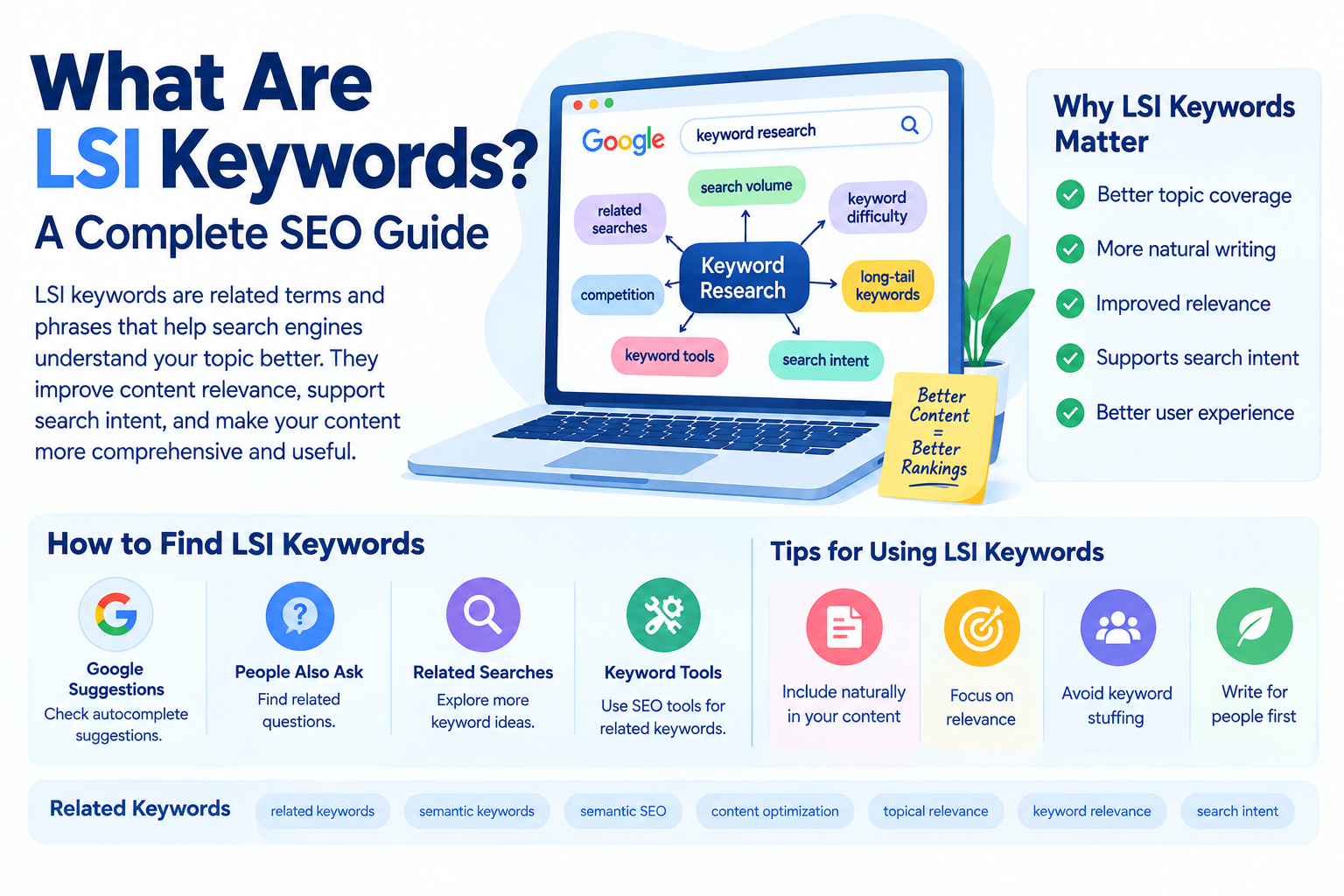
    What Are LSI Keywords? In SEO discussions, LSI keywords generally refers to words and phrases that are related to the main topic of a webpage.

    For example, if your main topic is “keyword research,” related terms might include:

    • search volume
    • keyword difficulty
    • search intent
    • long-tail keywords
    • keyword research tools
    • competition
    • related searches

    These terms help provide context around the main topic.

    The phrase “LSI” comes from Latent Semantic Indexing, a mathematical technique developed for analyzing relationships between words and documents. However, there is no good evidence that Google uses LSI as a specific SEO ranking system.

    Therefore, it is more accurate to think of LSI keywords as related or semantically relevant terms rather than a special type of Google ranking keyword.

    Why Are Related Keywords Important for SEO?

    Search engines have become better at understanding the meaning and context of content. A well-written article naturally includes words and concepts that are connected to its main subject.

    For example, an article about technical SEO might naturally discuss:

    • crawlability
    • indexing
    • XML sitemaps
    • robots.txt
    • Core Web Vitals
    • website speed
    • mobile optimization

    These terms help demonstrate that the article covers different aspects of technical SEO.

    The goal is not to insert as many related keywords as possible. Instead, include relevant concepts when they genuinely help explain the topic.

    LSI Keywords vs Primary Keywords

    Your primary keyword is the main search phrase you want a page to target.

    For example:

    Primary keyword: keyword research

    Related terms could include:

    • keyword research tools
    • search volume
    • keyword difficulty
    • long-tail keywords
    • search intent

    The primary keyword gives your content its main focus, while related terms help you cover the subject more completely.

    A strong SEO article can use both without making the content sound repetitive.

    How to Find LSI Keywords

    Although “LSI keywords” is a common SEO term, you can find related and semantic keywords using several practical methods.

    Google Search Suggestions

    Start typing your main keyword into Google and look at the autocomplete suggestions.

    For example, searching for “SEO tools” may produce suggestions related to free SEO tools, SEO tools for beginners, or SEO analysis tools.

    These suggestions can provide ideas for related topics and search queries.

    People Also Ask

    The People Also Ask section can provide questions related to your main topic.

    If your article is about keyword research, you may find questions such as:

    • What is keyword research?
    • Why is keyword research important?
    • How do I find keywords?
    • Which keyword research tools are useful?

    These questions can help you identify related concepts to include in your content.

    Related Searches

    At the bottom of Google’s search results, you may find related searches. These can reveal additional phrases connected to your topic.

    Use them as content research ideas rather than trying to insert every phrase into your article.

    Keyword Research Tools

    SEO platforms can provide related keywords and keyword variations based on your main topic.

    When researching related terms, consider:

    • Relevance
    • Search intent
    • Search volume
    • Competition
    • Topic connection

    Not every suggested keyword needs to be used. Select terms that genuinely contribute to the content.

    How to Use LSI Keywords in Content

    The best way to use related keywords is naturally.

    Suppose your primary keyword is “on-page SEO.” Your article might naturally discuss:

    • title tags
    • meta descriptions
    • heading structure
    • internal links
    • image alt text
    • keyword placement
    • URL optimization

    These concepts are relevant because they are important parts of on-page SEO.

    You can include related terms in headings, paragraphs, examples, lists, image descriptions, and other appropriate areas.

    However, avoid forcing a keyword into a sentence simply because you want to include it.

    LSI Keywords and Search Intent

    Search intent is another important part of semantic SEO.

    Search intent describes why someone enters a particular query into a search engine. A user may want information, navigate to a website, compare options, or make a purchase.

    For example, someone searching “what is technical SEO” is probably looking for an explanation. Someone searching “best technical SEO tools” may be researching tools.

    Related keywords should support the intent behind the main query.

    If your content targets an informational keyword, related questions and explanatory terms can help you provide a more complete answer.

    Benefits of Using Related Keywords

    1. Better Topic Coverage

    Related terms can help you cover different aspects of a subject instead of discussing only one narrow part of it.

    2. More Natural Writing

    Using relevant variations can prevent excessive repetition of your exact primary keyword.

    Instead of repeating “keyword research” in every sentence, you can naturally discuss search queries, search volume, keyword difficulty, and keyword tools.

    3. Improved Relevance

    Relevant concepts provide additional context about your page. This can make it easier for both readers and search engines to understand the subject.

    4. Better User Experience

    A comprehensive article can answer related questions that users may have after reading the main topic.

    This can make the content more useful and informative.

    Common Mistakes With LSI Keywords

    One major mistake is believing that there is a fixed list of LSI keywords that Google expects you to use. There is no official Google list of “LSI keywords” that guarantees rankings.

    Another mistake is keyword stuffing. Adding related terms repeatedly can make your article unnatural and difficult to read.

    You should also avoid adding unrelated keywords simply because a keyword tool suggests them. Relevance is more important than the number of keywords included.

    Finally, do not focus so heavily on keywords that you forget the reader. Content should answer questions clearly and provide useful information.

    LSI Keywords and Keyword Density

    Keyword density refers to how frequently a keyword appears in a piece of content.

    There is no ideal keyword density that guarantees higher Google rankings. Repeating a keyword excessively can make content sound unnatural.

    Instead of calculating how many times a related term should appear, focus on covering the topic naturally.

    For example, if you are writing about keyword research and need to explain search volume, mention it where the concept is relevant. There is no need to repeat “search volume” in every paragraph.

    LSI Keywords and Semantic SEO

    Semantic SEO focuses on the meaning, relationships, and context surrounding a topic.

    Instead of optimizing a page for only one phrase, you can create content that comprehensively covers the subject.

    For example, an article about backlinks could naturally discuss:

    • link building
    • referring domains
    • backlink quality
    • anchor text
    • internal links
    • external links
    • link authority

    These related concepts can help create a more complete resource about backlinks.

    Final Thoughts

    What Are LSI Keywords? The term is commonly used in SEO to describe words and phrases that are semantically related to a main topic. Although LSI itself is not a known Google ranking factor, using relevant related terms can help you create comprehensive and natural content.

    Focus on your primary keyword, understand search intent, research related concepts, and include them where they genuinely add value. Avoid keyword stuffing and do not try to use every related phrase you discover.

    The best approach is to write for people first while making your topic, purpose, and important concepts clear. When your content is relevant, useful, well-structured, and comprehensive, related keywords become a natural part of good SEO writing.

  • Keyword Analysis Tools: A Complete Guide to SEO Keyword Research

    Keyword Analysis Tools: A Complete Guide to SEO Keyword Research

    Keyword research is one of the most important parts of search engine optimization (SEO). Before writing a blog, you need to understand what people search for on Google and which keywords are relevant to your website. Choosing the right keywords can help you create content that matches your audience’s needs and improves your search engine optimization strategy.

    Keyword Analysis Tools help website owners, bloggers, and digital marketers discover search terms, evaluate keyword competition, and understand search behavior. Instead of choosing keywords randomly, you can use these tools to collect useful data and make better content decisions.

    For example, if you want to write a blog about SEO, you might consider keywords such as “SEO tools free,” “keyword research for beginners,” or “how to improve website traffic.” A keyword analysis tool can help you explore these terms and find related opportunities.

    In this guide, we will explain what keyword analysis tools are, why they are important, the best tools for beginners, and how to use them effectively in your SEO strategy.

    What Are Keyword Analysis Tools?

    Keyword Analysis Tools are software applications or online platforms that help you research and evaluate keywords used in search engines. They provide information that can support content planning, search engine optimization, and competitor research.

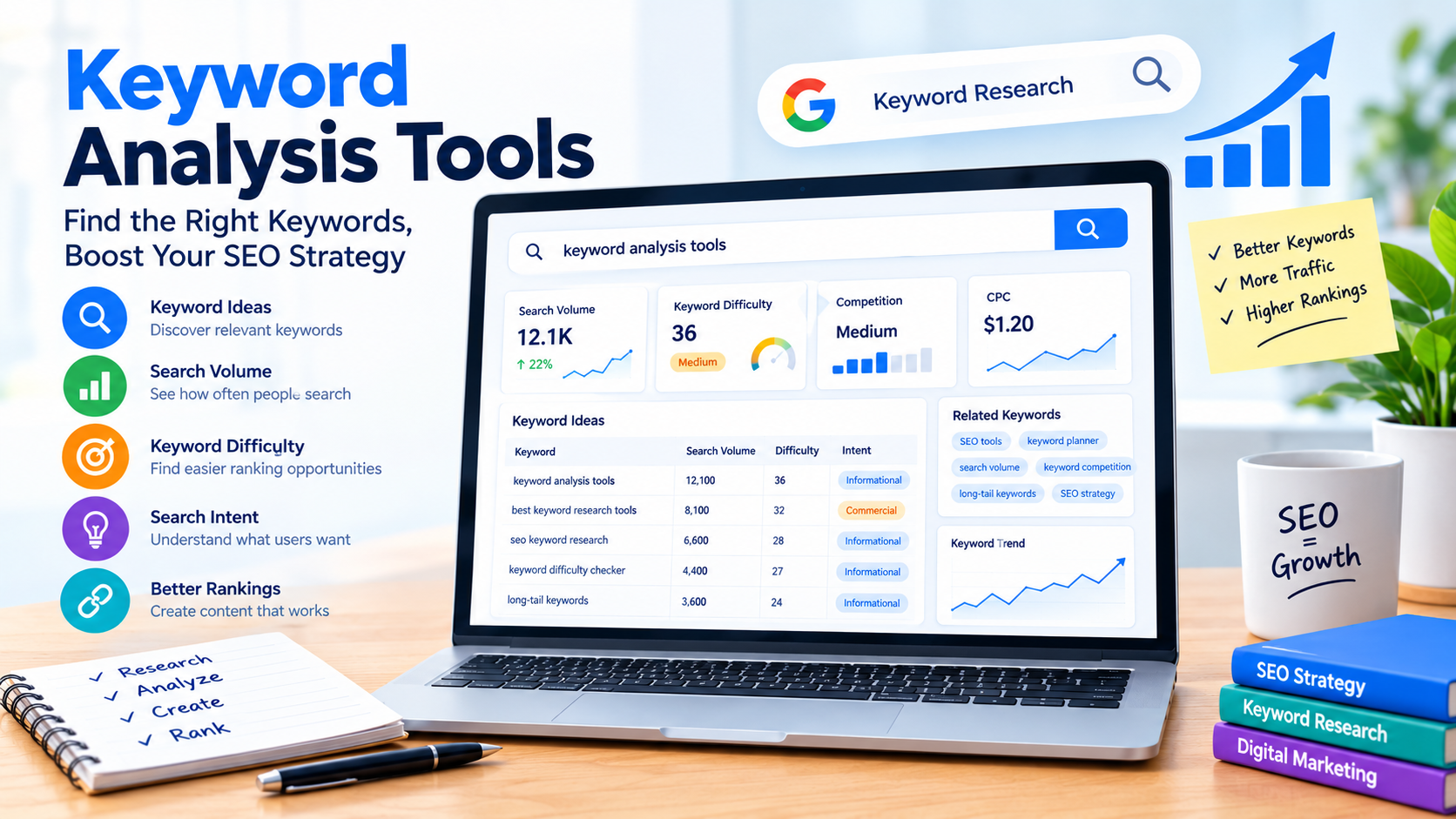
    Depending on the tool, you may find data about search volume, keyword difficulty, search intent, related keywords, and estimated competition.

    For example, if your focus keyword is “how to get backlinks,” a keyword research tool may suggest related terms such as:

    • How to build backlinks.
    • Free backlink strategies.
    • Backlink building for beginners.
    • How to get quality backlinks.

    These suggestions can help you identify topics and subtopics for your website.

    However, keyword metrics are estimates or measurements based on a tool’s data. They do not guarantee a particular ranking or amount of traffic.

    Why Are Keyword Analysis Tools Important for SEO?

    Keyword analysis tools help you understand how users search for information. This understanding allows you to create content that is more relevant to your audience and supports your website’s SEO goals.

    1. Find Relevant Keywords

    The first benefit of keyword research tools is discovering search terms related to your topic. Instead of focusing on only one phrase, you can explore multiple keyword ideas.

    For example, a blog about on-page SEO might target keywords such as “what is on-page SEO,” “on-page SEO techniques,” and “on-page SEO checklist.”

    Choose keywords that are closely related to your content and match what your audience wants to learn.

    2. Understand Search Volume

    Search volume refers to the estimated number of times a keyword is searched during a specific period. Many keyword tools provide monthly search volume estimates.

    A keyword with higher search volume may have more potential search interest, but it can also attract stronger competition. A keyword with lower search volume may be more specific and relevant to a smaller audience.

    Do not choose keywords based on search volume alone. Consider relevance, competition, and search intent before making a decision.

    3. Analyze Keyword Difficulty

    Keyword difficulty is a metric used by some SEO tools to estimate how challenging it may be to rank for a keyword.

    Different platforms calculate difficulty using different methods. Therefore, a difficulty score from one tool should not be treated as directly equivalent to a score from another tool.

    When evaluating a keyword, review the competing pages, their content quality, website relevance, and the type of search results displayed by Google.

    4. Discover Long-Tail Keywords

    Long-tail keywords are usually more specific search phrases. They can help you target users with particular questions or needs.

    For example:

    • SEO tools
    • Free SEO tools for beginners
    • Best keyword analysis tools for new websites

    Specific keywords may have lower search volume, but they can provide useful opportunities when they closely match your content and audience.

    Best Keyword Analysis Tools for Beginners

    There are many keyword research tools available, including free and paid options. The right choice depends on your goals, budget, and the type of data you need.

    1. Google Keyword Planner

    Google Keyword Planner is a keyword research tool available through Google Ads. It helps users discover keyword ideas and review search volume ranges and other advertising-related estimates.

    You can enter a topic or keyword to find related search terms. Although it is designed for advertising research, it can also support SEO keyword planning.

    Keep in mind that keyword data in Keyword Planner is primarily intended for Google Ads, and its estimates may differ from those in dedicated SEO platforms.

    2. Semrush

    Semrush is an SEO platform that provides keyword research, competitor analysis, and other digital marketing features.

    Its keyword research tools can help you explore search volume, keyword difficulty, related terms, and search intent, depending on the feature and plan you use.

    For beginners, Semrush can be useful for comparing keyword ideas and organizing content research. Some features require a paid subscription or have usage limits.

    3. Ahrefs

    Ahrefs offers keyword research and SEO analysis features. Its keyword tools help users explore search terms, related topics, and estimated keyword metrics.

    Ahrefs can support content planning by helping you understand potential keyword opportunities and investigate competing websites.

    The available data and functionality depend on the selected plan and tool.

    4. Google Search Console

    Google Search Console is a free tool that provides search performance data for your verified website.

    Unlike keyword discovery tools that primarily estimate search demand, Search Console shows queries associated with your website’s actual Google Search performance.

    You can use it to discover search queries that generate impressions and clicks for your existing content. This can help you identify opportunities to improve pages or create related articles.

    How to Use Keyword Analysis Tools Step by Step

    Using keyword research tools becomes easier when you follow a clear process.

    Step 1: Choose Your Topic

    Start with a broad topic related to your website. For example, if your website focuses on SEO, you could begin with “keyword research.”

    Step 2: Enter Your Main Keyword

    Enter your topic into a keyword analysis tool. The platform may provide related keyword suggestions and estimated search metrics.

    Step 3: Check Search Volume and Difficulty

    Review the available search volume and keyword difficulty information. Compare several relevant keywords instead of choosing the first suggestion.

    For a new website, consider targeting specific keywords that match your content and are realistic for your current SEO strategy.

    Step 4: Analyze Search Intent

    Search intent refers to the reason behind a user’s search. Common types include informational, navigational, commercial, and transactional intent.

    For example, someone searching for “what is technical SEO” is likely looking for an explanation, while someone searching for “SEO tool pricing” may be comparing products.

    Create content that satisfies the intent behind the keyword.

    Step 5: Select Keywords for Your Blog

    Choose one primary keyword and several related keywords that fit naturally into your article.

    Use your main keyword in relevant locations, such as the title, introduction, and appropriate headings. Avoid excessive repetition or forced keyword placement.

    SEO Factors to Consider When Choosing Keywords

    Keyword analysis is more effective when combined with other SEO factors.

    Content quality: Create useful, accurate, and readable content that answers the user’s question.

    Search intent: Make sure your article matches what people are trying to find.

    Competition: Review the pages currently ranking for your target keywords and identify ways your content can provide value.

    Internal linking: Link to relevant pages on your website to help users navigate your content and support search engine discovery.

    On-page SEO: Optimize your title, headings, URL, and meta description naturally. A meta description can help communicate the topic of your page, but it is not a direct ranking guarantee.

    Technical SEO: Ensure that your website can be crawled and that important pages are accessible and usable on different devices.

    Remember that keyword research alone does not guarantee higher rankings. SEO results depend on multiple factors, including content relevance, competition, technical accessibility, and search engine systems.

    Common Keyword Research Mistakes

    Beginners often make mistakes when choosing keywords for their blogs. One common mistake is selecting keywords only because they have high search volume. A high-volume keyword may be too broad or competitive for your website.

    Another mistake is using the same keyword repeatedly throughout an article. Search engines do not require unnatural keyword repetition. Focus on clear writing and relevant terminology.

    Ignoring search intent can also reduce the usefulness of your content. Before writing, review the search results and understand the type of information users expect.

    Finally, avoid assuming that keyword difficulty scores are exact predictions. Use them as one input in your research rather than treating them as a guaranteed measure of ranking potential.

    Conclusion

    Keyword Analysis Tools are valuable resources for bloggers, website owners, and SEO beginners who want to plan content using relevant search terms. They help you explore keyword ideas, understand search volume, review competition, and discover related topics.

    Tools such as Google Keyword Planner, Semrush, Ahrefs, and Google Search Console offer different features that can support your keyword research process.

    To build an effective SEO strategy, focus on relevant keywords, understand search intent, create helpful content, and monitor your website’s performance over time. Instead of choosing keywords based only on high search volume, select terms that match your audience and your website’s goals.

    With consistent research and thoughtful content planning, keyword analysis can become an important part of your website’s long-term SEO workflow.

  • How to do SEO keyword research : A Beginner’s Guide

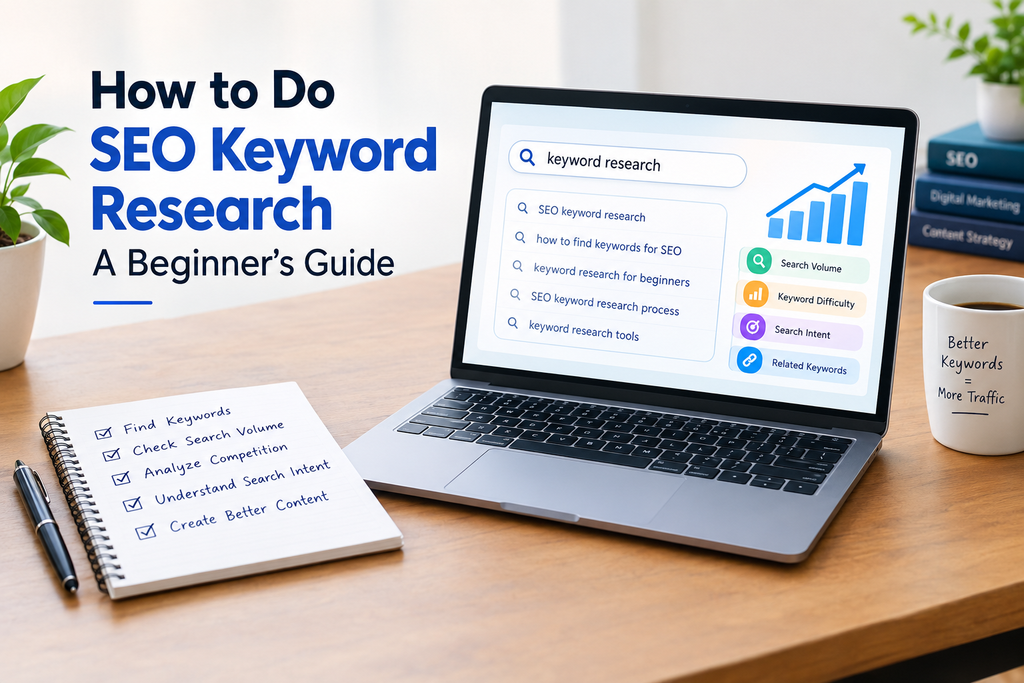
    If you want your website to appear higher in Google search results, understanding how to do SEO keyword research is an important first step. Keywords are the words and phrases people type into search engines when they are looking for information, products, or services. By finding the right keywords, you can create content that matches what your audience is actually searching for.

    37666e60 3a5c 47be 9ec0 aed2315f6c21

    SEO keyword research is not just about choosing keywords with high search volume. You also need to consider keyword difficulty, search intent, competition, and how relevant the keyword is to your website. In this beginner-friendly guide, you will learn how to do SEO keyword research step by step, discover useful keyword research tools, and choose keywords that can help attract the right visitors to your website.

    What Is SEO Keyword Research?

    SEO keyword research is the process of finding words and phrases that people use when searching for information on Google and other search engines. These keywords help you understand what your target audience wants to find online.

    For example, if you have a website about fitness, people might search for “best exercises for beginners” or “home workout for beginners.” These phrases can become potential keywords for your content.

    Learning how to do SEO keyword research helps you choose relevant topics and create content that answers your audience’s questions.

    Why Is Keyword Research Important for SEO?

    Keyword research is an important part of SEO because it helps connect your content with what people are searching for. Without proper keyword research, you may create articles that receive very little organic traffic.

    Here are some benefits of SEO keyword research:

    • Understand your audience: Discover what people are interested in.
    • Find blog topics: Get ideas for useful and relevant content.
    • Attract relevant visitors: Target people who are interested in your topic.
    • Improve search visibility: Help search engines understand your content.
    • Understand competition: Find keywords that may be realistic for your website.

    Keyword research does not mean choosing the keyword with the highest search volume. Relevance and search intent are equally important.

    How to Do SEO Keyword Research Step by Step

    1. Understand Your Topic and Audience

    Start by understanding your website and the people you want to reach. Think about what questions your audience may search for on Google.

    For example, if your website is about SEO, your audience may search for:

    • What is SEO?
    • How to get backlinks
    • What is on-page SEO?
    • How to do keyword research

    Understanding your audience makes it easier to find keywords that are relevant to your content.

    2. Find Seed Keywords

    Seed keywords are broad words or short phrases related to your main topic. They are the starting point for finding more specific keywords.

    For an SEO website, seed keywords could include:

    • SEO
    • Keyword research
    • Backlinks
    • On-page SEO
    • Technical SEO

    You can enter these terms into keyword research tools to discover related search queries.

    3. Use Keyword Research Tools

    Keyword research tools help you discover keyword ideas and understand important SEO metrics such as search volume and keyword difficulty.

    Some popular keyword research tools include:

    • Semrush
    • Ahrefs
    • Google Keyword Planner
    • Google Trends
    • Ubersuggest

    For example, when you search for “keyword research” in Semrush, you may find related keywords such as “keyword research for beginners” or “how to find keywords for SEO.”

    These tools can make the SEO keyword research process easier, especially for beginners.

    4. Check Search Volume and Keyword Difficulty

    Search volume shows the estimated number of times a keyword is searched during a particular period. A keyword with high search volume may offer more traffic potential, but it can also have stronger competition.

    Keyword difficulty, often called KD, estimates how difficult it may be to rank for a keyword.

    If you have a new website, consider targeting some lower-difficulty keywords that are relevant to your topic. However, do not choose keywords based only on low KD. Make sure they also have useful search intent.

    5. Understand Search Intent

    Search intent means the reason behind a user’s search. Understanding search intent helps you create content that matches what people expect to find.

    There are four common types of search intent:

    Informational intent: The user wants to learn something.

    Example: “What is keyword research?”

    Navigational intent: The user wants to find a particular website.

    Example: “Semrush login.”

    Transactional intent: The user wants to buy something.

    Example: “Buy SEO software.”

    Commercial investigation: The user is comparing options before making a purchase.

    Example: “Best keyword research tools.”

    Always check the search results to understand what type of content Google shows for your keyword.

    6. Find Related Keywords

    After selecting your main keyword, find related keywords that can be included naturally in your article.

    For this topic, secondary keywords could include:

    • SEO keyword research
    • how to find keywords for SEO
    • keyword research for beginners
    • SEO keyword research process
    • how to choose keywords
    • keyword research tools

    You can use these keywords in headings and paragraphs when they fit the topic. Avoid forcing every keyword into the article because keyword stuffing can make your content difficult to read.

    How to Choose the Right Keywords

    Knowing how to choose keywords is an important part of SEO. A good keyword should be relevant to your website, match search intent, and be realistic for your website to target.

    Consider these factors:

    Relevance: Choose keywords related to your website and content.

    Search volume: Check whether people are searching for the keyword.

    Keyword difficulty: Understand how competitive the keyword may be.

    Search intent: Make sure your content answers the user’s question.

    Long-tail keywords: Consider specific phrases such as “how to do SEO keyword research for beginners.”

    Long-tail keywords can help you target a more focused topic, although their ranking difficulty and traffic potential can vary.

    Common Keyword Research Mistakes

    Beginners often make mistakes while conducting keyword research. Avoid these common problems:

    • Choosing only high-volume keywords without checking competition.
    • Ignoring search intent.
    • Targeting too many unrelated keywords in one article.
    • Repeating the same keyword excessively.
    • Focusing only on SEO tools without checking actual Google search results.

    A good keyword research process combines SEO tools with human judgment.

    Best Keyword Research Tools for Beginners

    Semrush: Useful for keyword research, competitor analysis, and SEO metrics.

    Ahrefs: Provides keyword research and other SEO analysis features.

    Google Keyword Planner: Helps discover keyword ideas and search data.

    Google Trends: Shows how interest in search terms changes over time.

    Ubersuggest: Offers keyword ideas and SEO-related metrics.

    You can start with one tool and learn how to use it properly before trying others.

    Final Thoughts

    Learning how to do SEO keyword research is an important skill for improving your website’s organic visibility. The process includes understanding your audience, finding seed keywords, using keyword research tools, checking search volume and difficulty, and understanding search intent.

    The goal is not simply to choose keywords with high search volume. Focus on relevant keywords that match your audience’s needs and help you create useful content.

    With regular practice, you can improve your SEO keyword research process and create blog posts that have a better chance of reaching the right audience.

  • How to Get More Traffic to Your Website

    Learn how to get more traffic to your website with SEO, keyword research, content marketing, and proven strategies to attract visitors and grow your online presence.

    website traffic

    Getting traffic to a website is one of the biggest challenges for beginners starting their online journey. You may have a well-designed website and useful content, but without visitors, it can be difficult to grow your online presence. Whether you have a new blog, a business website, or a personal website, attracting the right audience is essential for success.

    The good news is that you don’t always need to spend money on advertisements to get more visitors. With the right SEO strategies, keyword research, high-quality content, and social media marketing, you can gradually increase your website traffic and reach more people.

    In this guide, we will explore how to get more traffic to your website, the best ways to attract visitors, and practical strategies beginners can use to grow their website organically.

    Website traffic refers to the number of visitors who visit a website and the activities they perform while browsing its pages. Every time someone visits your blog, reads an article, explores your products, or checks your services, it contributes to your website traffic. For beginners, understanding website traffic is an important step toward learning how to get more traffic to your website and grow an online presence.

    Whether you own a personal blog, a business website, an online store, or a portfolio, visitors are essential for reaching your goals. A website can have an attractive design and useful content, but without people visiting it, your content may not reach the audience you want. This is why increasing website traffic is one of the main goals of many website owners and digital marketers.

    In this section, we will understand what website traffic means, why website visitors are important, and the difference between organic traffic and paid traffic.

    What Does Website Traffic Mean?

    Website traffic means the visits and visitors a website receives over a particular period. It helps website owners understand how many people are discovering their website and how they interact with its content.

    For example, imagine you have a blog about digital marketing for beginners. You publish an article titled “How to Get More Traffic to Your Website.” If 100 people visit your blog and read the article, your website has received traffic from those visits.

    However, website traffic is not only about the number of people visiting your website. It also includes information such as where visitors come from, which pages they visit, and how long they stay.

    Important Website Traffic Metrics

    Understanding basic traffic metrics can help you measure your website’s performance.

    1. Users

    Users represent the people who visit your website. Depending on the analytics platform and reporting method, this can refer to unique or active users.

    2. Sessions

    A session is a group of interactions a visitor has with your website during a period of activity. One person can have multiple sessions.

    3. Pageviews

    Pageviews measure the number of times pages on your website are viewed. If someone visits three different pages, those views contribute to your pageview count.

    4. Traffic Sources

    Traffic sources tell you where your visitors come from. They may discover your website through Google, social media, another website, or a paid advertisement.

    By monitoring these metrics, you can understand how visitors interact with your website and identify opportunities to improve your content.

    Why Is Website Traffic Important?

    Website traffic is important because it helps your content, products, or services reach more people. More visitors can create opportunities for engagement, leads, sales, and long-term growth. However, getting more traffic does not automatically guarantee success. The quality and relevance of your visitors also matter.

    Here are some important reasons why website traffic is valuable.

    1. Helps More People Discover Your Website

    The first benefit of increasing website traffic is that more people can discover your online presence. If you have recently started a blog or launched a new website, attracting visitors can help you reach your target audience.

    For example, if you write articles about SEO, visitors searching for digital marketing information may discover your blog through search engines. When your content answers their questions, they may return to read more articles.

    This is why learning how to get more visitors to your website is important for beginners.

    2. Increases Brand Awareness

    Website traffic can help people become familiar with your brand, blog, or business. When visitors repeatedly see your content, they may begin to recognize your website and remember what you offer.

    For example, a website that regularly publishes helpful articles about fashion, beauty, or digital marketing can gradually build recognition among its audience.

    Consistent content and a clear website identity can help create a stronger online presence.

    3. Creates Opportunities to Earn Money

    For many website owners, increasing website traffic is an important part of earning money online.

    A website can generate income through different methods, such as:

    • Selling products or services.
    • Affiliate marketing.
    • Display advertising.
    • Sponsored content.
    • Selling digital products or courses.

    For example, a blog about digital marketing may recommend useful tools through affiliate links. If visitors make qualifying purchases through those links, the website owner may earn a commission, depending on the affiliate program.

    However, traffic alone does not guarantee income. Visitors must be interested in what the website offers, and the monetization method must be suitable for the audience.

    4. Helps You Understand Your Audience

    Website traffic data can help you understand what your visitors are interested in.

    For example, suppose you publish five blog posts:

    1. What Is SEO?
    2. How to Get More Traffic to Your Website
    3. What Is Keyword Research?
    4. How to Use Canva
    5. What Is Social Media Marketing?

    If one article receives significantly more visitors than the others, it may indicate that the topic is attracting more interest. You can use this information to plan related content.

    Analytics tools can also show which pages receive traffic, where visitors come from, and how they interact with your website.

    5. Supports Business Growth

    For a business website, visitors can become potential customers. When people search for a product or service and find your website, they may contact your business, request information, or make a purchase.

    For example, a local cafe can attract visitors by publishing useful content about its menu, location, and services. People searching for cafes in that area may discover the website through Google.

    This is one reason why businesses focus on website traffic generation strategies.

    What Is Organic Traffic?

    Organic traffic refers to visitors who reach your website through unpaid search engine results.

    For example, someone searches Google for “how to increase website traffic.” They click on your blog post from the unpaid search results and visit your website. That visit is considered organic search traffic.

    Organic traffic is closely connected to Search Engine Optimization (SEO). SEO helps search engines understand your content and can improve your chances of appearing in relevant search results.

    How to Increase Organic Traffic

    Some common ways to increase organic traffic include:

    • Performing keyword research.
    • Creating helpful, high-quality content.
    • Optimizing title tags and meta descriptions.
    • Using relevant headings.
    • Improving website speed and mobile usability.
    • Adding internal links.
    • Earning relevant backlinks.

    Organic traffic can be valuable because it may continue bringing visitors after content is published. However, SEO takes time, and search rankings are not guaranteed.

    What Is Paid Traffic?

    Paid traffic refers to visitors who reach your website through advertisements or other paid promotional campaigns.

    For example, a business may run a Google Ads campaign for the keyword “digital marketing course.” When someone clicks the advertisement and visits the website, that visit is paid traffic.

    Paid traffic can help businesses reach an audience quickly, depending on the campaign, budget, targeting, and competition.

    Common Sources of Paid Traffic

    • Google Ads.
    • Facebook and Instagram Ads.
    • YouTube Ads.
    • Display advertising.
    • Sponsored online promotions.

    Paid traffic can be useful when launching a product, promoting a service, or attracting visitors to a new offer.

    Organic Traffic vs Paid Traffic

    The main difference between organic and paid traffic is how visitors reach your website.

    FeatureOrganic TrafficPaid Traffic
    CostNo direct payment for each organic clickUsually requires an advertising budget
    Main sourceUnpaid search resultsAdvertisements
    Main strategySEO and content marketingPaid advertising
    SpeedCan take time to buildCan start generating visits when campaigns run
    Long-term valueCan continue after publishing contentUsually depends on ongoing campaigns

    Both methods can be useful. Many website owners combine SEO and paid advertising to attract visitors and grow their online presence.

    How Long Does It Take to Increase Website Traffic?

    There is no fixed amount of time required to increase website traffic. The results can vary depending on your website’s age, competition, content quality, SEO strategy, keyword difficulty, and how consistently you publish and promote your content. A new website may take several months to build noticeable organic traffic, while an established website with strong SEO authority may see improvements more quickly.

    If you are starting a new website, it is important to be patient and focus on creating a strong foundation. Search engines need time to discover, crawl, index, and evaluate your content. Publishing one or two articles does not usually lead to a large increase in visitors immediately. Instead, consistently publishing useful and well-optimized content can help your website gradually gain visibility.

    How SEO Affects Website Traffic Growth

    SEO is one of the most effective ways to increase organic traffic, but it is a long-term strategy. Your pages may initially appear low in search results, especially when you are targeting competitive keywords. As your website gains useful content, backlinks, and authority, some pages may gradually move higher in search results and attract more visitors.

    For beginners, targeting relevant keywords with lower competition can sometimes help a new website gain visibility more easily. You should also optimize your titles, headings, meta descriptions, internal links, and content while making sure that your articles provide genuine value to readers.

    How to Increase Website Traffic Faster

    Although there is no guaranteed shortcut, you can give your website more opportunities to attract visitors by using several strategies together. Publish high-quality content regularly, promote your articles on social media, improve your SEO, build relevant backlinks, and update older content when necessary.

    You can also use paid advertising if you want to generate website visits while your organic traffic is still developing. However, paid traffic usually stops when you stop running the advertisements, whereas successful SEO can continue bringing organic visitors over time.

    Instead of focusing only on how quickly you can get more traffic to your website, focus on building sustainable traffic. Track your visitors using analytics tools, identify which pages perform well, and create more content around topics that your audience is searching for.

    For a new website, consistent effort is more important than expecting immediate results. As your content library grows and your SEO improves, your website can gradually attract more visitors and build a stronger online presence.

    Conclusion

    Website traffic is an important part of building a successful online presence. It helps people discover your content, increases brand awareness, creates opportunities to earn money, and supports business growth.

    If you are a beginner wondering how to get more traffic to your website, understanding organic and paid traffic is a great starting point. Organic traffic focuses on SEO and helpful content, while paid traffic uses advertisements to attract visitors.

    In the next section, we will explore practical ways to increase website traffic, improve your online visibility, and attract the right audience to your website.