Meta Ads Management is the process of planning, creating, running, monitoring, and optimizing paid advertising campaigns on Meta platforms such as Facebook and Instagram. It helps businesses promote their products, services, brands, websites, or apps and reach the right audience.
In simple words, Meta Ads Management means managing Facebook and Instagram advertisements to achieve a specific business goal while using the advertising budget effectively.
Main Activities of Meta Ads Management
1. Campaign Planning
The first step is to understand the business goal. A business may want to:
- Increase brand awareness
- Generate leads
- Increase website traffic
- Get messages
- Increase sales
- Promote an app
The campaign is then planned according to the selected goal.
2. Audience Research and Targeting
A Meta Ads manager identifies the people most likely to be interested in the product or service. Audience targeting can consider factors such as location, age, interests, demographics, and previous interactions with the business.
For example, a local car business may target people in its service area who are interested in automobiles.
3. Ad Creation
Ad creation involves preparing the content that users will see. This may include:
- Images
- Videos
- Headlines
- Primary text
- Call-to-action buttons
- Product information
Good advertisements should communicate the main benefit clearly and encourage the audience to take the desired action.
4. Budget Management
Budget management in Meta Ads means planning, controlling, and monitoring the amount of money spent on Facebook and Instagram advertising campaigns. It helps businesses use their advertising budget wisely and avoid unnecessary spending.
Before starting a campaign, an advertiser decides how much money they can spend daily or during the entire campaign period. The budget is then allocated according to the campaign objective, target audience, and expected results. Advertisers can monitor important metrics such as cost per click (CPC), cost per lead, conversions, and return on advertising spend (ROAS) to understand whether their money is being used effectively.
Budget management also involves testing different advertisements and audiences to identify which ones provide better results. If a campaign performs well, the budget may be adjusted accordingly. If an advertisement performs poorly, spending can be reduced while improvements are made.
5. Campaign Setup
Campaign setup is the process of preparing and configuring a Meta Ads campaign before it is launched on Facebook or Instagram. It is an important step because the correct setup helps the advertisement reach the appropriate audience and work toward the desired business goal.
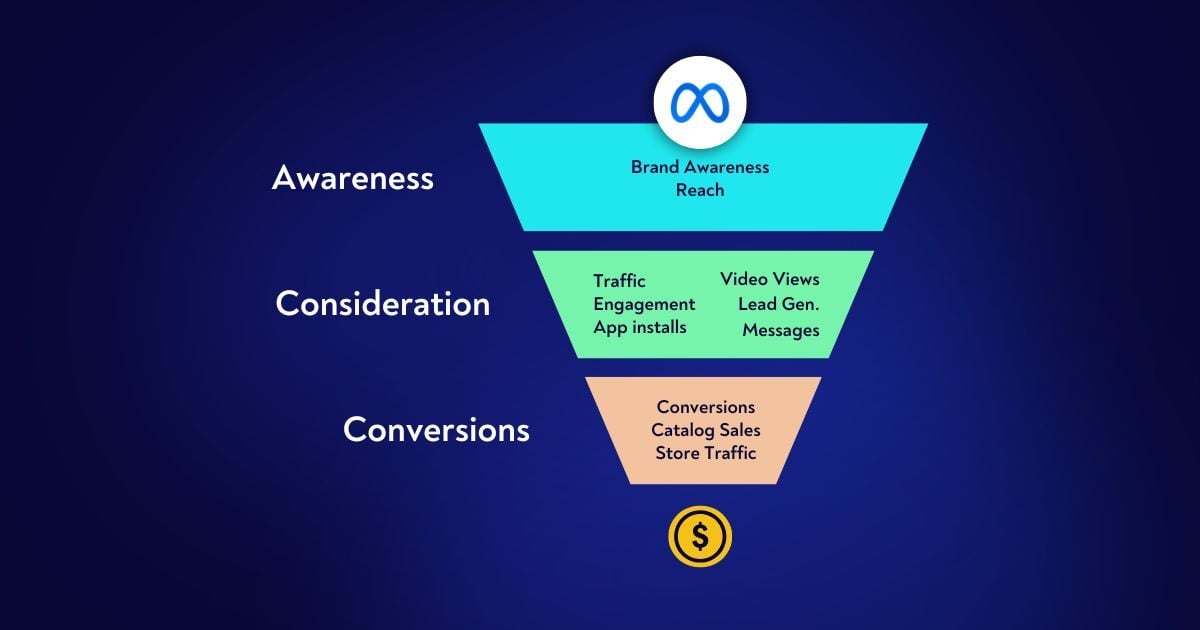
First, the advertiser selects a suitable campaign objective, such as Awareness, Traffic, Engagement, Leads, App Promotion, or Sales. Next, the advertiser creates an ad set, where they choose the target audience, location, budget, schedule, and available ad placements. After that, the advertiser creates the actual ad, including the image or video, headline, description, website link, and call-to-action button.
Before launching, all campaign settings should be checked carefully. The advertiser should make sure that the audience is relevant, the budget is appropriate, the advertisement is clear, and links are working correctly.
6. Performance Monitoring
After an advertisement starts running, its performance needs to be checked regularly. Important metrics can include:
- Reach: Number of people who saw the ad
- Impressions: Number of times the ad was displayed
- Clicks: Number of clicks on the ad
- CTR: Click-through rate
- CPC: Cost per click
- Leads: Number of potential customers generated
- Conversions: Desired actions completed
- Cost per Result: Average cost for the selected result
- ROAS: Return on advertising spend, when sales tracking is available
7. Optimization
Optimization means making changes to improve campaign performance. For example, a manager may test different images, videos, audiences, headlines, or calls to action.
If one advertisement performs better than another, the budget and strategy can be adjusted accordingly.
8. Reporting
A Meta Ads manager prepares reports to understand whether the campaign achieved its objectives. Reports can show spending, reach, clicks, leads, conversions, and other important results.
Example of Meta Ads Management
Suppose a used-car dealership wants to generate customer inquiries.
A Meta Ads manager might:
- Research the target customers.
- Select the Leads objective.
- Create attractive car advertisements.
- Target an appropriate local audience.
- Set an advertising budget.
- Launch the campaign.
- Monitor leads and cost per lead.
- Test different advertisements.
- Optimize the campaign based on performance.
- Prepare a performance report.
This complete process is called Meta Ads Management.
Benefits of Meta Ads Management
Effective management can help businesses:
- Reach relevant audiences
- Control advertising budgets
- Generate leads
- Increase website traffic
- Promote products and services
- Increase brand awareness
- Improve advertising performance
- Measure campaign results
- Reduce wasted advertising spend
- Make data-based marketing decisions
Conclusion
Meta Ads Management is much more than simply creating a Facebook or Instagram advertisement. It is a complete process that includes research, planning, campaign creation, audience targeting, budgeting, ad creation, monitoring, optimization, and reporting.
When Meta Ads are properly managed, businesses can use their advertising budget more efficiently and work toward specific goals such as generating leads, increasing sales, getting customer messages, or building brand awareness