Whales are among the largest and most remarkable animals on Earth. These marine mammals live in oceans around the world, from warm tropical waters to the cold seas surrounding the poles.
Life Beneath the Surface
Although whales spend their lives in water, they breathe air through blowholes located on top of their heads. They must regularly return to the surface to breathe before diving again in search of food or traveling through the ocean.
Whales are warm-blooded, give birth to live young, and nurse their calves with milk. A thick layer of fat called blubber helps protect them from cold water and stores energy during long migrations.
Two Main Groups
Whales are generally divided into baleen whales and toothed whales. Baleen whales filter small animals from the water using flexible plates inside their mouths. This group includes blue whales, humpback whales, and gray whales.
Toothed whales use teeth to catch fish, squid, and other prey. Many of them also use echolocation, producing sounds and listening for returning echoes to understand their surroundings. Sperm whales, belugas, and orcas belong to this group.
The Blue Whale
The blue whale is the largest known animal to have ever lived. An adult can grow longer than a city bus and weigh well over one hundred tonnes. Despite its enormous size, it feeds mainly on tiny crustaceans called krill.
Communication and Migration
Whales communicate using clicks, whistles, pulses, and complex songs. Some sounds can travel across great distances underwater. Humpback whales are especially famous for their long, patterned songs.
Many species migrate thousands of kilometres each year. They often feed in cold, nutrient-rich waters before traveling to warmer regions where they mate and give birth.
Protecting Whales
Commercial hunting once caused severe declines in many whale populations. Today, whales also face threats from fishing gear, ship collisions, underwater noise, pollution, and changes to ocean ecosystems.
Conservation programs, safer fishing practices, protected habitats, and international cooperation can help whale populations recover. Protecting whales also supports healthier oceans because these animals play an important role in marine food webs and nutrient cycles.
Meta Ads Management is the process of planning, creating, running, monitoring, and optimizing paid advertising campaigns on Meta platforms such as Facebook and Instagram. It helps businesses promote their products, services, brands, websites, or apps and reach the right audience.
In simple words, Meta Ads Management means managing Facebook and Instagram advertisements to achieve a specific business goal while using the advertising budget effectively.
Main Activities of Meta Ads Management
1. Campaign Planning
The first step is to understand the business goal. A business may want to:
Increase brand awareness
Generate leads
Increase website traffic
Get messages
Increase sales
Promote an app
The campaign is then planned according to the selected goal.
2. Audience Research and Targeting
A Meta Ads manager identifies the people most likely to be interested in the product or service. Audience targeting can consider factors such as location, age, interests, demographics, and previous interactions with the business.
For example, a local car business may target people in its service area who are interested in automobiles.
3. Ad Creation
Ad creation involves preparing the content that users will see. This may include:
Images
Videos
Headlines
Primary text
Call-to-action buttons
Product information
Good advertisements should communicate the main benefit clearly and encourage the audience to take the desired action.
4. Budget Management
Budget management in Meta Ads means planning, controlling, and monitoring the amount of money spent on Facebook and Instagram advertising campaigns. It helps businesses use their advertising budget wisely and avoid unnecessary spending.
Before starting a campaign, an advertiser decides how much money they can spend daily or during the entire campaign period. The budget is then allocated according to the campaign objective, target audience, and expected results. Advertisers can monitor important metrics such as cost per click (CPC), cost per lead, conversions, and return on advertising spend (ROAS) to understand whether their money is being used effectively.
Budget management also involves testing different advertisements and audiences to identify which ones provide better results. If a campaign performs well, the budget may be adjusted accordingly. If an advertisement performs poorly, spending can be reduced while improvements are made.
5. Campaign Setup
Campaign setup is the process of preparing and configuring a Meta Ads campaign before it is launched on Facebook or Instagram. It is an important step because the correct setup helps the advertisement reach the appropriate audience and work toward the desired business goal.
First, the advertiser selects a suitable campaign objective, such as Awareness, Traffic, Engagement, Leads, App Promotion, or Sales. Next, the advertiser creates an ad set, where they choose the target audience, location, budget, schedule, and available ad placements. After that, the advertiser creates the actual ad, including the image or video, headline, description, website link, and call-to-action button.
Before launching, all campaign settings should be checked carefully. The advertiser should make sure that the audience is relevant, the budget is appropriate, the advertisement is clear, and links are working correctly.
6. Performance Monitoring
After an advertisement starts running, its performance needs to be checked regularly. Important metrics can include:
Reach: Number of people who saw the ad
Impressions: Number of times the ad was displayed
Clicks: Number of clicks on the ad
CTR: Click-through rate
CPC: Cost per click
Leads: Number of potential customers generated
Conversions: Desired actions completed
Cost per Result: Average cost for the selected result
ROAS: Return on advertising spend, when sales tracking is available
7. Optimization
Optimization means making changes to improve campaign performance. For example, a manager may test different images, videos, audiences, headlines, or calls to action.
If one advertisement performs better than another, the budget and strategy can be adjusted accordingly.
8. Reporting
A Meta Ads manager prepares reports to understand whether the campaign achieved its objectives. Reports can show spending, reach, clicks, leads, conversions, and other important results.
Example of Meta Ads Management
Suppose a used-car dealership wants to generate customer inquiries.
A Meta Ads manager might:
Research the target customers.
Select the Leads objective.
Create attractive car advertisements.
Target an appropriate local audience.
Set an advertising budget.
Launch the campaign.
Monitor leads and cost per lead.
Test different advertisements.
Optimize the campaign based on performance.
Prepare a performance report.
This complete process is called Meta Ads Management.
Benefits of Meta Ads Management
Effective management can help businesses:
Reach relevant audiences
Control advertising budgets
Generate leads
Increase website traffic
Promote products and services
Increase brand awareness
Improve advertising performance
Measure campaign results
Reduce wasted advertising spend
Make data-based marketing decisions
Conclusion
Meta Ads Management is much more than simply creating a Facebook or Instagram advertisement. It is a complete process that includes research, planning, campaign creation, audience targeting, budgeting, ad creation, monitoring, optimization, and reporting.
When Meta Ads are properly managed, businesses can use their advertising budget more efficiently and work toward specific goals such as generating leads, increasing sales, getting customer messages, or building brand awareness
Meta Ads are paid advertisements created through Meta’s advertising platform to promote a business, product, service, website, application, or brand. Meta is the company that owns major social media platforms such as Facebook and Instagram. Through Meta Ads, businesses can display advertisements to selected audiences based on factors such as location, age, interests, online activity, and previous interactions.
Meta Ads are an important part of digital marketing because they help businesses reach potential customers quickly and measure the performance of their advertising campaigns. Businesses of different sizes can use Meta Ads with different budgets.
What are Meta Ads?
Meta Ads are online advertisements that businesses pay Meta to display across its advertising network. Advertisers create and manage these campaigns using Meta Ads Manager.
A Meta advertisement may appear in places such as
Facebook Feed
Instagram Feed
Facebook Stories
Instagram Stories
Instagram Reels
Facebook Reels
Messenger
Other available Meta advertising placements
For example, if a clothing company wants to promote a new collection, it can create an advertisement with product images or videos. The company can select an appropriate audience and budget, and Meta’s advertising system can deliver the advertisement to people who are more likely to be interested.
How Meta Ads Work
Meta Ads generally work through a series of steps.
1. Set a Marketing Goal
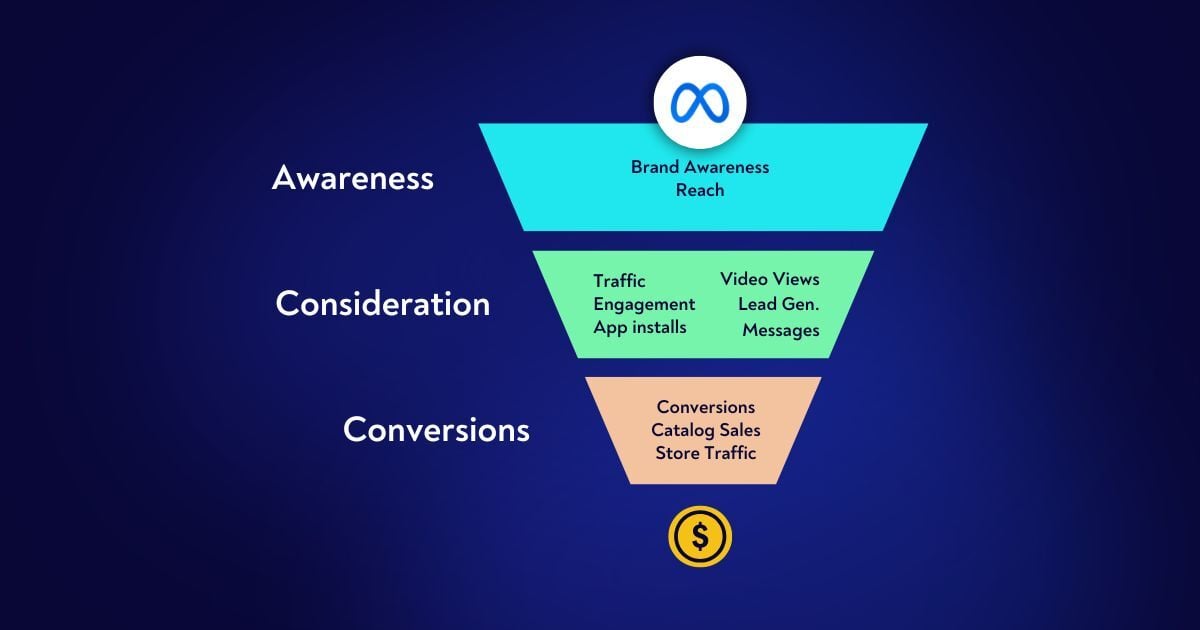
First, the advertiser decides what they want to achieve. Common goals include:
Brand awareness
Website traffic
Engagement
Lead generation
App promotion
Sales
A clear objective helps the advertiser create a suitable campaign.
2. Select the Target Audience
Audience targeting is one of the major features of Meta Ads. Advertisers can select an audience using different characteristics, such as
Age
Location
Interests
Demographic information
Online behavior
Previous interactions with a business
For example, a business selling sports products may create advertisements for people who are likely to be interested in sports-related products.
3. Decide the Budget
Advertisers can set a budget for their campaigns. They can choose how much they want to spend and control their advertising expenditure.
A business can start with a smaller budget, analyze the results, and make adjustments based on campaign performance.
4. Create the Advertisement
The next step is creating the actual advertisement. A Meta Ad may contain:
Images
Videos
Text
Headlines
Product information
Website links
Call-to-action buttons
The advertisement should clearly communicate what the business is offering and encourage the audience to take an appropriate action.
5. Choose Placements
Advertisers can select where their advertisements should appear. Meta provides different placement options across Facebook, Instagram, Messenger, and other supported locations.
Advertisers may use automatic placements or select specific placements depending on their campaign strategy.
6. Launch and Monitor the Campaign
After the advertisement is created, it can be submitted for review and, once approved, delivered to the selected audience.
The advertiser can then monitor its performance using Meta’s advertising tools.
Types of Meta Ads
Meta provides several advertisement formats that businesses can use.
1. Image Ads
Image ads use photographs, graphics, or other visual content to promote a product or service. They are simple and effective for communicating a message quickly.
2. Video Ads
Video ads use videos to explain products, demonstrate services, tell stories, or attract attention. They are particularly useful when a business wants to show how something works.
3. Carousel Ads
Carousel ads allow advertisers to display multiple images or videos in one advertisement. Businesses can use each card to present a different product, feature, or benefit.
4. Story Ads
Story ads are vertical advertisements designed for Facebook and Instagram Stories. They provide a full-screen format and are useful for short promotional messages.
5. Reels Ads
Reels ads appear in short-form video experiences. Businesses can use engaging vertical videos to introduce products, services, or brand messages.
6. Lead Ads
Lead ads are designed to help businesses collect information from people who are interested in their products or services. They can be useful for inquiries, registrations, and business leads.
7. Collection Ads
Collection ads combine visual content with product selections. They can help businesses showcase multiple products and encourage customers to explore them.
Benefits of Meta Ads
1. Large Reach
Meta Ads allow businesses to reach a large number of potential customers through Facebook, Instagram, and other Meta platforms.
2. Targeted Advertising
Businesses can focus their advertising on audiences that are relevant to their products or services. This can help reduce wasted advertising expenditure.
3. Flexible Budget
Meta Ads can be used with different budgets. Small businesses can start with a limited amount, while larger businesses can spend more depending on their goals.
4. Measurable Performance
One of the biggest advantages of digital advertising is the ability to measure results. Advertisers can examine information such as impressions, reach, clicks, leads, conversions, and spending.
5. Different Ad Formats
Businesses can choose from images, videos, carousels, Stories, Reels, and other formats. This gives advertisers flexibility when communicating with customers.
6. Retargeting
Meta advertising can help businesses reach people who have previously interacted with their business, website, or content, subject to applicable platform rules and privacy requirements.
Important Meta Ads Metrics
Advertisers use different metrics to understand whether a campaign is successful.
Reach: The number of unique people who saw an advertisement.
Impressions: The total number of times an advertisement was displayed.
Clicks: The number of times people clicked on an advertisement.
CTR (Click-Through Rate): The percentage of impressions that resulted in clicks.
CPC (Cost Per Click): The average cost paid for each click.
Conversions: Desired actions completed by users, such as making a purchase or submitting a form.
ROAS (Return on Ad Spend): A measurement that compares revenue generated with the amount spent on advertising.
Example of Meta Ads
Suppose a local automobile business wants to promote used cars. The business can create a Meta Ad containing photographs or a video of available cars, important vehicle information, and a contact button.
The business can select an appropriate audience and set an advertising budget. When people see the advertisement, they may click the button to visit the website or contact the business. The company can then analyze the results and improve its advertising campaign.
Tips for Successful Meta Ads
Businesses should follow some basic practices when creating Meta Ads:
Whales are among the largest and most remarkable animals on Earth. These marine mammals live in oceans around the world, from warm tropical waters to the cold seas surrounding the poles.
Life Beneath the Surface
Although whales spend their lives in water, they breathe air through blowholes located on top of their heads. They must regularly return to the surface to breathe before diving again in search of food or traveling through the ocean.
Whales are warm-blooded, give birth to live young, and nurse their calves with milk. A thick layer of fat called blubber helps protect them from cold water and stores energy during long migrations.
Two Main Groups
Whales are generally divided into baleen whales and toothed whales. Baleen whales filter small animals from the water using flexible plates inside their mouths. This group includes blue whales, humpback whales, and gray whales.
Toothed whales use teeth to catch fish, squid, and other prey. Many of them also use echolocation, producing sounds and listening for returning echoes to understand their surroundings. Sperm whales, belugas, and orcas belong to this group.
The Blue Whale
The blue whale is the largest known animal to have ever lived. An adult can grow longer than a city bus and weigh well over one hundred tonnes. Despite its enormous size, it feeds mainly on tiny crustaceans called krill.
Communication and Migration
Whales communicate using clicks, whistles, pulses, and complex songs. Some sounds can travel across great distances underwater. Humpback whales are especially famous for their long, patterned songs.
Many species migrate thousands of kilometres each year. They often feed in cold, nutrient-rich waters before traveling to warmer regions where they mate and give birth.
Protecting Whales
Commercial hunting once caused severe declines in many whale populations. Today, whales also face threats from fishing gear, ship collisions, underwater noise, pollution, and changes to ocean ecosystems.
Conservation programs, safer fishing practices, protected habitats, and international cooperation can help whale populations recover. Protecting whales also supports healthier oceans because these animals play an important role in marine food webs and nutrient cycles.