Tag: Website SEO

  • What Is Robots Txt in SEO? Complete Guide for SEO

    What Is Robots Txt in SEO? Complete Guide for SEO

    Technical SEO includes several elements that help search engines crawl and understand a website. One of these important elements is the robots.txt file. If you are learning SEO, you may have come across the question: what is robots txt in seo and why is it important?

    A robots.txt file gives instructions to search engine crawlers about which areas of a website they should or should not access. It can help website owners manage crawler activity and prevent unnecessary crawling of certain sections.

    However, robots.txt needs to be used carefully. It does not directly remove pages from Google’s search results, and a wrong configuration can accidentally prevent search engines from crawling important content.

    What Is Robots Txt in SEO?

    What is robots txt in SEO? Robots.txt is a text file placed in the root directory of a website that provides instructions to automated web crawlers.

    For example, the file is usually available at:

    https://example.com/robots.txt

    When a search engine crawler visits a website, it can check the robots.txt file to understand which URLs or directories the website owner wants to allow or disallow for crawling.

    A simple robots.txt file might look like this:

    User-agent: *
    Disallow: /private/
    

    In this example, User-agent: * applies the instruction to all crawlers, while Disallow: /private/ tells compliant crawlers not to crawl the specified path.

    Why Is Robots.txt Important for SEO?

    Robots.txt is mainly useful for controlling crawler access. Websites can contain many pages and files that do not need to be crawled by search engines.

    For example, a website may have:

    • Admin areas
    • Internal search results
    • Temporary files
    • Certain scripts or resources
    • Duplicate or unnecessary URL patterns

    Using robots.txt appropriately can help search engine crawlers focus their crawling on useful parts of a website.

    For large websites, crawler management can become particularly important because search engines need to efficiently discover and revisit many URLs.

    How Does Robots.txt Work?

    When a crawler visits a website, it can request the robots.txt file from the website’s root directory.

    For example:

    example.com/robots.txt

    The crawler reads the instructions and determines which paths it is allowed or disallowed to crawl.

    A basic robots.txt file can contain directives such as:

    • User-agent
    • Disallow
    • Allow
    • Sitemap

    Each directive serves a different purpose.

    Important Robots.txt Directives

    1. User-agent

    The User-agent directive specifies which crawler the instructions apply to.

    For example:

    User-agent: *
    

    The asterisk means the rules apply to all crawlers.

    A website can also specify rules for a particular crawler.

    For example:

    User-agent: Googlebot
    

    This identifies Google’s main web crawler.

    2. Disallow

    The Disallow directive tells a crawler not to crawl a specified path.

    For example:

    User-agent: *
    Disallow: /admin/
    

    This indicates that crawlers should not crawl URLs under the specified path.

    3. Allow

    The Allow directive can be used to permit crawling of a particular path when broader rules might otherwise restrict it.

    For example:

    User-agent: *
    Disallow: /private/
    Allow: /private/public-page/
    

    The exact behavior can depend on crawler implementation, so robots.txt rules should be tested carefully.

    4. Sitemap

    A robots.txt file can also provide the location of an XML sitemap.

    For example:

    Sitemap: https://example.com/sitemap.xml
    

    Including a sitemap URL can make it easier for search engines to discover the location of the site’s sitemap.

    Robots.txt vs Sitemap

    Robots.txt and XML sitemaps have different purposes.

    A robots.txt file provides crawler access instructions.

    An XML sitemap provides a list of URLs that a website wants search engines to discover and potentially crawl.

    For example:

    Robots.txt:
    “These areas should not be crawled.”

    Sitemap:
    “These are important URLs on my website.”

    They can work together as part of a technical SEO strategy.

    Does Robots.txt Remove a Page From Google?

    This is one of the most important things to understand about robots.txt.

    A robots.txt rule is primarily a crawling instruction. It should not be treated as a reliable method for removing a page from Google’s search results.

    A URL that is blocked from crawling can potentially still appear in search results if Google discovers information about that URL elsewhere.

    If you want a page to be removed from search results, different methods may be more appropriate depending on the situation, such as using noindex where Google can access and process the page, or using Google’s removal tools for eligible temporary removals.

    Therefore, blocking a URL in robots.txt and removing a URL from search results are two different things.

    Robots.txt and Crawl Budget

    Crawl budget refers broadly to the amount of crawling resources search engines allocate to a website.

    For very large websites, controlling unnecessary crawling can be useful. Blocking certain areas that do not need crawling may help search engine crawlers spend more time discovering useful URLs.

    However, most small websites do not need to make complicated crawl-budget changes. A simple, correctly configured robots.txt file is usually enough.

    Do not block important pages simply because you want to “save crawl budget.”

    Common Robots.txt Mistakes

    Blocking the Entire Website

    One serious mistake is accidentally blocking all crawlers.

    For example:

    User-agent: *
    Disallow: /
    

    This tells compliant crawlers not to crawl any path on the website.

    A mistake like this can cause major SEO problems if used on a live website unintentionally.

    Blocking Important Pages

    You should not block important pages such as your main content, product pages, service pages, or other URLs that search engines need to crawl.

    Always review your rules before publishing them.

    Using Robots.txt for Page Removal

    As explained earlier, robots.txt should not be treated as a direct page-removal tool.

    If a page should not appear in search results, investigate the appropriate indexing and removal method instead.

    Incorrect File Location

    The robots.txt file should normally be located at the root of the host.

    For example:

    https://example.com/robots.txt

    Putting it in a random website folder will not provide the same site-wide crawler instructions.

    How to Check Your Robots.txt File

    You can manually check your robots.txt file by entering:

    yourdomain.com/robots.txt

    in your browser.

    You can also use SEO and webmaster tools to inspect and test your site’s crawling configuration.

    Before making changes, check whether important URLs are accidentally blocked.

    It is also useful to review your website after major technical changes, migrations, redesigns, or CMS updates.

    Robots.txt and Technical SEO

    Robots.txt is only one part of technical SEO.

    Other important technical SEO elements include:

    • XML sitemaps
    • Website speed
    • Mobile usability
    • HTTPS
    • Canonical URLs
    • Structured data
    • Internal linking
    • Crawlability
    • Indexing
    • Core Web Vitals

    A properly configured robots.txt file can support your overall technical SEO strategy, but it cannot solve every crawling or indexing issue.

    Best Practices for Robots.txt

    Follow these practices when creating or editing your robots.txt file:

    1. Keep the file simple and clear.
    2. Do not block important pages accidentally.
    3. Check the file after website migrations.
    4. Include your XML sitemap URL when appropriate.
    5. Avoid using robots.txt as a page-removal method.
    6. Review rules regularly.
    7. Test important URLs after making changes.
    8. Be careful when editing rules on a live website.

    If you are not comfortable editing the file manually, consider asking a developer or experienced SEO professional to review major changes.

    Final Thoughts

    Understanding what is robots txt in seo is important for anyone learning technical SEO. Robots.txt is a file that provides instructions to search engine crawlers about which areas of a website they should or should not crawl.

    When used correctly, it can help manage crawler access and prevent unnecessary crawling of certain areas. However, it should not be confused with an indexing or page-removal tool.

    For a healthy SEO setup, combine robots.txt with an XML sitemap, proper internal linking, good website structure, and effective indexing practices.

    Most importantly, always check your robots.txt rules carefully. A small configuration mistake can prevent crawlers from accessing pages that are important to your website’s visibility.
  • Meta Title: A Complete Guide to SEO Success

    A meta title is one of the most important elements of on-page SEO. It helps search engines understand what your webpage is about and gives users an idea of what they can expect before clicking on your website. Creating an effective meta title can improve your website’s visibility, attract relevant visitors, and support your overall SEO strategy.

    If you are learning SEO or managing a new website, understanding how meta titles work is essential. In this blog, we will explain what a meta title is, why it matters, how to write an SEO-friendly meta title, and common mistakes to avoid.

    What Is a Meta Title?

    A meta title, also known as an SEO title or title tag, is an HTML element that describes the main topic of a webpage. It is commonly displayed as the clickable headline in search engine results.

    For example, if you publish a blog about keyword research, your meta title could be:

    Keyword Research for Beginners: A Complete Guide

    This title tells search engines and users what the page is about. A clear and relevant title helps search engines understand your content and allows users to decide whether your page matches their search intent.

    You can add a meta title using the SEO plugin or settings in your website’s content management system, such as WordPress.

    Why Is a Meta Title Important for SEO?

    A meta title plays an important role in helping search engines and users understand your webpage. Here are some key reasons why it matters.

    1. Helps Search Engines Understand Your Content

    Search engines use various signals to understand the topic of a webpage. A relevant meta title provides a clear description of your content.

    For example, if your focus keyword is “technical SEO,” a suitable title could be:

    Technical SEO: A Beginner’s Guide to Optimization

    This title communicates the main subject and gives search engines useful context. However, a meta title alone does not guarantee higher rankings.

    2. Improves Click-Through Rate

    The meta title is one of the first things users see when your webpage appears in search results. An informative and attractive title may encourage users to click on your website.

    For example, compare these two titles:

    • SEO Tips
    • 10 Practical SEO Tips to Improve Your Website

    The second title provides more information about what readers can expect. Your title should accurately represent the content rather than make misleading promises.

    3. Supports Keyword Optimization

    Including your main keyword naturally in the meta title can help communicate the topic of your page. It also makes the title more relevant to users searching for that topic.

    For example, if your main keyword is meta title, you could use:

    Meta Title: How to Write SEO-Friendly Title Tags

    Avoid adding the same keyword repeatedly just to increase keyword usage. Search engines prioritize useful content and relevance rather than keyword stuffing.

    How to Write an SEO-Friendly Meta Title

    Creating an effective meta title requires a combination of keyword placement, readability, and relevance. Follow these steps when writing a title for your blog.

    1. Include Your Main Keyword

    Start by identifying the primary keyword you want your webpage to target. Try to include it naturally in the meta title, preferably near the beginning when it makes sense.

    For example:

    Meta Title: A Beginner’s Guide to SEO Title Tags

    The main keyword is included naturally, and the title clearly describes the topic.

    Your keyword should fit the title without making it sound unnatural or repetitive.

    2. Keep the Title Concise

    A meta title should be clear and concise. Google does not use a fixed character limit for every title. Instead, titles may be truncated depending on their pixel width and the device being used.

    As a practical starting point, aim for around 50–60 characters, but focus on communicating the main topic rather than meeting an exact character count.

    For example:

    Meta Title: Meta Title Guide for Better SEO

    This is short, readable, and communicates the subject of the blog.

    Remember that a title’s length alone does not determine its search ranking.

    3. Match Search Intent

    Search intent refers to the reason behind a user’s search. Understanding search intent helps you create a meta title that matches what readers are looking for.

    Common types of search intent include:

    • Informational: Users want to learn something.
    • Navigational: Users want to find a specific website.
    • Commercial: Users are researching products or services.
    • Transactional: Users want to complete an action, such as making a purchase.

    For an informational blog about meta titles, you could use:

    Meta Title: What Is a Meta Title? Complete SEO Guide

    This title matches users who want to understand the concept.

    4. Make Every Title Unique

    Each important webpage on your website should have a relevant and unique meta title. Using the same title for multiple pages can make it harder for users and search engines to distinguish between your content.

    For example, if you have separate blogs about on-page SEO and technical SEO, create individual titles that describe each topic.

    Unique titles improve clarity and help users understand which page is most relevant to their search.

    5. Use Your Brand Name When Appropriate

    Adding your brand name to a meta title can help with brand recognition, particularly for important pages such as your homepage or service pages.

    For example:

    Meta Title: SEO Services for Small Businesses | Your Brand

    However, adding a brand name is not necessary for every blog post, especially when it makes the title too long or pushes the main topic out of focus.

    Common Meta Title Mistakes to Avoid

    Even a small mistake in your meta title can affect its clarity and usefulness. Here are some common errors to avoid.

    Keyword Stuffing

    Keyword stuffing means using the same keyword excessively in an attempt to manipulate search rankings.

    For example:

    Meta Title: Meta Title, Meta Title Guide, Meta Title SEO

    This title sounds unnatural and provides a poor user experience. Use your main keyword once when appropriate and focus on readability.

    Using the Same Title Everywhere

    Avoid copying the same meta title across different webpages. Each page should have a title that reflects its specific content.

    Writing Misleading Titles

    Your meta title should accurately describe the information on your page. Avoid promising information that your blog does not provide, as this can disappoint visitors and reduce trust.

    Ignoring Mobile Users

    Many people browse the internet using mobile devices. Since titles may appear differently on smaller screens, place important information near the beginning and avoid unnecessary words.

    How to Add a Meta Title in WordPress

    If you use WordPress, you can generally add a meta title through an SEO plugin, such as Yoast SEO or Rank Math.

    Follow these steps:

    1. Open your WordPress dashboard.
    2. Go to Posts and select the blog you want to edit.
    3. Scroll to the SEO plugin section.
    4. Find the SEO title or meta title field.
    5. Enter your optimized title.
    6. Check the preview if available.
    7. Save or update your post.

    The exact steps may vary depending on the SEO plugin you use.

    How to Check Your Meta Title

    After adding a meta title, review it to ensure it meets basic SEO and readability requirements.

    You can check:

    • Whether the main keyword is included naturally.
    • Whether the title accurately describes the content.
    • Whether the title is concise and readable.
    • Whether the title is unique compared with other pages.
    • Whether the title matches the user’s search intent.

    SEO tools such as Yoast SEO, Rank Math, and other website auditing tools can help you review your title. Keep in mind that SEO tool recommendations are guidelines, not guarantees of ranking success.

    Conclusion

    A meta title is a fundamental part of on-page SEO that helps communicate your webpage’s topic to search engines and users. By using relevant keywords, matching search intent, writing clear titles, and avoiding keyword stuffing, you can create more useful and optimized webpages.

    If you are building a new website, make meta title optimization part of your regular content publishing process. Combine effective titles with valuable content, internal linking, technical SEO, and other optimization practices to support your website’s long-term growth.

  • Search Console: A Complete Guide to Google Search Console

    Search Console: A Complete Guide to Google Search Console

    If you own a website or blog, understanding how people discover your content through Google is essential for improving your online visibility. Creating content is only the first step in search engine optimization (SEO). You also need to monitor how your website appears in search results, whether Google can index your pages, and which keywords bring visitors to your site.

    Search Console is a free tool from Google that helps website owners understand their website’s performance in Google Search. It provides useful information about search queries, clicks, impressions, average position, and indexing issues.

    Whether you are an SEO beginner, blogger, or business owner, Google Search Console can help you make data-informed decisions and identify areas where your website can improve.

    In this guide, you will learn what Search Console is, how it works, its important features, and how to use it as part of your SEO strategy.

    What Is Search Console?

    Search Console is a free Google service that allows website owners to monitor and troubleshoot their website’s presence in Google Search. It provides information about how Google discovers, crawls, and indexes your website.

    Unlike some third-party SEO tools, Search Console provides search performance data directly from Google’s search system for your verified website property.

    You can use it to:

    • Monitor organic search traffic.
    • Discover search queries that bring visitors to your website.
    • Check whether pages are indexed.
    • Identify certain technical and security issues.
    • Submit sitemaps.
    • Analyze website search performance.

    For example, if you publish a blog about SEO tools, Search Console can help you see whether users find your page through queries related to free SEO tools, keyword research, or website optimization.

    Why Is Google Search Console Important for SEO?

    Search Console helps you understand what happens after you publish content. You can use its reports to review search visibility and identify opportunities to improve your website.

    1. Monitor Website Performance

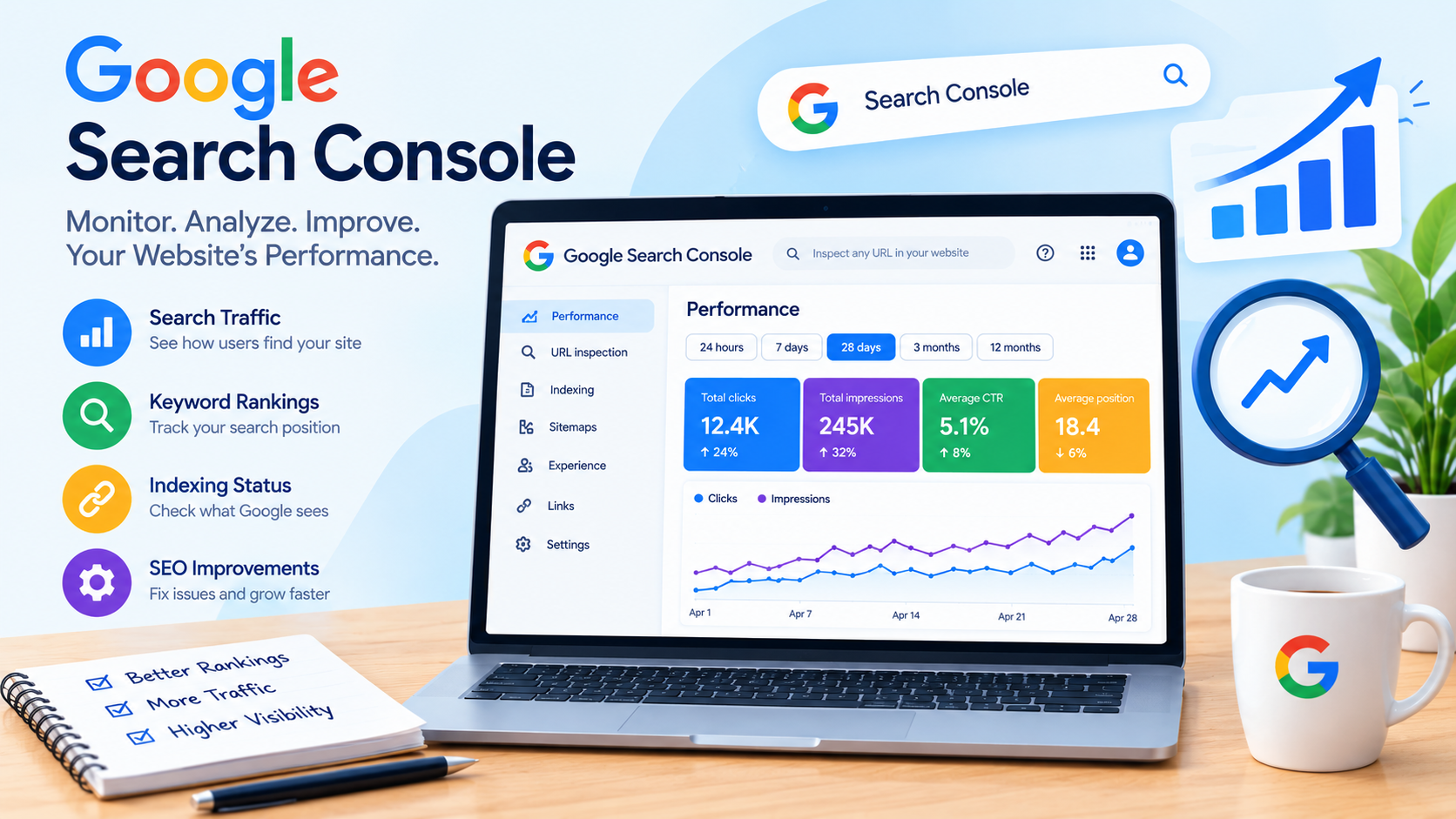
    The Performance report provides information about how your website appears in Google Search. You can review clicks, impressions, click-through rate (CTR), and average position.

    These metrics help you understand how users interact with your website in search results. For example, a page may receive many impressions but relatively few clicks. You can investigate whether the search intent, title, or page content aligns with what users are looking for.

    Search Console data should be analyzed over time rather than relying on a single day’s results.

    2. Identify Search Queries

    Search queries are the words or phrases users enter into Google. Search Console helps you discover queries associated with your website’s search performance.

    This information can support keyword research and content planning. You may discover that a blog receives impressions for related keywords that you did not specifically target.

    You can use these insights to improve existing content or plan new articles that answer relevant user questions.

    3. Check Website Indexing

    Google needs to discover and index your pages before they can generally appear in its organic search results. Search Console includes indexing reports that help you understand the status of your pages.

    The Page Indexing report can show indexed pages and certain pages that Google has not indexed, along with reasons or information for investigation.

    Not every page needs to be indexed, and an exclusion is not always an error. Review the specific reason before making changes.

    How to Set Up Search Console for Your Website

    Setting up Google Search Console is an important step for beginners who want to monitor their SEO performance. Follow these steps to get started.

    Step 1: Visit Google Search Console

    Open the official Google Search Console website and sign in with your Google account.

    Step 2: Add Your Website

    Click the property selection option and add your website. You can choose between a domain property or a URL-prefix property, depending on your setup and verification method.

    Step 3: Verify Ownership

    Google requires you to verify that you own or have permission to manage the website. The available verification methods depend on the property type.

    Step 4: Open Your Website Dashboard

    After verification, access your website property to explore performance, indexing, and other reports.

    Important Features of Search Console

    Google Search Console includes several features that support website monitoring and SEO analysis.

    Performance Report

    The Performance report shows how your website performs in Google Search. You can review search queries, pages, countries, and other dimensions.

    Important metrics include:

    • Total clicks: How many clicks your website received from Google Search.
    • Total impressions: How many times your website’s search results were shown.
    • Average CTR: The average percentage of impressions that resulted in clicks.
    • Average position: The average position of your website’s search results in the reporting data.

    These metrics can help you evaluate your content’s search performance.

    URL Inspection Tool

    The URL Inspection tool allows you to inspect information about a specific URL on your website. It can provide details about indexing, crawl information, and other available Google Search data.

    You can use this tool when you want to investigate whether a particular blog page is indexed or request a recrawl after making changes. A recrawl request does not guarantee immediate indexing or improved rankings.

    Sitemaps

    A sitemap helps search engines discover URLs on your website. Search Console allows you to submit a sitemap and review related processing information.

    For a blog website, a sitemap can support the discovery of important pages. However, submitting a sitemap does not guarantee that every URL will be indexed.

    Page Experience and Core Web Vitals

    Search Console provides reports related to page experience and Core Web Vitals, where applicable. These reports help website owners review aspects of user experience, including loading performance, responsiveness, and visual stability.

    Technical SEO improvements should support both search engine accessibility and a positive experience for visitors.

    How to Use Search Console to Improve SEO

    Using Search Console effectively requires regular analysis and practical improvements. Start by identifying pages that receive impressions but fewer clicks than expected. Review their titles, content relevance, and search intent without making unnecessary changes.

    Next, examine your top-performing pages and the queries associated with them. This can help you understand which topics interest your audience and guide future content planning.

    You should also check indexing reports for important pages and investigate technical issues that may prevent search engines from accessing or understanding your content.

    Remember that SEO results are influenced by competition, content quality, website changes, and search engine updates. Search Console provides valuable data, but it does not guarantee higher rankings.

    Common Mistakes to Avoid

    Beginners should avoid relying on only one metric to evaluate SEO performance. A high number of impressions does not automatically mean a page receives substantial traffic, and a ranking change does not always indicate a technical problem.

    Do not repeatedly request indexing for the same page or add keywords unnaturally to content. Focus on creating helpful articles, maintaining a clear website structure, and addressing genuine technical issues.

    It is also important to remember that Search Console data may have reporting delays, and average position is not the same as a guaranteed ranking for every searcher.

    Conclusion

    Search Console is a valuable free tool for website owners who want to monitor Google Search performance and improve their SEO strategy. From analyzing search queries and organic traffic to checking indexing status and reviewing Core Web Vitals, it provides useful information for making informed decisions.

    If you are new to SEO, start by verifying your website, exploring the Performance report, and reviewing your important pages. Use the insights you gather to improve content quality, address technical issues, and understand your audience’s search behavior.

    Consistent monitoring, relevant content, and a user-focused SEO strategy can help you build a stronger foundation for your website’s long-term growth.

  • SEO Ranking Checker: Track and Improve Your Website Rankings

    SEO Ranking Checker: Track and Improve Your Website Rankings

    If you have a website or blog, checking your search engine rankings is an important part of search engine optimization (SEO). You may create high-quality content, use relevant keywords, and improve your website, but how do you know whether your efforts are producing results? An SEO ranking checker helps you monitor your website’s keyword positions on search engines like Google.

    Tracking your rankings allows you to understand how your website performs in search results, identify changes, and discover opportunities to improve your SEO strategy. Whether you are a beginner, blogger, or business owner, using a keyword ranking checker can help you make more informed decisions about your website.

    In this blog, we will explain what an SEO ranking checker is, how it works, why ranking tracking matters, and how you can use it to improve your website’s visibility.

    What Is an SEO Ranking Checker?

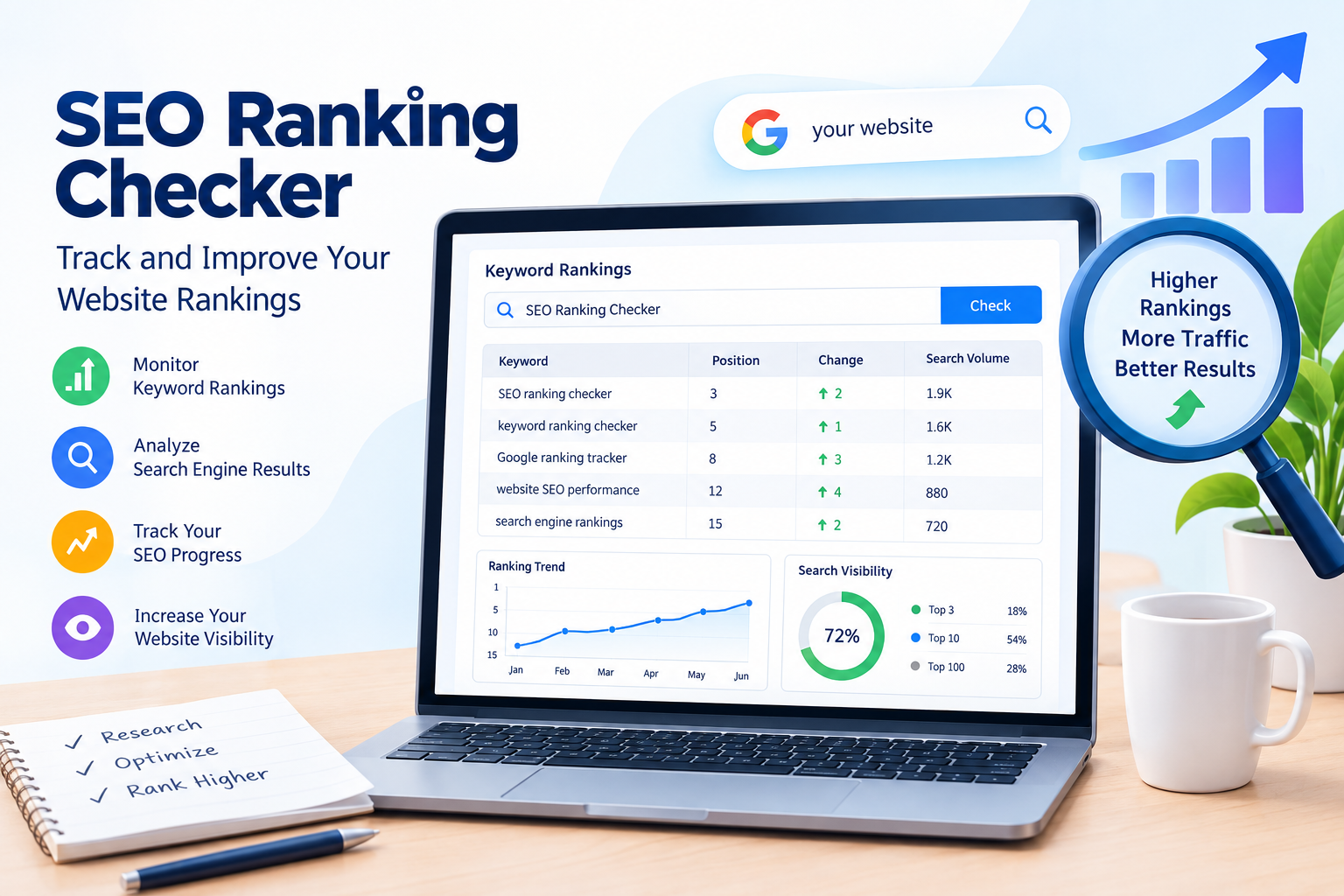
    An SEO Ranking Checker is a tool that helps you check where your website appears in search engine results for specific keywords. It is also known as a keyword ranking checker or Google ranking tracker.

    For example, imagine you have written a blog about “how to get backlinks.” You want to know whether your blog appears on Google’s first page when someone searches for that keyword. An SEO ranking tool can help you monitor your website’s position for that search term.

    These tools may provide information such as:

    • Keyword position in search results.
    • Search engine ranking changes.
    • Search visibility.
    • Competitor ranking information.
    • Desktop and mobile ranking differences.
    • Ranking history over time.

    Your ranking may change depending on the search location, device, language, and personalization. Therefore, ranking data should be interpreted as an estimate or measurement from a particular tool and not as a guarantee of what every user sees.

    Why Is Tracking Your SEO Ranking Important?

    Tracking your search engine rankings helps you understand whether your SEO strategy is working. Publishing a blog is only one part of SEO. You also need to monitor how your content performs and identify areas that need improvement.

    Here are some important reasons to track keyword rankings.

    1. Measure Your SEO Performance

    An SEO Ranking Checker helps you monitor your website’s performance for targeted keywords. When you track rankings over time, you can identify whether your pages are moving upward, declining, or remaining relatively stable.

    For example, your blog may initially appear on the fifth page of Google and later move closer to the first page. This change can help you evaluate the impact of your content improvements and other SEO activities.

    However, ranking changes do not always result from your actions. Search engine updates, competition, and changes in search results can also influence performance.

    2. Identify Ranking Opportunities

    Keyword tracking can help you discover pages that are already ranking but have room for improvement. A page appearing on the second page for a relevant keyword may be worth reviewing.

    You can improve the page by:

    • Updating outdated information.
    • Improving content clarity.
    • Answering user questions more effectively.
    • Adding relevant internal links.
    • Improving the page title and meta description where appropriate.

    These improvements should focus on helping users rather than adding keywords unnecessarily.

    3. Understand Your Website Visibility

    Website visibility refers to how easily users can discover your website through search engine results. Monitoring keyword positions provides one way to understand your search performance.

    For example, if several of your blogs rank for relevant search queries, you may be reaching users who are interested in your content. However, rankings alone do not represent complete website visibility. Search impressions, clicks, and the type of search results also matter.

    You can use Google Search Console to review search performance data for your website.

    How Does an SEO Ranking Checker Work?

    An SEO Ranking Checker collects ranking information for selected keywords and websites. The exact process depends on the tool you use.

    Here is a basic explanation of how keyword rank tracking works:

    Step 1: Enter Your Website

    First, add your website URL to the SEO tracking tool. Some tools may require you to create a project before monitoring your website.

    Step 2: Add Your Target Keywords

    Enter the keywords you want to track. These could include keywords such as “SEO tools free,” “how to get backlinks,” or “on-page SEO guide.”

    Choose keywords that are relevant to your website’s content and audience.

    Step 3: Select Your Search Location and Device

    Some ranking tools allow you to choose a country, city, language, or device type. These settings are important because search results can differ between locations and devices.

    Step 4: Check Your Ranking Data

    The tool may show your current position, previous position, ranking changes, and other performance metrics. Review the results to understand how your pages are performing.

    Step 5: Monitor Changes Over Time

    Regularly check your keyword performance. Looking at ranking trends over weeks or months can provide more useful information than focusing on one day’s position.

    Best Tools for Checking Website Rankings

    There are several SEO monitoring tools that can help you track keyword rankings. Different tools offer different features, data sources, and pricing options.

    1. Google Search Console

    Google Search Console is a free tool from Google that helps website owners understand how their websites perform in Google Search.

    It provides information such as:

    • Search queries.
    • Impressions.
    • Clicks.
    • Average position.
    • Click-through rate (CTR).

    Google Search Console is especially useful for beginners because it provides data about how your own website appears in Google Search.

    It is important to understand that the average position shown in Search Console is calculated from search performance data and may not match a fixed ranking position seen in a manual search.

    2. Semrush

    Semrush is an SEO platform that offers keyword tracking and other search engine optimization features. Its position tracking functionality can help users monitor keyword performance over time.

    Semrush may also provide competitor research and keyword analysis features, depending on the plan and tool being used.

    It can be useful for bloggers and businesses that want to organize and monitor their SEO campaigns.

    3. Ahrefs

    Ahrefs is an SEO toolset that includes keyword research, competitor analysis, and rank tracking features.

    Its ranking tools can help users monitor selected keywords and understand search performance. The available features depend on the subscription and specific product.

    Before choosing a paid SEO tool, compare its pricing, keyword limits, location tracking, and reporting features.

    How to Check Your Website Ranking Using Google Search Console

    If you are new to SEO, Google Search Console is a useful starting point for understanding your website’s search performance.

    Follow these steps:

    Step 1: Open Google Search Console

    Visit the official Google Search Console website and sign in using your Google account.

    Step 2: Add Your Website

    Add your website as a property and complete the verification process. Verification allows Google Search Console to associate search performance data with your website.

    Step 3: Open the Performance Report

    After accessing your property, open the Search Results report under the Performance section.

    Step 4: Review Your Keywords

    The report shows search queries that generated impressions and clicks for your website. You can review metrics such as total clicks, total impressions, average CTR, and average position.

    Step 5: Analyze Your Results

    Select a query to understand how your website performs for that search term. You can also review individual pages to see which content receives search traffic.

    Remember that Search Console reports historical performance data, and new websites may need time to accumulate meaningful data.

    How to Improve Your Website’s Search Rankings

    Using an SEO Ranking Checker is useful, but tracking rankings alone does not improve your website. You need to combine ranking data with effective SEO practices.

    1. Create Helpful and Relevant Content

    Write content that answers your audience’s questions. Include useful explanations, examples, and information that matches the search intent of your target keyword.

    Avoid writing content only to reach a specific word count. A clear and helpful article is more valuable than unnecessary repetition.

    2. Improve On-Page SEO

    On-page SEO includes improvements made to your website’s pages. These may include optimizing page titles, headings, content structure, internal links, and image alt text.

    Use your focus keyword naturally and include related terms where they genuinely fit the topic.

    3. Improve Website Speed and Mobile Experience

    A website should be easy to use on mobile devices and should provide a smooth browsing experience. Review technical issues that may affect accessibility, loading performance, or user experience.

    Google uses various signals to evaluate pages, and page experience is one part of overall SEO.

    4. Build Relevant Backlinks

    Backlinks are links from other websites to your website. Relevant, naturally earned backlinks can help search engines discover pages and may support your website’s authority.

    Focus on creating useful content and building genuine relationships instead of using spammy link-building techniques.

    5. Update Existing Content

    Review older blogs to identify outdated information, missing explanations, or opportunities to improve readability. Update content when there is a clear reason to do so.

    Do not change a page simply because its ranking fluctuates for a short period. Analyze the data before making significant changes.

    Common Mistakes to Avoid When Tracking Rankings

    Beginners often make mistakes when using keyword rank tracking tools. Understanding these mistakes can help you interpret your data more effectively.

    Checking rankings every day: Daily fluctuations are normal. Focus on longer-term trends rather than reacting to every change.

    Tracking only one keyword: A website can rank for many related search queries. Monitor a relevant group of keywords to understand performance more broadly.

    Ignoring search intent: A high ranking is not the only goal. Your content should match what users are looking for.

    Expecting instant results: SEO often takes time, and results depend on competition, content quality, website history, and other factors.

    Focusing only on rankings: Also review impressions, clicks, CTR, and conversions when these metrics are available.

    Conclusion

    An SEO Ranking Checker is a valuable tool for monitoring your website’s keyword positions and understanding your search engine performance. Whether you use Google Search Console, Semrush, Ahrefs, or another keyword ranking checker, tracking your data can help you identify opportunities and evaluate your SEO efforts.

    However, ranking tracking is only one part of a successful SEO strategy. To improve your website’s visibility, focus on helpful content, on-page SEO, technical improvements, and relevant backlinks. Monitor your performance consistently and use data to guide your decisions.

    If you are starting your SEO journey, begin with Google Search Console and gradually explore additional SEO monitoring tools as your website grows. With regular analysis and meaningful improvements, you can build a stronger foundation for your website’s long-term search performance.