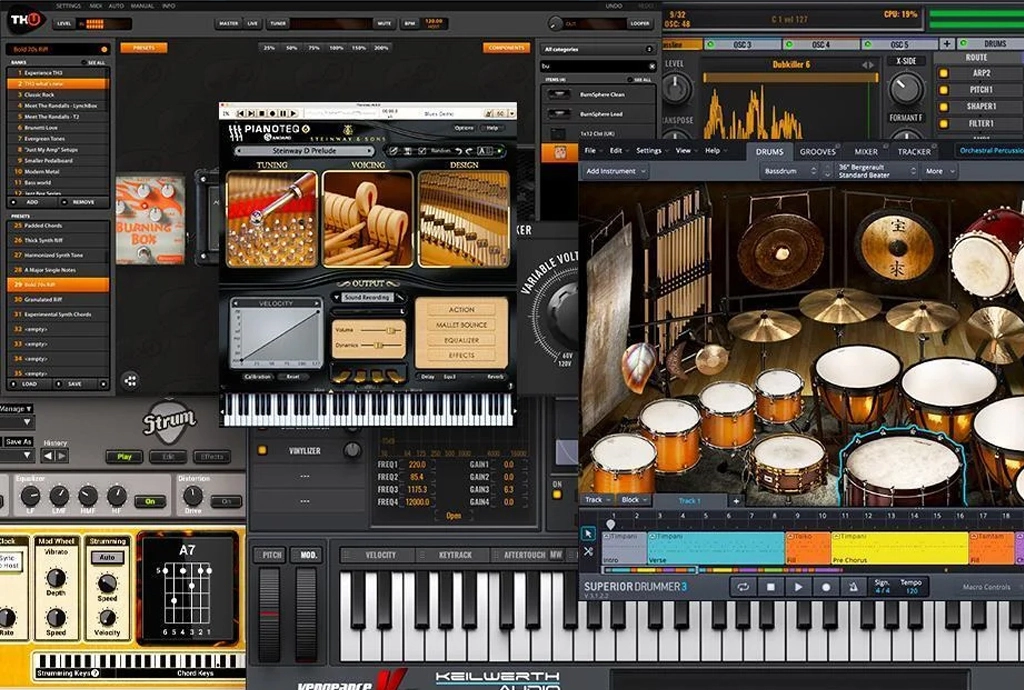
Discover the Best Free VST Plugins for vocals, mixing, mastering, synths, drums, and music production. Explore useful plugins for beginners and producers.
Table of Contents
Best Free VST Plugins for Music Production
Introduction
VST plugins can significantly expand the creative possibilities of a digital audio workstation.
Producers can use plugins for instruments, synthesizers, drums, mixing, mastering, vocals, and sound design.
Many high-quality plugins are available without purchasing expensive software.
The Best Free VST Plugins can be useful for beginners as well as experienced producers.
Free plugins can help producers experiment with new sounds without immediately investing in expensive plugin bundles.
This guide covers different types of plugins and explains what to consider when building a free plugin collection.
What Are VST Plugins?
VST stands for Virtual Studio Technology.
VST plugins are software components that can run inside compatible DAWs.
They can function as virtual instruments or audio effects.
Synthesizers, samplers, compressors, EQs, reverbs, delays, and distortion effects are common examples.
Free VST Plugins can provide additional sounds and processing capabilities without requiring a large budget.
Plugin compatibility depends on the DAW, operating system, plugin format, and architecture.
H2: Why Use Free VST Plugins?
There are several reasons producers choose free plugins.
H3: 1. Save Money
Build a useful plugin collection without spending a large amount.
Experiment with different types of effects.
Try different synthesizers and instruments.
Learn plugin workflows before purchasing premium products.
H3: 2. Learn Music Production
Understand EQ.
Learn compression.
Experiment with reverb and delay.
Practice sound design.
Learn how virtual instruments work.
H3: 3. Expand Your DAW
Add new instruments.
Add new effects.
Create different sounds.
Improve your mixing options.
Experiment with new production techniques.
The Best Free VST Plugins can therefore be useful additions to both beginner and advanced production setups.
H2: Best Free VST Plugins Categories
Different plugins are designed for different tasks.
H3: 1. Free Synth Plugins
Synth plugins can generate electronic sounds such as:
Bass.
Leads.
Pads.
Plucks.
Keys.
Textures.
Experimental sounds.
Recommended Uses
Electronic music.
Hip-hop.
Pop.
Ambient music.
Cinematic production.
H3: 2. Free VST Instruments
Free VST Instruments can provide virtual versions of:
Pianos.
Synthesizers.
Organs.
Strings.
Drums.
Bass instruments.
Orchestral sounds.
They can be useful when you do not own physical instruments.
H3: 3. Free Mixing Plugins
Mixing plugins can help with:
EQ.
Compression.
Saturation.
Stereo processing.
Dynamics.
Frequency control.
These tools can help producers shape individual tracks and improve the balance of a mix.
H3: 4. Free Reverb Plugins
Reverb can create a sense of:
Space.
Depth.
Room ambience.
Hall ambience.
Plate-style effects.
It can be used on vocals, drums, instruments, and other elements.
Discover the Best Music Production Software for beginners, beat makers, singers, and producers. Compare popular DAWs, features, pricing, recording tools, and more.
Best Music Production Software for Beginners and Producers
Introduction
Choosing the right DAW can make music creation easier and more organized.
The Best Music Production Software can help you create beats, record vocals, edit audio, arrange songs, mix tracks, and prepare music for release.
Modern DAWs provide professional tools that can be used from a home studio.
Different software is designed for different workflows, genres, and experience levels.
Some programs are especially useful for beat making, while others are designed around recording, live performance, songwriting, or mixing.
This guide explains the major options and the features you should consider before choosing a DAW.
What Is Music Production Software?
Music Production Software is a digital application used to create and produce music.
Most professional production applications are called Digital Audio Workstations, or DAWs.
A DAW can provide audio recording, MIDI sequencing, editing, mixing, automation, virtual instruments, and effects.
Modern Music Production Software can allow a producer to complete an entire song on a computer.
Many DAWs also support third-party plugins, virtual instruments, samples, and audio effects.
How to Choose the Best Music Production Software
The Best Music Production Software for one producer may not be the right choice for another. Consider these factors before making a decision.
̥1. Your Music Genre
Beat makers may need a fast MIDI and drum workflow.
Electronic producers may prefer loop-based and performance features.
Vocal artists may need strong recording and editing tools.
Composers may prioritize MIDI and orchestral instruments.
Live performers may require specialized performance features.
2. Your Operating System
Check whether the DAW works on Windows or macOS.
Some applications are designed specifically for Apple devices.
Check minimum hardware requirements.
Make sure your computer has enough RAM and storage for large projects.
3. Your Budget
Some DAWs offer free versions.
Some provide free trials.
Some require a one-time purchase.
Others may offer subscription-based plans.
Compare the included instruments, effects, updates, and features.
4. Your Workflow
Ask yourself:
Do you mainly create beats?
Do you record vocals?
Do you work with MIDI?
Do you perform live?
Do you mix and master your own songs?
Do you need advanced audio editing?
Your answers can help you find suitable software.
7 Popular Music Production Software Options
1. FL Studio
FL Studio is widely used for beat making, electronic music, hip-hop, pop, and other genres.
Key Features
Step-based beat creation.
Powerful Piano Roll.
Playlist-based arrangement.
Audio recording.
MIDI editing.
Built-in instruments.
Built-in effects.
Mixer and routing.
Third-party plugin support.
Suitable For
Beat makers.
Hip-hop producers.
Electronic producers.
Beginners.
Songwriters.
2. Ableton Live
Ableton Live is known for its flexible workflow and is widely used for music creation and live performance.
Key Features
Session View.
Arrangement View.
Audio recording.
MIDI production.
Audio warping.
Built-in instruments.
Effects.
Live performance tools.
Suitable For
Electronic music producers.
Live performers.
DJs.
Loop-based producers.
Experimental musicians.
3. Logic Pro
Logic Pro is Apple’s professional music creation platform.
Key Features
Audio recording.
MIDI production.
Virtual instruments.
Sound library.
Beat-making tools.
Mixing tools.
Audio editing.
Mastering features.
Suitable For
Mac users.
Vocal producers.
Songwriters.
Recording artists.
Music producers.
4. Cubase
Cubase is a popular DAW for recording, composition, MIDI production, arrangement, and mixing.
Key Features
Advanced MIDI editing.
Audio recording.
Virtual instruments.
Mixing.
Automation.
Arrangement tools.
Plugin support.
Suitable For
Composers.
Recording artists.
MIDI producers.
Songwriters.
Mixing engineers.
5. GarageBand
GarageBand is an accessible option for people who are beginning to create music on Apple devices.
Key Features
Simple interface.
Virtual instruments.
Audio recording.
Loops.
Basic effects.
Easy songwriting workflow.
Suitable For
Beginners.
Songwriters.
Musicians creating demos.
Students.
Casual producers.
6. Pro Tools
Pro Tools is widely associated with professional recording, editing, mixing, and studio workflows.
Key Features
Multitrack recording.
Detailed audio editing.
Mixing.
Automation.
Plugin support.
Professional studio workflow.
Suitable For
Recording engineers.
Professional studios.
Vocal recording.
Mixing engineers.
Audio professionals.
7. Studio One
Studio One provides tools for recording, production, arrangement, mixing, and mastering.
Key Features
Audio recording.
MIDI production.
Arrangement.
Mixing.
Mastering.
Virtual instruments.
Plugin support.
Suitable For
Home producers.
Songwriters.
Recording artists.
Mix engineers.
Independent musicians.
Best DAW for Beginners
Finding the Best DAW for Beginners depends on how you want to create music.
FL Studio
Easy pattern-based workflow.
Strong beat-making features.
Powerful Piano Roll.
Large learning community.
Suitable for electronic and beat-focused production.
GarageBand
Simple interface.
Easy recording.
Built-in instruments.
Useful loops.
Good starting point for Apple users.
Ableton Live
Flexible workflow.
Useful for electronic music.
Session View supports experimentation.
Suitable for both production and performance.
Logic Pro
Large collection of sounds.
Recording and songwriting tools.
Built-in instruments and effects.
Suitable for Apple users.
For someone starting Music Production for Beginners, choosing one DAW and learning it properly is usually more useful than constantly switching between different programs.
Free Music Production Software
If you have a limited budget, Free Music Production Software can be a useful way to start learning.
Benefits
No large initial investment.
Useful for learning DAW basics.
Can help you understand your preferred workflow.
Allows you to experiment before purchasing premium software.
Suitable for simple recording and production projects.
What to Look For
When choosing Free Music Production Software, check whether it provides:
Audio recording.
MIDI support.
Virtual instruments.
Audio effects.
Plugin compatibility.
Export options.
Enough tracks for your projects.
Music Recording Software Features
Good Music Recording Software should provide the tools required for clean and organized recording.
Audio Recording
Microphone recording.
Instrument recording.
Multitrack recording.
Audio editing.
Multiple takes.
Vocal Recording
Low-latency monitoring.
Vocal editing.
Take management.
Comping features.
Plugin support.
Automation.
Instrument Recording
Audio interface support.
Guitar recording.
Keyboard recording.
MIDI integration.
Multitrack editing.
Important Features to Compare
When comparing the Best Music Production Software, pay attention to the following features.
MIDI
Piano Roll.
MIDI recording.
MIDI editing.
Quantization.
MIDI controller support.
Audio Editing
Cutting and trimming.
Time stretching.
Pitch correction.
Noise editing.
Take management.
Mixing
Channel mixer.
EQ.
Compression.
Reverb.
Delay.
Automation.
Routing.
Plugins
Virtual instruments.
Synthesizers.
Samplers.
Audio effects.
Third-party plugin support.
Best Software for Beat Making
If beat making is your main goal, look for software with:
Fast drum programming.
Powerful MIDI editing.
Good Piano Roll functionality.
Sample management.
Built-in instruments.
Flexible arrangement.
Easy automation.
FL Studio, Ableton Live, Logic Pro, and other DAWs can be used for beat production.
The right choice depends on your preferred workflow, music genre, and experience.
Best Software for Vocal Recording
When selecting Music Recording Software for vocals, consider:
Microphone compatibility.
Audio interface support.
Low recording latency.
Multiple takes.
Vocal editing.
Pitch correction.
EQ and compression.
Reverb and delay.
Automation.
A good recording setup also requires a suitable microphone, audio interface, headphones, and an appropriate recording environment.
Music Production Tips for Better Results
These practical tips can help you get more from your DAW.
1. Learn One DAW
Avoid constantly changing software.
Learn the shortcuts.
Learn the mixer.
Learn MIDI editing.
Learn automation.
2. Start With Simple Projects
Create short beats.
Make simple arrangements.
Practice recording.
Finish complete tracks.
Increase project complexity gradually.
3. Learn Basic Music Theory
Understand scales.
Learn chords.
Study rhythm.
Learn basic harmony.
Understand song structure.
4. Train Your Ears
Listen to professional recordings.
Compare frequency balance.
Study vocal levels.
Notice stereo width.
Analyze different arrangements.
Music Production Software Comparison
Software
Main Strength
Platform
FL Studio
Beat Making
Windows & macOS
Ableton Live
Electronic Music & Performance
Windows & macOS
Logic Pro
Songwriting & Recording
Apple
Cubase
MIDI & Composition
Windows & macOS
GarageBand
Beginners
Apple
Pro Tools
Professional Recording
Windows & macOS
Studio One
Production & Recording
Windows & macOS
There is no single DAW that works perfectly for every producer. Your workflow, genre, hardware, and experience should guide the decision.
How to Start Music Production
For Music Production for Beginners, follow a simple learning process.
Step 1: Select One DAW
Choose a program that matches your requirements.
Install it.
Learn the interface.
Understand tracks and channels.
Step 2: Learn the Basics
Learn BPM.
Understand MIDI.
Learn audio recording.
Study EQ.
Learn compression.
Understand reverb and delay.
Step 3: Make Your First Track
Create drums.
Add bass.
Add chords.
Create a melody.
Record vocals if required.
Arrange the song.
Step 4: Practice Mixing
Balance volume.
Pan instruments.
Control frequencies.
Use compression carefully.
Add effects where necessary.
Step 5: Finish the Track
Complete the arrangement.
Mix the song.
Export the final version.
Listen on different speakers and headphones.
Take notes for your next project.
Common Mistakes When Choosing Music Software
Buying software without checking system requirements.
Choosing a DAW only because another producer uses it.
Installing too many plugins.
Switching DAWs constantly.
Ignoring the learning curve.
Focusing on expensive equipment instead of skills.
Buying plugins without understanding their purpose.
Not trying demos or free versions when available.
Frequently Asked Questions
What is the Best Music Production Software for beginners?
The answer depends on your music style, operating system, budget, and workflow. FL Studio, Ableton Live, Logic Pro, and GarageBand are commonly considered by people starting music production.
Is FL Studio good for music production?
Yes. FL Studio provides tools for beat creation, MIDI editing, audio recording, arrangement, mixing, instruments, effects, and plugin support.
What is the Best DAW for Beginners?
The Best DAW for Beginners depends on the type of music you want to create. A beat maker may prefer a different workflow from a vocalist, songwriter, or live performer.
Is free music software good enough?
Free Music Production Software can be sufficient for learning the basics and creating simple projects. As your requirements grow, you may choose a more advanced DAW.
What is the best software for recording vocals?
Good Music Recording Software should provide reliable audio recording, editing, low-latency monitoring, take management, and plugin support.
Can beginners learn music production at home?
Yes. Music Production for Beginners can be learned at home with a computer, DAW, headphones, and basic recording equipment. Consistent practice is important.
Conclusion
The Best Music Production Software depends on your genre, workflow, computer, budget, and experience.
FL Studio can be useful for beat-focused workflows.
Ableton Live provides flexible production and performance workflows.
Logic Pro provides a broad collection of tools for Apple users.
Cubase, Pro Tools, Studio One, and GarageBand provide their own approaches to music creation.
Music Production Software should be selected based on the features you actually need.
Beginners should focus on learning one DAW instead of constantly switching between programs.
Free Music Production Software can be a practical starting point if you are working with a limited budget.
Good Music Recording Software is important when your workflow includes vocals or live instruments.
If you are learning Music Production for Beginners, focus on recording, arrangement, mixing, and consistent practice.
Ultimately, the Best Music Production Software is the one that fits your workflow and helps you turn your musical ideas into finished tracks.
Learn Music Production Guide from scratch with this complete beginner’s guide covering software, recording, mixing, home studio setup, and practical production tips.
Table of Contents
Music Production Guide: Complete Guide for Beginners
Introduction
Guide Music Production Guide is the process of creating a complete song or musical track from an initial idea to the final master.
It can include songwriting, beat making, recording, editing, arrangement, mixing, and mastering.
Modern technology allows musicians to produce professional-sounding music from a computer or even a mobile device.
Beginners can start with basic equipment and gradually improve their skills.
This guide explains the complete process and the essential tools required to get started.
What Is Music Production Guide?
Music ProductionGuide involves turning a musical idea into a finished recording.
It can involve creating melodies and chords.
Producers can create beats and drum patterns.
Vocal and instrument recordings can be edited and arranged.
Effects can be added to improve the sound.
Mixing balances different elements of a song.
Mastering prepares the final track for distribution.
A producer may handle some or all of these stages depending on the project.
What Does a Music Producer Do?
1. Song Development
Develop the initial musical idea.
Select suitable instruments.
Create melodies and chord progressions.
Decide the overall style and direction.
Help arrange different sections of the song.
2. Beat Making
Create drum patterns.
Select suitable kicks, snares, and percussion.
Add bass lines.
Create rhythmic patterns.
Match the beat with the song’s mood.
3. Recording
Record vocals and instruments.
Set microphone levels.
Monitor recording quality.
Record multiple takes when required.
Select the best performances.
4. Editing
Remove unwanted parts.
Correct timing issues.
Clean up recordings.
Edit vocal performances.
Arrange recorded elements within the project.
How Does Music Production Work?
A typical production workflow includes several stages.
Arrange instruments so the song remains interesting.
4. Recording
Prepare the microphone.
Set appropriate recording levels.
Record vocals or live instruments.
Record multiple takes when necessary.
Keep recordings organized.
5. Mixing
Adjust volume levels.
Use EQ to shape sounds.
Apply compression when appropriate.
Add reverb and delay.
Create stereo balance.
Make vocals and instruments work together.
6. Mastering
Balance the final stereo track.
Control overall dynamics.
Check loudness.
Review the track on different playback systems.
Export the final version in an appropriate format.
Best Music Production Software
Choosing the right software is an important part of the production process.
1. FL Studio
Popular digital audio workstation.
Useful for beat making.
Includes MIDI sequencing features.
Supports virtual instruments and plugins.
Suitable for electronic, hip-hop, pop, and many other styles.
2. Ableton Live
Popular among electronic music producers.
Useful for live performance.
Includes powerful MIDI and audio tools.
Supports extensive plugin integration.
Useful for creating and arranging tracks.
3. Logic Pro
Professional DAW for Apple devices.
Includes virtual instruments and effects.
Useful for recording and production.
Provides extensive mixing and arrangement features.
Cubase
Used for recording, arrangement, and mixing.
Provides MIDI and audio production features.
Useful for musicians and professional producers.
5. GarageBand
Beginner-friendly music creation software.
Available on Apple devices.
Includes instruments and recording features.
Useful for learning basic production concepts.
Essential Music Production Equipment
You do not need an expensive studio to start.
Computer
A computer is the central part of most modern production setups.
It runs the DAW and plugins.
More RAM can help when working with large projects.
A fast SSD can improve project loading and file management.
Audio Interface
Connects microphones and instruments to your computer.
Converts analog signals into digital audio.
Can improve recording quality.
Useful for microphones, guitars, and other instruments.
Studio Headphones
Useful for recording and mixing.
Help you hear details in a track.
Closed-back headphones can be useful during recording.
Monitoring headphones can help with critical listening.
Studio Monitors
Provide a more balanced listening environment.
Useful for mixing and production.
Placement and room acoustics are important.
How to Build a Home Music Studio
A Home Music Studio does not have to be expensive.
Basic Setup
Computer or laptop
DAW
Headphones
Microphone
Audio interface
MIDI keyboard
Microphone stand
Basic acoustic treatment
Advanced Setup
Studio monitors
Better microphone
Multiple instruments
Hardware processors
Acoustic treatment
MIDI controllers
External synthesizers
The most important thing is to learn how to use your equipment effectively rather than purchasing expensive gear immediately.
Best Music Recording Software
Choosing suitable Music Recording Software depends on your workflow and requirements.
For Beginners
GarageBand
FL Studio
Ableton Live
Other beginner-friendly DAWs
For Vocal Recording
Choose software with reliable audio recording.
Use proper microphone gain.
Monitor latency.
Keep vocals organized.
Record multiple takes when necessary.
For Professional Recording
Choose a stable DAW.
Use a suitable audio interface.
Use high-quality microphones.
Monitor recordings accurately.
Maintain an organized recording workflow.
Music Production Guide Tips for Beginners
Following practical Music Production Tips can help beginners improve faster.
1. Learn Your DAW
Learn the interface.
Understand tracks and channels.
Learn MIDI editing.
Learn audio editing.
Practice using automation.
2. Start With Simple Projects
Do not begin with extremely complicated arrangements.
Create short beats.
Finish complete songs.
Practice one skill at a time.
Gradually increase project complexity.
3. Learn Basic Music Theory
Understand scales.
Learn chords.
Study rhythm.
Learn basic harmony.
Understand song structure.
4. Train Your Ears
Listen carefully to professional recordings.
Compare bass levels.
Study vocal placement.
Notice stereo width.
Learn how different frequencies sound.
5. Finish Your Songs
Avoid constantly starting new projects.
Complete arrangements.
Mix your tracks.
Export finished versions.
Review your work and identify areas for improvement.
Music Production Guide Software vs Hardware
Feature
Software
Hardware
Cost
Often lower
Can be expensive
Flexibility
Very High
Depends on device
Portability
High
Usually lower
Instruments
Virtual
Physical
Effects
Plugins
Hardware processors
Learning
Software-based
Hands-on
Software provides flexibility and portability.
Hardware can provide a different workflow and physical experience.
Many modern producers combine software and hardware.
How to Learn Music Production?
Learning Music Production takes practice and consistent experimentation.
Step 1: Learn a DAW
Choose one DAW.
Learn its basic functions.
Practice creating simple projects.
Step 2: Learn the Fundamentals
Study rhythm.
Learn basic music theory.
Understand EQ.
Learn compression.
Study reverb and delay.
Step 3: Recreate Existing Tracks
Choose songs you like.
Study their arrangement.
Identify instruments.
Recreate simple sections for practice.
Use this exercise to improve your production skills.
Step 4: Create Original Music
Write your own melodies.
Create original beats.
Record vocals.
Experiment with different sounds.
Develop your own production style.
Common Music Production Mistakes
Using too many plugins.
Over-processing vocals.
Making mixes unnecessarily loud.
Ignoring room acoustics.
Not using reference tracks.
Creating overly complicated arrangements.
Focusing too much on equipment instead of skills.
Never finishing songs.
Not saving project backups.
Mixing without taking listening breaks.
Benefits of Learning Music Production
Create your own songs.
Produce beats independently.
Record vocals at home.
Experiment with different sounds.
Reduce dependence on expensive studios.
Develop technical and creative skills.
Build a portfolio.
Collaborate with other musicians.
Explore professional music opportunities.
Music Production Guide Checklist
Use this checklist when creating a new track:
Choose a song idea
Set the BPM
Create the basic rhythm
Develop chords
Create the melody
Record vocals or instruments
Arrange the song
Edit recordings
Balance volume levels
Apply EQ
Use compression where needed
Add effects
Check the stereo image
Mix the track
Master the final version
Listen on multiple devices
Export the final track
Frequently Asked Questions
What is Music Production?
Music Production is the process of creating, recording, arranging, editing, mixing, and preparing a song for final release.
Is Music Production Guide difficult for beginners?
It can take time to learn because it combines creative and technical skills. However, beginners can start with simple projects and gradually learn recording, arrangement, mixing, and other production techniques.
What is the best software for Music Production?
There is no single software that is ideal for every producer. FL Studio, Ableton Live, Logic Pro, Cubase, and other DAWs offer different workflows and features.
Can I learn Music Production at home?
Yes. A computer, DAW, headphones, and basic recording equipment can provide a starting point. A Home Music Studio can be built gradually as your skills and requirements increase.
Do I need expensive equipment for Music Production?
No. Expensive equipment is not required to learn the fundamentals. Good production skills, listening ability, arrangement, and consistent practice are more important when starting.
Conclusion
Music Production combines creativity, technology, recording, arrangement, mixing, and mastering.
Beginners can start with basic equipment and gradually build their setup.
Choosing suitable Music Production Software can make the learning process easier.
A simple Home Music Studio is enough to begin creating original music.
Consistent practice and learning are more important than buying expensive equipment.
By understanding recording, arrangement, mixing, and mastering, you can gradually develop your own production workflow.
Use these Music Production Tips as a starting point and continue experimenting with different sounds and techniques.
Discover the best Free SEO Tools for keyword research, SEO audits, backlinks, technical SEO, and website optimization. Perfect for beginners and marketers.
Free SEO Tools: Best Tools to Improve Your Website SEO
Introduction
SEO does not always require expensive software or subscriptions.
Many powerful Free SEO Tools can help with keyword research, technical SEO, backlinks, website performance, and content optimization.
Bloggers, beginners, freelancers, business owners, and digital marketers can use these tools to improve their website’s search visibility.
In this guide, you will discover useful SEO tools for different SEO requirements.
You will also learn how to choose the right tool according to your SEO goals.
What Are Free SEO Tools?
Free SEO Tools are online platforms, applications, or software that provide SEO-related features without requiring a paid subscription.
They can help you discover relevant keywords.
You can identify technical SEO problems on your website.
You can analyze backlinks and referring domains.
You can check website speed and performance.
You can research competitors and content opportunities.
Free SEO Tools for Beginners can be especially useful for people who are learning SEO and want to practice without an initial investment.
Why Should You Use Free SEO Tools?
1. Keyword Research
Discover what people are searching for.
Find relevant keywords for your content.
Identify long-tail keyword opportunities.
Understand different search intents.
Find potential topics for blog posts.
Free Keyword Research Tools can help beginners start their keyword research process.
2. Website SEO Audits
Find broken links.
Identify missing or poorly optimized meta tags.
Discover technical SEO problems.
Check important website elements.
Analyze basic website health.
Free SEO Audit Tools can help you identify issues that may affect your website’s SEO performance.
3. Website Performance
Check website loading speed.
Analyze mobile performance.
Review Core Web Vitals.
Identify performance issues.
Find opportunities to improve page experience.
Free Website SEO Tools can help you monitor different aspects of website optimization.
15 Best Free SEO Tools
1. Google Search Console
Google Search Console is an official Google platform for monitoring website performance in Google Search.
View search queries.
Monitor clicks and impressions.
Identify indexing issues.
Submit and monitor sitemaps.
Check pages indexed by Google.
Monitor search performance.
2. Google Keyword Planner
Discover keyword ideas.
Research keyword demand.
Find related search terms.
Explore potential keywords for content.
Plan keywords for SEO and advertising campaigns.
3. Google Trends
Analyze search trends over time.
Compare multiple search terms.
Discover trending topics.
Identify seasonal trends.
Compare interest across different locations.
Find topics that are gaining search interest.
4. Google Analytics
Monitor website traffic.
Understand where visitors come from.
Analyze user behavior.
Track organic traffic.
Measure website engagement.
Understand how visitors interact with your website.
5. Google PageSpeed Insights
Test website performance.
Analyze mobile and desktop performance.
Check Core Web Vitals.
Identify page speed problems.
Get recommendations for improving website performance.
6. Bing Webmaster Tools
Monitor Bing search performance.
Check website indexing.
Analyze search queries.
Identify SEO issues.
Submit and manage website sitemaps.
Understand how your website performs in Bing Search.
7. Ahrefs Webmaster Tools
Analyze your website’s SEO health.
Check backlinks.
Identify technical SEO problems.
Crawl your website.
Find SEO issues that may require attention.
8. Semrush Free Tools
Perform basic keyword research.
Research competitors.
Analyze websites.
Explore SEO opportunities.
Access various SEO-related reports and tools.
9. Ubersuggest
Discover keyword ideas.
Find content ideas.
Research competitors.
Analyze basic SEO metrics.
Explore related keywords.
10. Screaming Frog SEO Spider
Crawl websites.
Find broken links.
Analyze page titles.
Check meta descriptions.
Identify technical SEO issues.
Review important on-page SEO elements.
11. Yoast SEO
Useful for WordPress websites.
Provides on-page SEO recommendations.
Helps manage meta titles and descriptions.
Supports XML sitemaps.
Helps optimize content for search engines.
12. Rank Math
WordPress SEO optimization.
On-page SEO recommendations.
Schema markup support.
Meta title and description management.
SEO analysis features.
13. AnswerThePublic
Discover questions people search for.
Find question-based keywords.
Generate content ideas.
Understand potential search intent.
Find topics based on real search queries.
14. SEO Minion
Check broken links.
Analyze on-page SEO elements.
Preview SERPs.
Perform basic SEO checks.
Useful for quick browser-based SEO analysis.
15. Keyword Surfer
View keyword information directly in Google search results.
Discover related keyword ideas.
Research content topics.
Explore estimated search volume information.
Useful for quick keyword research.
Free SEO Tools vs Paid SEO Tools
Feature
Free Tools
Paid Tools
Keyword Research
Basic
Advanced
SEO Audit
Basic
Detailed
Backlink Data
Limited
More Extensive
Competitor Analysis
Limited
Advanced
Historical Data
Limited
Usually More
Cost
Free
Subscription
Beginners can start with free tools to learn SEO and perform basic optimization.
Larger websites may require more advanced data.
Agencies and professional SEO teams may need additional features for large-scale campaigns.
The right choice depends on your website size, SEO goals, and budget.
Free SEO Tools Checklist
Use this checklist when working on your website:
Set up Google Search Console
Set up Google Analytics
Perform keyword research
Identify search intent
Check website speed
Perform a technical SEO audit
Check broken links
Monitor backlinks
Research competitor keywords
Optimize important pages
Update old content
Monitor organic traffic
Track keyword rankings
Review SEO performance regularly
Frequently Asked Questions
What are the best free SEO tools?
Some commonly used options include Google Search Console, Google Keyword Planner, Google Trends, PageSpeed Insights, Bing Webmaster Tools, and Ahrefs Webmaster Tools. Different tools are useful for different SEO tasks.
Can I do SEO without paying for tools?
Yes. Many basic SEO activities can be performed using free tools. However, advanced keyword research, competitor analysis, backlink data, and large-scale SEO features may require paid platforms.
Which SEO tool is best for beginners?
Beginners can start with Google Search Console, Google Keyword Planner, Google Trends, and PageSpeed Insights. These tools cover several fundamental SEO tasks and are useful for learning the basics.
Are free SEO tools accurate?
The accuracy of SEO data can vary between tools because different platforms may use different data sources and methodologies. For important SEO decisions, comparing information from multiple reliable sources can provide better context.
Can free SEO tools improve Google rankings?
SEO tools themselves do not directly improve rankings. They provide data and insights that can help you identify problems, research keywords, improve content, and make technical improvements that may support better search performance.
Conclusion
You do not need a large SEO budget to start optimizing a website.
The right Free SEO Tools can help with keyword research, technical SEO, website performance, backlinks, and content planning.
Beginners can start with Google’s free tools and gradually add other platforms as their requirements grow.
Different tools should be selected according to the specific SEO task.
The most important step is not simply collecting SEO data but using that data to make practical improvements to your website.
With consistent research, optimization, and monitoring, Free SEO Tools can become an important part of a website’s SEO workflow.
Learn Intraday Trading, day trading, intraday trading strategy, technical analysis, risk management, and practical trading factors for short-term markets.
Intraday Trading: 7 Powerful Strategies for Smarter Trading
Intraday Trading is a short-term market approach in which a position is opened and closed during the same trading session. It focuses on short-term price movements rather than holding a position for a long period. Intraday Trading requires preparation, discipline, and careful control of risk.
What Is Intraday Trading?
Intraday Trading means buying and selling a financial instrument within the same trading session. Traders may study charts, price action, news, liquidity, and volume before deciding whether to enter a position in Intraday Trading.
Day trading involves frequent decisions and short holding periods. Because prices can change quickly, traders should understand that both gains and losses can occur within a short time.
How Intraday Trading Works
A typical Intraday Trading process begins before the market opens. A trader may review the previous session, create a watchlist, identify important price levels, and define possible entry and exit points.
Technical analysis is often used to study price charts, trends, support, resistance, and momentum. It can help organize market information, but it cannot guarantee a particular result.
Intraday Trading Strategy Basics
A trading plan may focus on breakouts, trends, reversals, or range-bound movements. A trader generally defines an entry, target, and stop loss before placing an order.
A clear plan can reduce impulsive decisions. Traders should also determine how much capital they are prepared to risk before opening a position.
7 Important Factors for Intraday Trading
1. Technical Analysis
Technical analysis uses historical price and market data to study possible patterns. Traders may use moving averages, trendlines, support and resistance, and momentum indicators.
2. Trading Volume
Trading volume shows how actively a security is being bought and sold. Changes in trading volume can provide additional context when combined with price movement.
3. Market Volatility
Market volatility describes the size and speed of price changes. Higher market volatility can create larger short-term moves, but it can also increase the potential size of losses.
4. Stop Loss
A stop loss is a predefined exit level intended to limit a loss when a trade moves in an unfavorable direction. Order execution can differ depending on the order type and market conditions.
5. Risk Management
Risk management includes position sizing, maximum loss limits, and controlling total exposure. Strong risk management can help prevent one trade from creating an outsized impact on an account.
6. Trading Psychology
Fear, greed, and revenge trading can influence decisions. A written plan can help traders follow predetermined rules instead of reacting emotionally to every price movement.
7. Market News
Company announcements, economic releases, policy decisions, and global events can affect prices. Traders should verify important information through reliable sources.
Tools Used for Intraday Trading
Trading platforms can provide charts, market data, alerts, watchlists, screeners, and different order types. Technical analysis tools can help traders organize information and monitor price behavior.
Day trading platforms may also provide real-time quotes and execution features. Available products, charges, margin rules, and order types depend on the broker and market.
Benefits of Intraday Trading
Intraday Trading allows participants to focus on short-term market movements and generally close positions within the same session.
Some traders prefer not to carry positions overnight. However, frequent monitoring and repeated transactions can increase costs and decision-making pressure.
Risks of Intraday Trading
Intraday Trading involves significant financial risk. Rapid price changes can produce losses quickly, especially when margin or leveraged products are involved.
FINRA explains that frequent intraday trading can carry substantial risks, and margin trading can potentially result in losses greater than the original amount invested. Broker requirements can also differ.
Market volatility can make entries and exits harder to manage. A trader should never assume that a previous profitable trade or a particular setup will produce the same outcome in the future.
Intraday Trading Risk Management
A practical risk plan can include a predefined stop loss, controlled position size, and a maximum daily loss limit.
Risk management should be established before entering a trade. A trading journal can also help record entries, exits, mistakes, and results.
Trading volume and market volatility can be reviewed together with the overall setup. No single indicator can remove market risk.
Intraday Trading vs Long-Term Investing
Intraday Trading focuses on short-term price movements, while long-term investing generally uses a much longer holding period.
Day trading may require frequent monitoring and rapid decisions. Long-term investors may have different objectives, time horizons, and approaches to risk.
How Beginners Can Learn Intraday Trading
Beginners should first understand market basics, order types, chart reading, position sizing, and risk controls.
Before using real money, learners can study historical charts and use paper trading or other simulated practice when available. They should also understand brokerage charges and applicable rules.
An intraday trading strategy should be tested against historical or simulated conditions before being used with real capital. Past performance does not guarantee future results.
The Future of Intraday Trading
Modern technology is making market data, charting, alerts, and execution tools more accessible. Automated systems can also assist with defined trading processes.
Even advanced technology cannot remove uncertainty from financial markets. Traders still need to evaluate information, control exposure, and understand the risks of their chosen products.
Frequently Asked Questions
Is Intraday Trading profitable?
Intraday Trading can result in gains or losses. There is no guaranteed profit, and outcomes depend on market conditions, strategy, costs, execution, and risk controls.
What is the best intraday trading strategy?
There is no single strategy that works for every trader or market condition. An intraday trading strategy should have clearly defined entry, exit, and risk rules.
Is Intraday Trading risky?
Yes. Intraday Trading can involve rapid price movements and substantial losses. The risk can become higher when margin or leveraged products are used.
What is a stop loss?
A stop loss is a predefined exit instruction or price level intended to limit a loss when a trade moves against the trader.
Why is risk management important?
Risk management helps control how much capital is exposed to individual trades and can reduce the effect of a series of losing positions.
Conclusion
Intraday Trading is a fast-moving approach that requires preparation, discipline, market knowledge, and risk awareness. Traders should focus on a defined process instead of expecting guaranteed returns.
Day trading should be treated as a high-risk activity rather than a guaranteed income method. Learning technical analysis, monitoring market conditions, and applying consistent risk controls can support more informed trading decisions.
Artificial Intelligence is shaping the future of technology through AI tools, machine learning, generative AI, automation, and smarter digital experiences.
Artificial Intelligence is becoming one of the most important technologies shaping the future of digital products, businesses, education, healthcare, and everyday life. From intelligent software to advanced automation, Artificial Intelligence is helping computers understand information, identify patterns, generate content, and support complex workflows.
The future of Artificial Intelligence will not be limited to chatbots or content generators. New systems are increasingly being designed to work with multiple types of information, use external tools, and assist people with longer and more complicated tasks.
What Is the Future of Artificial Intelligence?
The future of Artificial Intelligence is focused on creating systems that can understand context, process different types of information, and perform useful tasks with appropriate human oversight.
Modern AI technology already combines data, computing power, algorithms, and machine learning to solve different problems. As these systems become more capable, businesses are exploring ways to integrate them into everyday workflows.
According to Google Cloud, modern AI includes areas such as machine learning, deep learning, natural language processing, computer vision, and generative systems.
Why Artificial Intelligence Matters for the Future
Artificial Intelligence can process large amounts of information quickly and identify patterns that may be difficult to find manually. This makes the technology useful for research, customer service, software development, marketing, education, and many other areas.
The future will also involve closer cooperation between people and intelligent software rather than simply replacing existing digital tools.
7 Major Artificial Intelligence Trends to Watch
The next stage of Artificial Intelligence is developing across several connected areas. These trends can influence how businesses build software and how people interact with technology.
1. Generative AI Will Continue to Grow
Generative AI can create text, images, audio, video, and computer code from user instructions. Its rapid development has already changed how people approach content creation, research, design, and software development.
Future generative AI systems may become better at understanding context and working across multiple formats. Multimodal systems can process combinations of text, images, audio, and video.
This development can make AI tools more useful for people who need to work with different types of information.
2. AI Agents Will Handle Complex Workflows
One important direction for Artificial Intelligence is the development of AI agents. Instead of simply responding to one prompt, an agent can be designed to complete multiple steps toward a specific goal.
For example, an AI agent could gather information, organize data, use software tools, create a draft, and request human approval before completing an important action.
This approach can make AI automation more useful for businesses with repetitive multi-step processes.
3. Machine Learning Will Become More Specialized
Machine learning will remain a core technology behind many intelligent systems. Instead of using one model for every possible task, organizations may increasingly use specialized models designed for particular industries and workflows.
Specialized machine learning systems can be trained or adapted for areas such as customer service, financial analysis, manufacturing, education, and scientific research.
Better data management and model evaluation will remain important because the quality of training data can affect system performance.
4. AI Will Become More Multimodal
Future AI systems are expected to work with several types of information at the same time.
A system could potentially analyze a document, understand an image, process spoken instructions, and generate a response in one workflow.
Deep learning has played an important role in the development of systems that can process complex patterns across different types of data.
5. Natural Language Processing Will Improve
Natural language processing allows computers to understand, interpret, and generate human language.
Future systems may become better at understanding context, maintaining conversations, translating languages, summarizing information, and responding to more complicated instructions.
Improved natural language processing can make software easier to use because people can interact with digital systems using everyday language instead of learning complicated commands.
6. AI Automation Will Transform Business Workflows
AI automation combines intelligent systems with automated processes. Businesses can use it for document processing, customer support, data entry, reporting, research, and workflow management.
Instead of automating only one simple task, organizations can connect multiple steps into a single workflow.
Human review can remain important for sensitive or high-impact decisions. Google Cloud documentation also highlights the value of considering human involvement at critical stages when developing automated generative AI workflows.
7. AI Will Become More Accessible
Another important trend is accessibility. AI technology is becoming easier for businesses, developers, students, and individual users to experiment with.
AI technology tools are increasingly available through websites, mobile applications, APIs, cloud platforms, and productivity software.
As access expands, understanding how to use AI responsibly will become just as important as understanding the technology itself.
How Artificial Intelligence Can Change Businesses
Artificial Intelligence can influence business operations in several ways.
Companies can use AI applications to analyze customer feedback, generate content ideas, improve support services, identify patterns in data, and automate repetitive processes.
For example, a business could use AI tools to summarize customer conversations and identify frequently reported problems. Employees could then use those insights to improve products or services.
The future of business AI is likely to involve a combination of automation and human decision-making.
Artificial Intelligence in Everyday Life
People already interact with Artificial Intelligence through search engines, recommendation systems, navigation applications, spam filters, voice assistants, and other digital services.
In the future, these systems may become more personalized and context-aware.
For example, an intelligent assistant could help organize information from different applications, summarize important messages, prepare a task list, and provide suggestions based on a user’s instructions.
The goal would be to reduce repetitive digital work while keeping users in control of important decisions.
The Role of AI Tools in the Future
AI tools are likely to become more integrated into everyday software.
Writers may use them for research and drafting. Developers may use them for coding assistance and debugging. Designers may use them for concept development. Businesses may use them for analysis and workflow management.
However, users should still verify important information generated by AI systems. AI outputs can contain errors, and the quality of a result depends on the model, instructions, available data, and specific use case.
Challenges in the Future of Artificial Intelligence
The growth of Artificial Intelligence also creates important challenges.
Privacy, cybersecurity, misinformation, bias, copyright, reliability, and responsible deployment all require attention.
Deep learning models can be complex, and it may not always be easy to understand why a particular output was produced.
Organizations should therefore establish appropriate testing, monitoring, security, and human-review processes before deploying AI systems in important workflows.
Skills Needed for an AI-Powered Future
People do not necessarily need to become AI researchers to work effectively with Artificial Intelligence.
Useful skills can include understanding how AI systems work, writing clear instructions, checking AI-generated information, working with data, and understanding the limitations of automated systems.
For developers, knowledge of APIs, machine learning concepts, data handling, and software engineering can be valuable.
For business professionals, understanding AI applications and workflow design can help identify practical opportunities.
What Could Artificial Intelligence Look Like in the Future?
The next generation of Artificial Intelligence may combine reasoning, multimodal processing, tool use, memory, automation, and interaction with physical devices.
Microsoft Research’s 2026 research outlook discusses developments involving AI agents, reasoning, robotics, multimodal systems, AI infrastructure, and longer-running workflows.
These developments suggest that future AI systems may increasingly operate as collaborators within digital workflows rather than simply responding to isolated questions.
However, the exact capabilities and timeline of future systems remain uncertain because research and deployment are developing rapidly.
Frequently Asked Questions
What Is the Future of Artificial Intelligence?
The future of Artificial Intelligence is expected to include more capable generative systems, AI agents, multimodal models, specialized machine learning, and advanced automation.
Will AI Tools Become More Powerful?
AI tools are continuing to develop across writing, coding, research, design, analysis, and productivity. Their usefulness will depend on the specific task, data, model, and human oversight.
How Will AI Applications Affect Businesses?
AI applications can help businesses automate repetitive work, analyze information, improve customer experiences, and support employees with complex workflows.
Why Is Machine Learning Important?
Machine learning allows computer systems to learn patterns from data and use those patterns for predictions, classifications, and other tasks. It remains an important foundation of modern AI systems.
What Is Generative AI?
Generative AI is a type of technology that can create new content such as text, images, audio, video, and code based on user instructions.
Conclusion
Artificial Intelligence is moving beyond simple automation and basic digital assistance. The combination of generative AI, machine learning, deep learning, natural language processing, AI agents, and AI automation is creating new ways for people and businesses to interact with technology.
The future will likely depend not only on more capable AI systems but also on responsible implementation, reliable information, security, privacy, and human oversight.
Understanding these developments today can help businesses, developers, students, and everyday users prepare for an increasingly AI-powered digital world.
Explore Artificial Intelligence, AI technology, machine learning, AI tools, generative AI, and real-world AI applications shaping the future.
Artificial Intelligence: How AI Is Changing the Modern World
Artificial Intelligence is transforming the way people work, communicate, learn, and use digital services. From smart assistants to advanced business software, Artificial Intelligence is becoming an important part of modern technology.
What Is Artificial Intelligence?
Artificial Intelligence refers to computer systems that can perform tasks that normally require human intelligence. These tasks include learning, recognizing patterns, understanding language, analyzing information, and generating useful results.
The growth of Artificial Intelligence has been supported by better computing power, large datasets, and advanced algorithms.
How Artificial Intelligence Technology Works
AI technology combines data, algorithms, and computing systems to process information and generate results. Different systems can analyze text, images, audio, numbers, and other forms of data.
Machine learning allows these systems to identify patterns from data and improve their performance for specific tasks.
Machine Learning in Artificial Intelligence
Machine learning is one of the most important technologies used in Artificial Intelligence. It enables computers to learn from data and make predictions or classifications without relying entirely on manually programmed rules.
Deep learning is an advanced form of machine learning that uses neural networks to process complex information.
Deep Learning and Artificial Intelligence
Deep learning can process large and complicated datasets using multiple layers of neural networks. It is used in image recognition, speech processing, recommendation systems, and other advanced applications.
AI Tools and Artificial Intelligence
Modern AI tools are available for writing, research, coding, design, customer service, data analysis, and productivity.
Businesses and individuals can use AI tools to save time, organize information, generate ideas, and support repetitive workflows.
AI Tools for Business
Businesses can use AI tools for customer support, data analysis, content creation, research, and workflow management.
AI technology can also help organizations identify patterns in large datasets and support human decision-making.
Artificial Intelligence Applications in Different Industries
Artificial Intelligence is being used across healthcare, education, finance, marketing, manufacturing, transportation, and software development.
AI Applications in Healthcare
AI applications can support medical research, medical-image analysis, data processing, and administrative workflows.
AI Applications in Education
Educational organizations can use AI applications for personalized learning, content development, student assistance, and administrative tasks.
AI Applications in Marketing
Marketing professionals use AI technology to analyze audiences, create content ideas, personalize experiences, and improve marketing workflows.
Generative AI and Artificial Intelligence
Generative AI is a rapidly developing area of Artificial Intelligence that can create text, images, audio, video, and computer code from user instructions.
Generative AI has made content creation and experimentation more accessible to creators, developers, students, and businesses.
Natural Language Processing and Artificial Intelligence
Natural language processing enables computers to understand, analyze, and generate human language.
It is used in chatbots, translation systems, voice assistants, search systems, and conversational software.
AI Automation and Artificial Intelligence
AI automation combines intelligent software with automated workflows to reduce repetitive manual tasks.
Organizations can use AI automation for customer support, document processing, data management, and other business operations.
AI automation can improve workflow efficiency while allowing humans to review important decisions and results.
Benefits of Artificial Intelligence
Artificial Intelligence can process large amounts of information quickly and help identify patterns that may be difficult to find manually.
Automation can reduce repetitive work and allow employees to focus on creative, strategic, and human-centered activities.
Artificial Intelligence can also support personalization by analyzing user behavior and generating relevant recommendations.
Challenges of Artificial Intelligence
Artificial Intelligence also has limitations. Systems may generate inaccurate information, depend on the quality of their training data, or create concerns related to privacy, security, transparency, and bias.
Deep learning models can be complex, making some AI-generated results difficult to explain.
Responsible use requires testing, monitoring, appropriate data protection, and human oversight.
The Future of Artificial Intelligence
The future of Artificial Intelligence will involve continued development of intelligent software, generative AI, machine learning, and advanced automation.
Natural language processing will continue to influence how people communicate with software through conversational interfaces.
As Artificial Intelligence becomes more accessible, understanding its capabilities and limitations will become increasingly important.
Frequently Asked Questions
What Is Artificial Intelligence?
Artificial Intelligence is a field of computer science focused on creating systems capable of performing tasks involving learning, reasoning, language understanding, pattern recognition, and prediction.
What Are AI Applications?
AI applications include healthcare systems, educational platforms, recommendation engines, customer-service software, marketing platforms, data-analysis systems, and development tools.
What Are AI Tools Used For?
AI tools can help with writing, research, coding, design, data analysis, customer service, content creation, and workflow automation.
What Is Generative AI?
Generative AI refers to systems that can create new text, images, audio, video, or code based on instructions provided by users.
What Is Natural Language Processing?
Natural language processing is a technology that enables computers to understand, analyze, and generate human language.
Conclusion
Artificial Intelligence is becoming a major part of modern digital technology. Its combination with machine learning, deep learning, natural language processing, generative AI, and automation is creating new possibilities across many industries.
Organizations can benefit from these technologies while maintaining responsible data practices, human oversight, and appropriate evaluation of AI-generated results.
Discover Artificial Intelligence, AI technology, machine learning, AI tools, generative AI, and real-world applications transforming modern businesses and everyday life.
Artificial Intelligence: How It Is Transforming the Digital World
Artificial Intelligence is changing the way people work, communicate, learn, and use digital services. From intelligent search systems to business software, modern AI can help organizations process information, automate repetitive tasks, and create new digital experiences.
What Is Artificial Intelligence?
Artificial Intelligence refers to computer systems that are designed to perform tasks associated with human intelligence. These tasks can include understanding language, recognizing patterns, analyzing information, generating content, and making predictions.
The development of AI has expanded rapidly because of improvements in computing power, data availability, and advanced algorithms.
How Does AI Technology Work?
AI technology uses algorithms and data to analyze information and produce useful outputs. Depending on the system, it can work with text, images, audio, numbers, or other types of information.
Machine learning is an important part of modern AI systems because it allows computers to identify patterns from data and improve their performance over time.
Major Technologies Behind AI
Several technologies contribute to the development of AI. Together, they allow computers to process information, understand patterns, and perform increasingly complex tasks.
Machine Learning
Machine learning allows software to learn from data instead of relying entirely on manually written rules. It is used for recommendations, predictions, fraud detection, classification, and many other tasks.
Deep learning is an advanced approach within machine learning that uses multi-layer neural networks to process complex information. It has contributed to major improvements in image recognition, speech systems, and other AI capabilities.
Natural Language Processing
Natural language processing helps computers understand and generate human language. It is used in chatbots, translation systems, voice assistants, search engines, and text-analysis software.
Natural language processing has become particularly important as more people interact with computers through conversational interfaces.
Popular AI Tools and Their Uses
Today, AI tools are available for writing, research, coding, design, customer service, data analysis, and productivity. These tools can assist users with tasks that previously required significant amounts of manual work.
AI Tools for Businesses
Businesses can use AI to analyze customer information, generate content ideas, summarize documents, and support customer-service workflows.
AI technology can also help companies identify patterns in large datasets and provide information that supports human decision-making.
Real-World AI Applications
The practical use of AI extends across many industries. Organizations are using intelligent systems to improve workflows, analyze information, and develop new services.
AI in Healthcare
AI applications can assist with medical research, medical-image analysis, data processing, and administrative workflows. These systems are generally intended to support qualified professionals rather than replace their judgment.
AI in Education
Educational organizations can use AI for personalized learning, content creation, student assistance, and administrative tasks.
AI in Marketing
Marketing teams use AI to analyze audiences, generate ideas, personalize experiences, and improve digital campaigns.
Generative AI and Content Creation
Generative AI can create new content such as text, images, audio, video, and computer code based on instructions provided by users.
The growth of AI has made content creation and experimentation more accessible to individuals, creators, developers, and businesses.
AI Automation
AI automation combines intelligent software with automated workflows to reduce repetitive manual tasks. It can be used for customer support, data processing, document handling, and business operations.
Organizations can use AI automation to streamline workflows while keeping human review for tasks that require judgment.
Benefits of Artificial Intelligence
Artificial Intelligence can help organizations process large quantities of information quickly and identify patterns that may be difficult to detect manually.
Another benefit is automation. Repetitive activities can be handled by software, allowing people to spend more time on creative, strategic, and interpersonal work.
Artificial Intelligence can also support personalization by analyzing user behavior and providing more relevant recommendations and experiences.
Challenges of AI
Despite its benefits, Artificial Intelligence has limitations. AI systems can produce incorrect results, depend on the quality of available data, and create concerns related to privacy, security, transparency, and bias.
Deep learning systems can also be difficult to explain because their internal decision-making processes may involve complex mathematical models.
Responsible development therefore requires testing, monitoring, appropriate data practices, and human oversight.
The Future of Artificial Intelligence
The future of AI will involve continued development of intelligent software, advanced automation, generative systems, and data-driven applications.
Machine learning will remain an important area as organizations look for ways to analyze data and improve digital products.
Natural language processing will also continue to influence how people communicate with software through conversational interfaces.
As AI becomes more accessible, users will need to understand both its capabilities and its limitations.
Frequently Asked Questions
What is Artificial Intelligence?
Artificial Intelligence is a field of computer science focused on creating systems that can perform tasks involving learning, reasoning, language understanding, pattern recognition, and prediction.
What are the main AI applications?
Common AI applications include healthcare systems, educational platforms, recommendation engines, customer-service solutions, marketing tools, data analysis, and software development.
What is generative AI?
Generative AI refers to systems that can produce new content such as text, images, audio, video, or code based on user instructions.
What is natural language processing?
Natural language processing is a technology that enables computers to understand, analyze, and generate human language.
Conclusion
Artificial Intelligence is becoming an important part of modern digital technology. Its combination with machine learning, deep learning, natural language processing and automation is creating new possibilities across different industries.
Businesses and individuals can benefit from understanding these technologies while maintaining appropriate human oversight and responsible data practices.