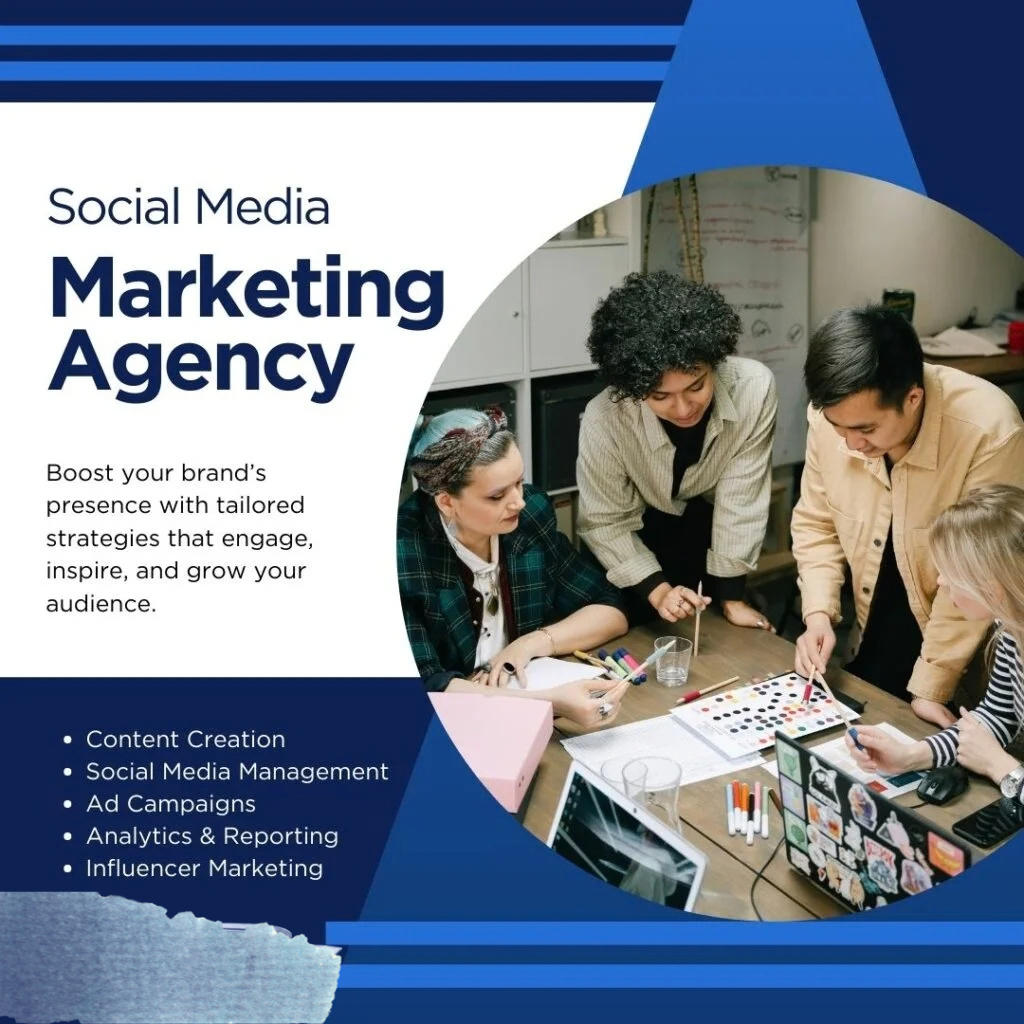
In 2026, social media continues to play an important role in digital marketing and business growth. Customers use social platforms to discover brands, research products, communicate with businesses, and make purchasing decisions. For businesses that want to build a strong online presence, working with a social marketing agency can provide professional support and a structured marketing strategy.
A social marketing agency helps businesses manage their social media presence, create engaging content, reach target audiences, generate leads, and improve brand visibility. Whether you are a small business, startup, online store, service provider, or established company, a well-planned social media strategy can help you compete in the digital marketplace.
What Is a Social Marketing Agency?
A social marketing agency is a professional company or team that helps businesses promote their brands, products, and services through social media platforms.
- Social media strategy
- Content creation
- Social media management
- Community engagement
- Paid social media advertising
- Influencer marketing
- Social media analytics
- Lead generation
- Brand promotion
- Campaign management
Why Social Marketing Is Important in 2026
Social media has become an important part of the customer journey. People can discover a business through a short video, read comments and reviews, visit the brand profile, and then contact the business or visit its website.
In 2026, businesses need more than just regular posting. They need content that is useful, engaging, relevant, and suitable for their target audience.
A professional social marketing strategy can help businesses:
- Increase online visibility
- Build brand awareness
- Reach potential customers
- Improve audience engagement
- Generate leads
- Promote products and services
- Drive website traffic
- Support sales
- Build customer relationships
Major Services Offered by a Social Marketing Agency
Different agencies provide different services, but most social marketing agencies offer several core services.
1. Social Media Strategy
A successful campaign starts with a clear strategy. An agency first understands the business, target audience, competitors, goals, and available resources.
2. Content Creation
Content is one of the most important parts of social media marketing.:
- Reels and short videos
- Images and graphics
- Carousels
- Stories
- Educational posts
- Promotional posts
- Product videos
- Captions
- Infographics
3. Social Media Management
This can include scheduling posts, publishing content, responding to comments, monitoring messages, managing communities, and maintaining the brand’s online presence.
4. Paid Social Media Advertising
Organic content is only one part of social media marketing. Businesses can also use paid advertising to reach specific audiences.
A social marketing agency may help with:
- Campaign planning
- Audience targeting
- Ad creative
- Budget management
- Campaign monitoring
- Performance analysis
- Conversion tracking
Paid advertising can be useful when a business wants to promote a product, generate leads, drive website traffic, or reach a specific audience.
5. Social Media Analytics
Agencies can monitor metrics such as:
- Reach
- Impressions
- Engagement
- Video views
- Clicks
- Profile visits
- Follower growth
- Leads
- Conversions
Analytics can also help identify which content formats and topics receive better audience responses.
Benefits of Hiring a Social Marketing Agency
Professional Expertise
Social media marketing requires knowledge of content, advertising, audience targeting, analytics, and platform features. An experienced agency can bring specialized skills to your marketing efforts.
Saves Time
Managing multiple social media accounts can take a significant amount of time. An agency can handle planning, content, publishing, and reporting while business owners focus on other important responsibilities.
Consistent Content
Consistency is important for maintaining an active online presence. Agencies can create content calendars and publishing schedules to help businesses maintain regular activity.
Better Audience Targeting
A social marketing agency can research the target audience and create campaigns designed around their interests, needs, and online behavior.
Data-Based Decisions
Instead of relying only on assumptions, agencies can use analytics to understand performance and make adjustments based on available data.
How to Choose a Social Marketing Agency in 2026
Choosing the right agency requires careful research. Businesses should look beyond attractive promises and examine the agency’s services, communication process, experience, and reporting methods.
Consider the following factors:
Check Their Experience
Look at the agency’s previous work and experience with businesses similar to yours.
Understand Their Services
Make sure the agency provides the services you actually need. For example, some businesses may need content creation, while others may need paid advertising or lead generation.
Review Their Strategy
Ask how they plan to understand your audience, select platforms, create content, and measure results.
Ask About Reporting
A professional agency should provide clear performance reports. You should be able to understand what activities were completed and how campaigns performed.
Consider Communication
Good communication is important. Discuss how often you will receive updates and how you can provide feedback.
Understand Pricing
Agency pricing can vary depending on services, campaign size, content requirements, advertising budgets, and business goals. Understand what is included before signing an agreement.
Social Media Platforms for Business Growth
A social marketing agency may use different platforms depending on the target audience and business objectives.
Instagram is useful for visual marketing, Reels, Stories, product promotion, lifestyle content, and brand building.
Facebook can support community building, business promotion, customer communication, and paid advertising.
YouTube
YouTube is suitable for tutorials, educational videos, product demonstrations, reviews, Shorts, and long-form content.
LinkedIn is valuable for B2B marketing, professional networking, recruitment, thought leadership, and business-related content.
Other Platforms
Depending on the audience and industry, businesses may also use platforms such as Pinterest, X, Snapchat, or other emerging social networks.
The right platform depends on where your target audience spends time and what type of content your business can produce effectively.
Social Marketing Strategy for Small Businesses
Small businesses do not always need to be active on every platform. Instead, they can focus on one or two platforms where their target customers are most active.
A simple strategy can include:
- Define a specific business goal.
- Identify the target audience.
- Select relevant social platforms.
- Create a monthly content calendar.
- Publish educational and engaging content.
- Share product or service information.
- Respond to comments and messages.
- Test paid advertising when appropriate.
- Monitor analytics.
- Improve the strategy based on results.
This approach can help small businesses build their presence gradually without unnecessarily spreading their resources.
SEO and Social Media Marketing
Social media and SEO are different digital marketing channels, but they can support each other.
For example, a business targeting the keyword “social marketing agency” can create an SEO-friendly blog, optimize its title and headings, and promote the article through relevant social media channels.
Common Social Marketing Mistakes
Businesses should avoid several common mistakes:
- Posting without a strategy
- Focusing only on follower count
- Ignoring audience comments
- Using irrelevant hashtags
- Posting too much promotional content
- Copying competitors
- Not tracking performance
- Using the same content everywhere without adaptation
- Expecting instant results
- Not updating the strategy
Social media marketing usually requires consistent effort, testing, and optimization.
Future of Social Marketing in 2026
Social marketing continues to evolve as platforms, content formats, and audience behavior change. Short-form video, creator collaborations, personalized content, social commerce, community engagement, and data-driven marketing remain important areas for businesses to consider.
Artificial intelligence and automation can also assist marketers with tasks such as content ideas, research, scheduling, and analysis. However, businesses should still maintain human creativity, brand identity, accuracy, and meaningful communication with customers.
The most useful approach is to combine technology with a clear understanding of the audience and business goals.
Conclusion
A Social Marketing Agency for Business Growth can help businesses build a stronger online presence through strategy, content creation, social media management, advertising, engagement, and analytics. In 2026, having a social media account is not enough. Businesses need a clear plan that connects social media activities with measurable business objectives.
Whether you are a startup, small business, online store, or established company, the right social media strategy can help you reach relevant audiences and build long-term brand relationships.