Keyword research is one of the most important parts of search engine optimization. Before creating a blog post or optimizing a website, you need to understand what people are searching for online. A google keyword analysis tool can help you discover relevant search terms, understand keyword competition, and choose phrases that match your content and audience.
Whether you are a beginner, blogger, business owner, or digital marketer, analyzing keywords can help you create a more focused SEO strategy. Instead of choosing keywords randomly, you can use keyword data to make more informed content decisions.
What Is a Google Keyword Analysis Tool?
A google keyword analysis tool is a tool or platform used to research and evaluate keywords that people search for on Google. Keyword analysis usually involves looking at metrics such as search volume, competition, keyword difficulty, trends, and search intent.
Some keyword research platforms also provide related keywords, keyword variations, questions, and estimated traffic information.
For example, if your website focuses on SEO, you might start with the keyword “SEO.” Keyword analysis can then help you discover more specific terms such as:
- SEO tips for beginners
- how to improve website SEO
- SEO tools for beginners
- how to do keyword research
- best free SEO tools
These related phrases can provide ideas for creating targeted content.
Why Is Keyword Analysis Important?
Keyword analysis helps you understand what your target audience is searching for. Without keyword research, you may create content around topics that have little relevance to your audience or are extremely difficult to rank for.
Keyword analysis can help you:
- Find relevant search terms
- Understand search demand
- Identify keyword opportunities
- Analyze competition
- Discover long-tail keywords
- Understand search intent
- Plan blog content
- Improve on-page SEO
The goal is not simply to find keywords with the highest search volume. A useful keyword should also be relevant to your website and match what users expect to find.
Important Keyword Metrics to Check
When using a google keyword analysis tool, there are several metrics you should understand.
Search Volume
Search volume indicates how frequently a keyword is searched during a particular period. Higher search volume can mean more potential traffic, but it can also indicate stronger competition.
A keyword with lower search volume should not automatically be ignored. If it is highly relevant and has clear search intent, it may still be valuable.
Keyword Difficulty
Keyword difficulty estimates how challenging it may be to rank for a particular keyword. Different SEO tools calculate this metric differently.
For a newer website, targeting extremely competitive keywords can be difficult. Specific keywords with manageable competition may provide additional opportunities.
Competition
Competition describes how many advertisers or websites may be competing around a keyword, depending on the tool and metric being used.
Remember that paid advertising competition and organic SEO competition are not exactly the same thing.
Search Intent
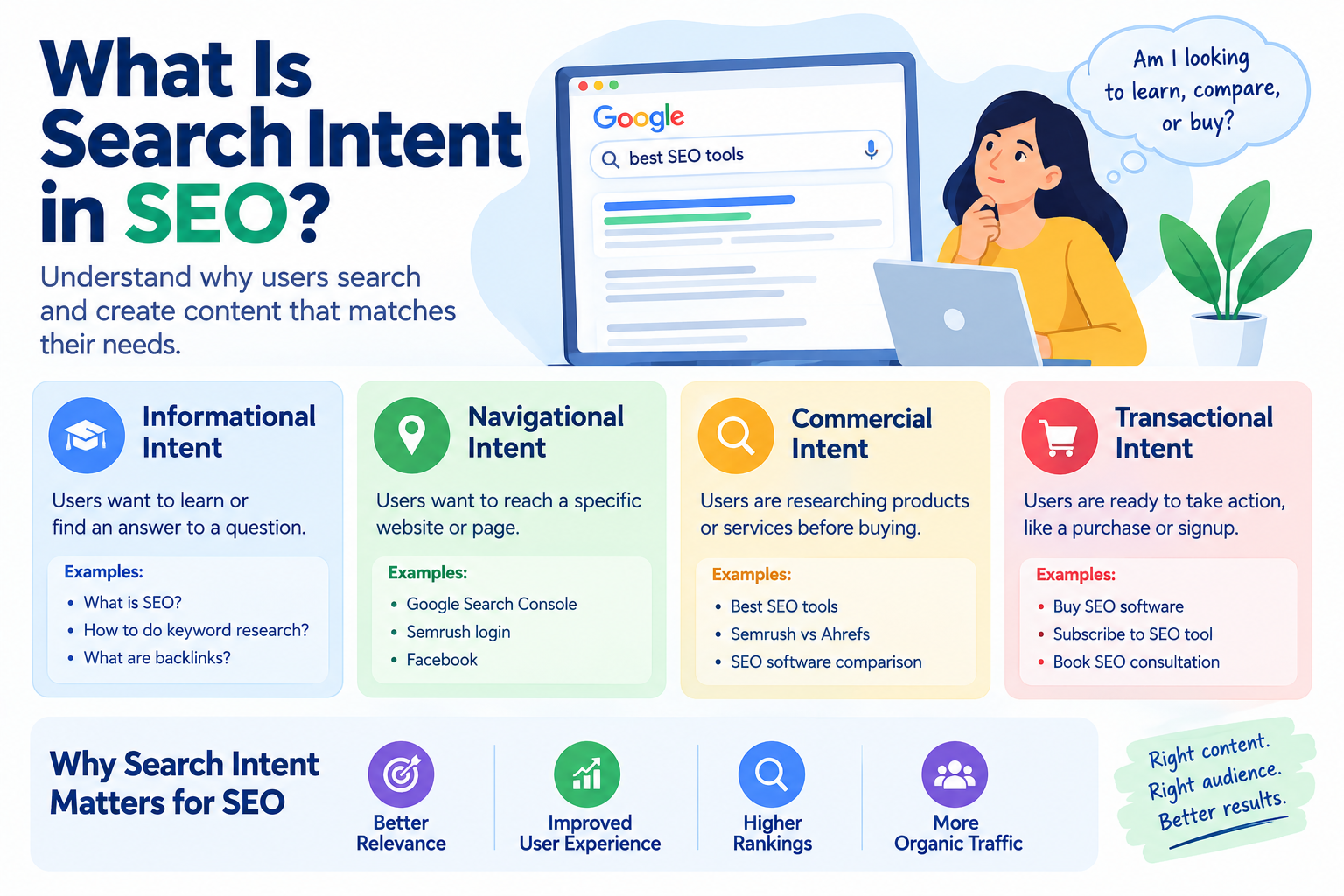
Search intent is the reason behind a user’s search. Understanding intent is essential when selecting keywords.
Common types include:
- Informational intent
- Navigational intent
- Commercial investigation
- Transactional intent
For example, “what is technical SEO” is primarily informational, while “buy SEO software” has transactional intent.
How to Use a Google Keyword Analysis Tool
Using a keyword analysis tool does not have to be complicated. Start with a broad topic related to your website.
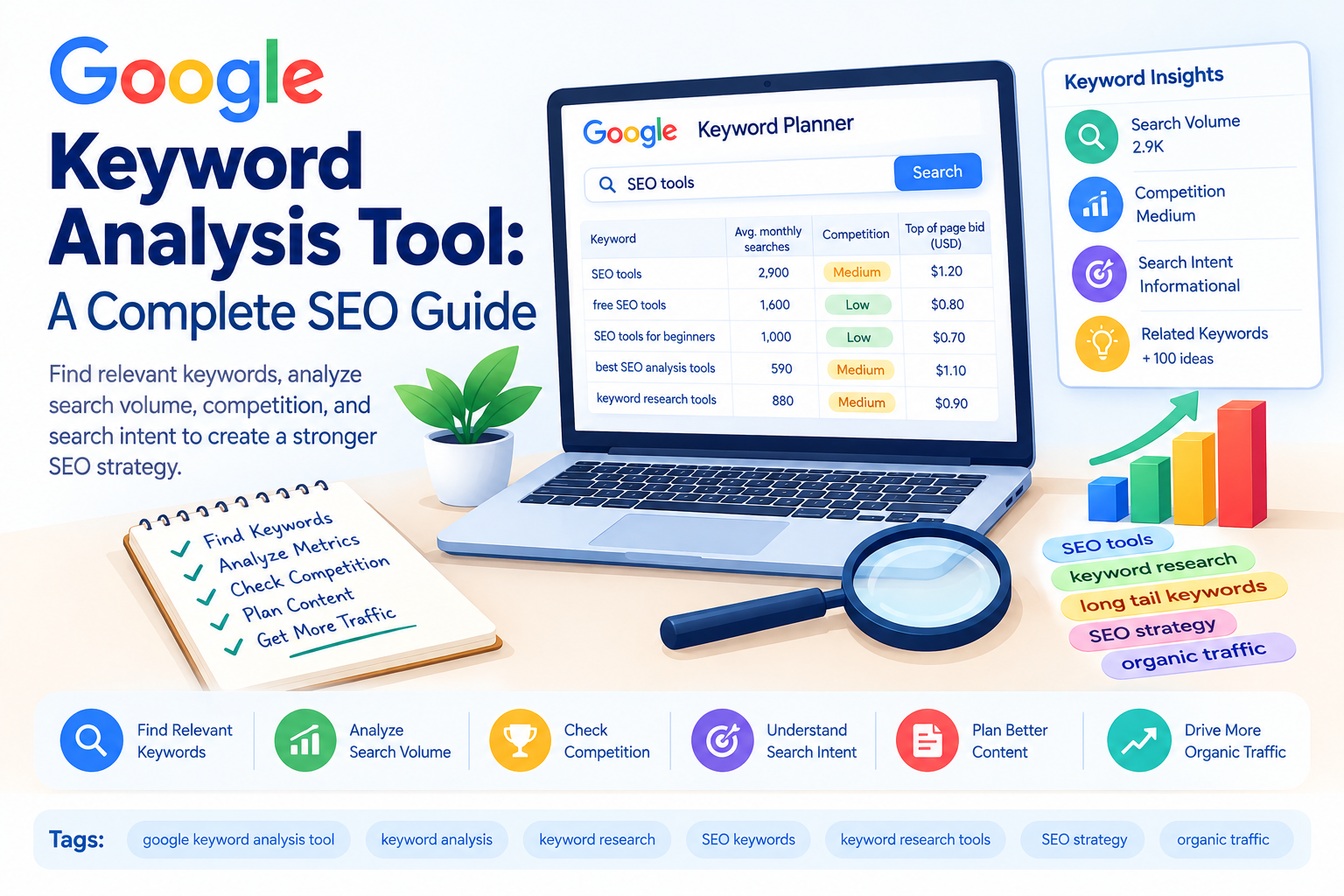
For example, if your website is about SEO, enter a seed keyword such as “SEO tools.”
The tool may provide related keywords such as:
- free SEO tools
- SEO tools for beginners
- best SEO analysis tools
- keyword research tools
- website SEO checker
Review the suggestions and compare their relevance, search volume, competition, and intent.
Create a list of keywords that closely match your website and the content you want to publish.
Find Long-Tail Keywords
Long-tail keywords are specific search phrases that usually contain several words.
For example:
“SEO”
is a broad keyword, while:
“best SEO tools for small websites”
is much more specific.
Long-tail keywords can help you create content for specific searches. They may have lower search volume than broad keywords, but they can provide useful opportunities when they closely match the user’s needs.
A google keyword analysis tool can help you discover these longer keyword variations.
Analyze Your Competitors
Keyword analysis can also help you understand what topics competitors are targeting.
Look at websites that already rank for your target keyword. Examine the topics they cover, the questions they answer, and the types of content they publish.
This does not mean copying competitor content. Instead, use competitor research to identify content gaps and opportunities to provide more useful information.
For example, if competing articles discuss basic keyword research but do not explain how beginners can evaluate keyword difficulty, you could create content that addresses that specific need.
Choose Keywords Based on Relevance
One of the biggest mistakes in keyword research is selecting a keyword only because it has high search volume.
Imagine your website sells SEO services. A keyword such as “SEO” may have significant search demand, but it is extremely broad.
A more specific phrase such as “SEO services for small businesses” may better match your business offering.
Keyword relevance should therefore be one of the first things you consider.
Ask yourself:
- Is this keyword related to my website?
- Does it match my target audience?
- Can I create useful content around it?
- Does the search intent match my page?
- Does the keyword support my business or content goal?
If the answer is yes, the keyword may be worth considering.
Google Keyword Analysis Tool and Content Strategy
Keyword analysis can make content planning easier. Instead of writing random blog posts, you can create content around topics your audience is actively searching for.
For example, an SEO website could create articles about:
- keyword research
- on-page SEO
- technical SEO
- internal linking
- backlinks
- SEO tools
- website analysis
- search engine optimization
Each topic can then be expanded into more specific articles targeting related search queries.
This approach can help you build topical coverage and organize related content through internal links.
Common Keyword Analysis Mistakes
Focusing Only on Search Volume
High search volume does not guarantee valuable traffic. Relevance and search intent are equally important.
Ignoring Keyword Difficulty
A keyword may look attractive because of its search volume, but ranking for it may be challenging if the competition is strong.
Choosing Irrelevant Keywords
Never target a keyword simply because it has low competition. The topic should be connected to your website and audience.
Keyword Stuffing
Once you select a keyword, do not repeat it unnaturally throughout the article. Search engines are designed to understand topics and related terms. Write naturally and prioritize useful content.
Ignoring Search Intent
Always examine the current search results before creating content. The results can give you an idea of what users expect when searching for a particular phrase.
Best Practices for Keyword Analysis
To make keyword research more effective, combine several factors rather than relying on one metric.
Start with relevance, then check search volume and competition. Analyze keyword difficulty and search intent before selecting your final keywords.
You can also organize keywords into groups based on related topics. For example, keywords about technical SEO can form one content group, while keywords about keyword research can form another.
After publishing your content, monitor its performance using tools such as Google Search Console and other SEO platforms. Your keyword strategy can be updated as you collect real performance data.
Final Thoughts
A google keyword analysis tool can make keyword research more structured and data-driven. It can help you discover relevant search terms, compare keyword metrics, identify long-tail opportunities, and understand what your audience is searching for.
However, keyword data should be used as a guide rather than the only factor in your SEO strategy. Relevance, search intent, content quality, competition, and user experience all matter.
Choose keywords that fit your website, create useful content around them, and monitor performance over time. With consistent keyword analysis and thoughtful content planning, you can build a stronger foundation for your SEO strategy.