Off-page SEO is an important part of search engine optimisation that helps improve your website’s visibility and reputation outside your own website. While on-page SEO focuses on optimising content and HTML elements, off-page SEO focuses on activities such as link building, brand mentions, and building relationships with other websites.
If you want to increase organic traffic and improve your website’s search engine rankings, understanding off-page SEO techniques is essential. In this beginner-friendly guide, you will learn what off-page SEO is, why it matters, how backlinks work, and which off-page SEO strategies you can use to support your website’s growth.
What Is Off-Page SEO?
Off-page SEO refers to activities performed outside your website to improve its visibility in search engines. These activities help search engines understand how other websites and people view your content, business, or brand.
One of the most important parts of off-page SEO is link building. When another website links to your website, it creates a backlink. Backlinks can help search engines discover your pages and may contribute to how your website is evaluated.
However, off-page SEO is not limited to backlinks. It can also include brand mentions, digital public relations, content promotion, and building relationships within your industry.
For example, if you publish a blog about SEO and another website refers to your article as a useful resource, that mention can help people discover your content and may provide an SEO benefit if it includes a relevant link.
Why Is Off-Page SEO Important?
Off-page SEO is important because search engines consider more than just the content on your website when evaluating pages. External signals can provide additional information about your website’s relevance and reputation.
Here are some benefits of off-page SEO:
1. Helps Improve Search Visibility
Quality backlinks and other relevant external signals can support your website’s visibility in search results. However, backlinks alone do not guarantee higher rankings.
2. Increases Website Traffic
When other websites link to your content, their visitors may click those links and visit your website. This can bring referral traffic from relevant audiences.
3. Builds Website Authority
When trustworthy websites refer to your content, it can help establish your website as a useful resource in your niche. This is particularly valuable when you consistently publish helpful and accurate content.
4. Improves Brand Awareness
Off-page SEO strategies such as content promotion and digital PR can help more people discover your business or website.
5. Supports Long-Term SEO Growth
Building genuine relationships, creating useful resources, and earning relevant backlinks can support a long-term SEO strategy.
What Are Backlinks?
Backlinks are links from one website to another website. For example, if a digital marketing website links to your SEO blog, that link is a backlink for your website.
Backlinks are also called inbound links or incoming links.
Search engines can use links to discover pages and understand connections between websites. Some backlinks may also contribute to ranking signals.
However, not all backlinks have the same value. A relevant link from a trustworthy website can be more useful than a link from an unrelated or low-quality website.
Types of Backlinks
Natural backlinks: These are links that other website owners create because they genuinely find your content useful.
Editorial backlinks: These are links included naturally within an article, guide, or resource.
User-generated backlinks: These may appear in comments, forums, or other user-created content. Their SEO value varies, and some may use a nofollow or other link attribute.
The main goal of backlink building should be to earn useful, relevant links rather than collect as many links as possible.
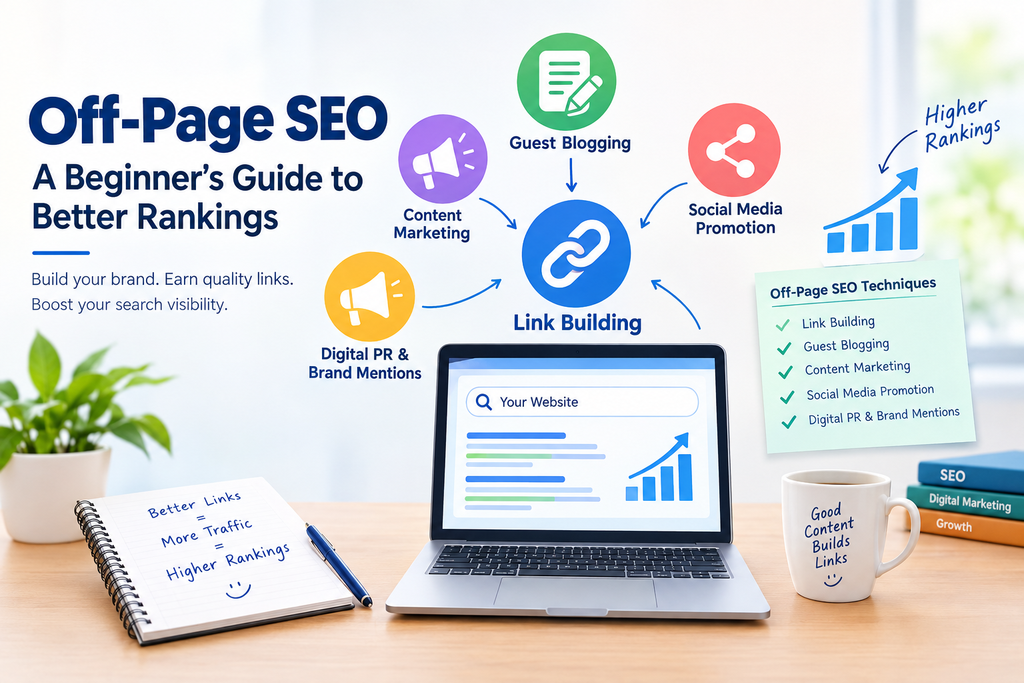
Important Off-Page SEO Techniques
There are several off-page SEO techniques that beginners can use to promote their websites and build credibility.
1. Link Building
Link building is the process of acquiring links from other websites to your own website. It is one of the most well-known off-page SEO techniques.
You can build links by creating useful content, publishing original research, contributing expert information, and developing relationships with relevant website owners.
For example, if you publish a detailed guide about keyword research, another SEO website may link to it as a helpful resource.
Focus on relevance and quality instead of trying to get hundreds of backlinks from unrelated websites.
2. Guest Blogging
Guest blogging means writing an article for another website. Some websites allow contributors to include a relevant link to their own content.
For example, if you write about digital marketing, you may contribute an article to a marketing blog and include a useful link to your website when the website’s guidelines allow it.
Guest blogging should focus on providing valuable information to readers. Avoid publishing low-quality articles on many websites only to gain backlinks.
3. Content Marketing
Content marketing involves creating and promoting useful content that attracts your target audience.
Examples include:
- Blog posts
- Detailed guides
- Infographics
- Original research
- Case studies
- Helpful tutorials
When your content is useful, people may share it, mention it, or link to it. This makes content marketing an important part of off-page SEO strategies.
4. Social Media Promotion
Social media promotion involves sharing your website content on platforms such as Facebook, Instagram, LinkedIn, and other relevant channels.
Social media links are not generally treated as direct ranking signals in the same way as qualifying editorial backlinks. However, social media can help increase content visibility, attract visitors, and create opportunities for others to discover and link to your content.
For example, you can share a blog about SEO keyword research on your social media page and encourage your audience to read it.
5. Digital PR and Brand Mentions
Digital PR involves promoting your website, business, or expertise through online publications, news websites, interviews, and other relevant media.
Brand mentions can help increase awareness and may lead to backlinks when publishers choose to link to your website.
For example, if you run a digital marketing website and provide useful information for an industry article, a publication may mention your brand and link to your website.
How to Get Backlinks Naturally
If you are wondering how to get backlinks, start by creating content that other websites would genuinely want to reference.
Here are some practical methods:
Create Helpful Content
Write detailed articles that answer common questions and provide useful information. Original research, statistics, tutorials, and comprehensive guides can be valuable resources.
Promote Your Content
Share your articles through relevant social media platforms, online communities, and professional networks. Promotion can help your content reach people who may find it useful.
Build Relationships
Connect with bloggers, website owners, and professionals in your niche. Genuine relationships can create opportunities for collaboration and relevant mentions.
Find Broken Link Opportunities
Some websites contain broken links to resources that no longer exist. If you have a relevant, useful replacement resource, you can inform the website owner. There is no guarantee they will replace the link.
Contribute Useful Information
You can contribute expert insights to relevant articles, interviews, or industry discussions. When appropriate, these opportunities may lead to brand mentions or backlinks.
Off-Page SEO Mistakes to Avoid
Beginners should avoid shortcuts that may harm their website’s SEO.
Buying backlinks: Purchasing links intended to manipulate search rankings can violate search engine spam policies.
Keyword stuffing in anchor text: Repeating exact-match keywords unnaturally in backlinks can look manipulative. Use natural and descriptive anchor text.
Low-quality link building: Getting links from unrelated, spammy, or low-quality websites may not provide meaningful value.
Excessive guest posting: Publishing poor-quality content only to obtain links is not a sustainable strategy.
Ignoring content quality: Backlinks cannot replace useful, relevant, and well-written content.
A good off-page SEO strategy focuses on creating value for readers and earning trust over time.
How to Measure Off-Page SEO Results
You can use SEO tools to monitor your off-page SEO performance.
Google Search Console
Google Search Console helps you monitor your website’s search performance, indexing, and search queries. It also provides information about links to your website.
Semrush
Semrush can help you analyze backlinks, referring domains, competitors, and other SEO metrics.
Ahrefs
Ahrefs provides backlink analysis and tools for researching link opportunities and competitor link profiles.
Important metrics to monitor include:
- Referring domains
- Relevant backlinks
- Organic search traffic
- Search impressions
- Search queries
- Website visibility
Remember that an increase in backlinks does not automatically mean your rankings will increase. SEO results depend on many factors, including content quality, competition, technical SEO, and search intent.
Final Thoughts
Off-page SEO is an important part of a complete SEO strategy. It helps your website build visibility, attract referral traffic, and develop credibility through activities outside your own website.
The most important off-page SEO techniques include link building, content marketing, guest blogging, social media promotion, and digital PR. Among these, earning relevant and high-quality backlinks is a major focus for many SEO professionals.
If you are a beginner, start by creating helpful content, promoting your articles, and building genuine relationships with relevant websites. Avoid shortcuts such as buying backlinks or using spammy link-building methods.
With consistent effort and a focus on quality, off-page SEO strategies can support your website’s long-term growth and help more people discover your content online.