In today’s digital world, social media has become one of the most important tools for businesses, brands, creators, and individuals. Millions of people use platforms such as Instagram, Facebook, YouTube, LinkedIn, and X every day. Because of this, having a strong social media presence can help a business reach new customers, build brand awareness, increase engagement, and generate sales.
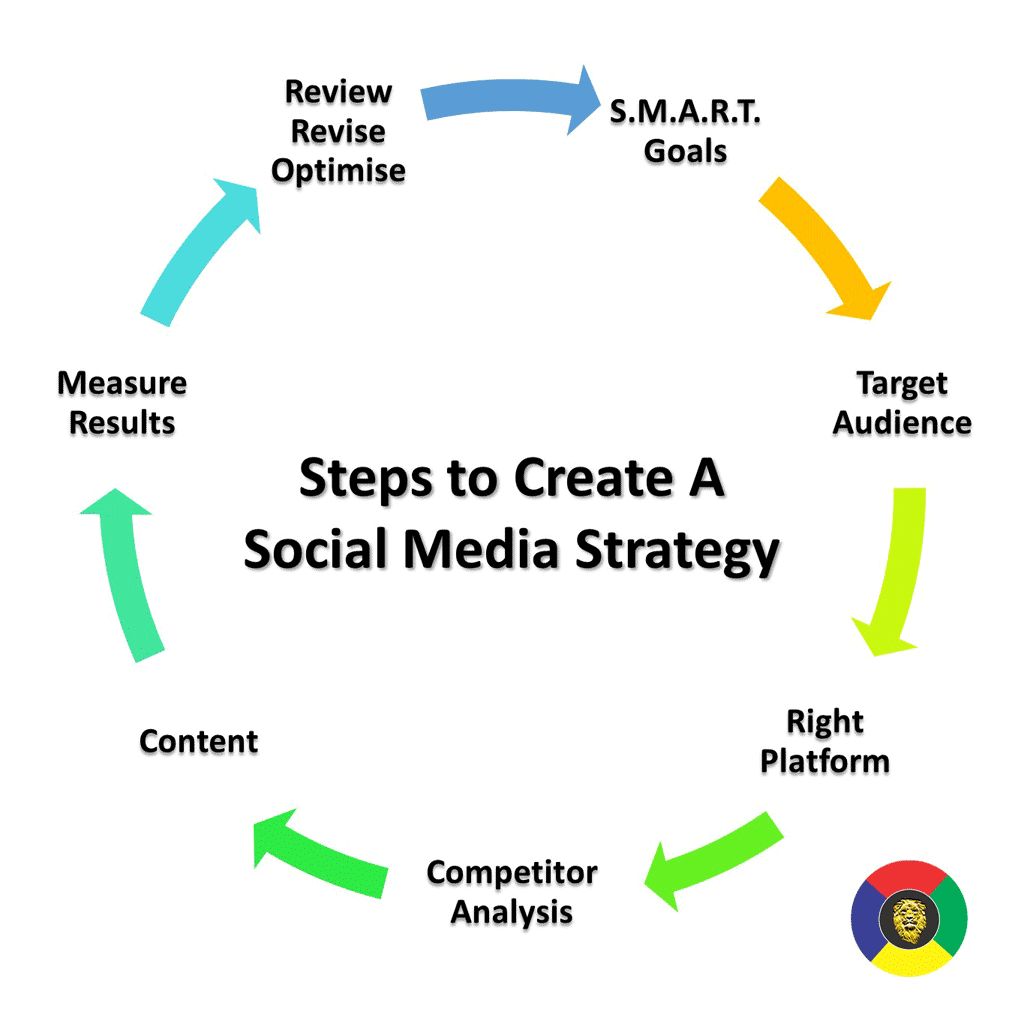
However, simply posting content on social media is not enough. To achieve consistent results, you need a proper social media strategy. A social media strategy is a planned approach that explains what you want to achieve, who your target audience is, what type of content you should create, which platforms you should use, and how you will measure your results.
What Is a Social Media Strategy?
A social media strategy is a detailed plan for using social media platforms to achieve specific marketing or business goals. It includes your target audience, content plan, posting schedule, platform selection, engagement methods, and performance measurement.
For example, if your goal is to increase brand awareness, you may focus on short videos, educational posts, stories, and collaborations.
Why Is Social Media Strategy Important?
A social media strategy provides direction and helps you use your time and resources effectively. Without a strategy, it can be difficult to understand what content works and why your account is not growing.
Here are some major benefits of having a social media strategy:
1. Increases Brand Awareness
Social media can help more people discover your brand. Regular and valuable content can make your brand more recognizable among your target audience.
2. Builds Audience Engagement
Social media is not only about publishing content. It is also about communicating with your audience. Comments, likes, shares, messages, polls, and questions can help build stronger relationships.
3. Helps Generate Leads
A well-planned social media strategy can encourage interested users to visit your website, send a message, fill out a form, or contact your business.
4. Supports Sales
Product demonstrations, customer reviews, offers, tutorials, and informative content can help potential customers understand your products or services.
5. Builds Trust
Consistent and useful content can help establish credibility. Sharing knowledge, answering questions, showing behind-the-scenes content, and responding professionally can make your brand appear more trustworthy.
Step 1: Set Clear Social Media Goals
The first step is to define what you want to achieve. Your goals should be clear and measurable.
Common social media goals include:
- Increasing brand awareness
- Growing followers
- Increasing engagement
- Generating leads
- Increasing website traffic
- Promoting products or services
- Improving customer communication
- Increasing sales
Instead of saying “I want more followers,” create a measurable objective such as increasing followers by a specific amount within a particular period.
Step 2: Understand Your Target Audience
Knowing your audience is essential for successful social media marketing.
You should understand:
- Age group
- Location
- Interests
- Problems and needs
- Buying behavior
- Preferred social media platforms
- Type of content they enjoy
For example, a fashion business may target people interested in clothing, beauty, lifestyle, and fashion trends. A professional training company may focus on students, job seekers, and working professionals.
When you understand your audience, you can create content that is more relevant to them.
Step 3: Choose the Right Social Media Platforms
You do not need to use every social media platform. Choose platforms that match your audience and business goals.
Instagram is useful for visual content such as Reels, photos, Stories, product showcases, fashion, beauty, lifestyle, and brand content.
Facebook can help businesses build communities, share updates, promote products, and communicate with customers.
YouTube
YouTube is useful for long-form videos, tutorials, reviews, educational content, Shorts, and detailed demonstrations.
LinkedIn is mainly focused on professional networking, career content, business communication, industry knowledge, and professional branding.
Choosing the right platforms allows you to focus your efforts instead of spreading your resources too widely.
Step 4: Create a Strong Content Strategy
Content is one of the most important parts of a social media strategy. Your content should provide value and match your goals.
You can create different types of content, such as:
Educational Content
Teach your audience something useful through tips, guides, tutorials, and how-to posts.
Informative Content
Share industry updates, facts, news, statistics, or useful information.
Promotional Content
Promote your products, services, offers, discounts, or new launches.
Entertainment Content
Use creative videos, trends, relatable posts, and entertaining content to increase engagement.
User-Generated Content
Customer reviews, testimonials, photos, and videos can provide social proof and show real experiences with your brand.
A good content strategy should maintain a balance between promotional and valuable content.
Step 5: Create a Content Calendar
A content calendar helps you organize your social media activities in advance.
Your calendar can include:
- Date
- Platform
- Content topic
- Content format
- Caption
- Hashtags
- Call-to-action
- Publishing time
For example, you could plan educational content on Monday, a Reel on Wednesday, and promotional content on Friday.
Planning ahead can save time and help maintain consistency.
Step 6: Focus on Quality and Consistency
Posting frequently is useful, but quality should not be ignored. Your content should be clear, visually appealing, useful, and relevant to your audience.
Consistency is also important. Regular posting helps your audience know when to expect new content.
Step 7: Use Hashtags and Keywords
Relevant hashtags and keywords can help users discover your content.
Instead of using random or unrelated hashtags, choose hashtags connected to your topic, industry, product, or audience.
Step 8: Engage With Your Audience
Social media is a two-way communication channel. Do not only post content and leave.
Respond to comments and messages, ask questions, conduct polls, reply to customer queries, and encourage discussions.
Step 9: Analyze Your Performance
Analytics help you understand whether your strategy is working.
Important metrics include:
- Reach
- Impressions
- Likes
- Comments
- Shares
- Saves
- Video views
- Profile visits
- Website clicks
- Follower growth
- Leads and conversions
Step 10: Improve Your Strategy
Social media trends and audience behavior change over time. Therefore, your strategy should not remain exactly the same forever.
Review your performance regularly and identify which content performs well and which content needs improvement.
Experiment with different topics, formats, captions, posting schedules, and creative ideas. Use your analytics to make informed changes.
Common Social Media Strategy Mistakes
Many businesses make simple mistakes that can reduce their social media performance.
Common mistakes include:
- Posting without a clear goal
- Targeting the wrong audience
- Using too many unrelated hashtags
- Posting only promotional content
- Ignoring comments and messages
- Inconsistent posting
- Copying competitors without adding value
- Not checking analytics
- Focusing only on follower numbers
- Not adapting to audience interests
Avoiding these mistakes can make your social media activities more organized and effective.
Conclusion
A strong Social Media Strategy can help businesses and creators build their online presence, connect with their target audience, increase engagement, generate leads, and support business growth. The key is to create a clear plan instead of posting content randomly.
Start by setting specific goals, understanding your audience, selecting the right platforms, creating valuable content, maintaining a content calendar, engaging with followers, and monitoring your analytics.