SEO is not only about targeting popular keywords with thousands of monthly searches. Sometimes, specific and less competitive search terms can bring more valuable visitors to your website. This is where long tail keywords become important. They are longer and more specific search phrases that usually target a particular need, question, or search intent.
For beginners and small websites, using specific keywords can be a practical way to attract relevant organic traffic. Instead of competing only for broad terms, you can create content around detailed searches that closely match what users are looking for.
What Are Long Tail Keywords?
Long tail keywords are longer, more specific keyword phrases that usually contain three or more words. They describe a particular search rather than a broad topic.
For example:
- SEO
- SEO tips
- SEO tips for beginners
- SEO tips for beginners to improve website rankings
The last example is more specific and clearly explains what the searcher wants to find.
Long-tail search terms can have lower search volume than broad keywords, but they can also be less competitive and more closely connected to a user’s search intent.
Why Are Long Tail Keywords Important for SEO?
Using specific keywords can help you build a more focused SEO strategy. When your content directly answers a detailed search query, users may find it more relevant to their needs.
One major advantage is lower keyword competition. Broad keywords can be difficult for new websites to rank for because many established websites are already targeting them. Specific phrases may provide additional opportunities to appear in search results.
Another benefit is relevance. Someone searching for “how to do keyword research for a new website” has a clearer intention than someone simply searching for “keyword research.”
Long-tail queries can therefore help you create content that answers specific questions and provides useful information.
Long Tail Keywords vs Short Tail Keywords
Short-tail keywords are broad search terms, usually consisting of one or two words. Examples include “SEO,” “digital marketing,” and “shoes.”
Long-tail keywords are more specific, such as:
- how to improve SEO for a new website
- best SEO tools for beginners
- how to choose keywords for a blog
- how to write SEO-friendly blog posts
The main difference is specificity.
Short-tail keywords may have higher search volume, but they can also have strong competition and broad search intent. Long-tail keywords generally have more specific intent, which can make them useful for targeted content.
A balanced SEO strategy can include both types of keywords rather than relying on only one.
Benefits of Using Long Tail Keywords
1. Lower Competition
Many specific search phrases have fewer websites competing directly for them. This can create opportunities for newer websites and smaller businesses.
However, lower competition does not guarantee rankings. Content quality, website authority, backlinks, technical SEO, and search intent also affect performance.
2. Better Search Intent
Specific queries often provide more information about what a person wants.
For example, “SEO” is extremely broad. A search such as “how to check SEO score of a website” gives a much clearer indication that the user wants instructions or a tool.
Understanding search intent allows you to create content that answers the user’s actual question.
3. Easier Content Planning
Long-tail search phrases can give you ideas for blog posts, guides, FAQs, and tutorials.
For example, instead of creating one general article about “SEO tools,” you could create separate content around:
- free SEO tools for beginners
- best keyword research tools
- website SEO analysis tools
- free tools to check backlinks
This approach can help you build a broader content strategy around related topics.
4. More Relevant Traffic
Traffic is useful when visitors are actually interested in your content. Specific keywords can help you target users who are searching for a particular solution.
For example, a person searching for “how to create internal links in WordPress” is likely looking for practical instructions. A detailed article addressing that exact topic can provide a more relevant experience.
How to Find Long Tail Keywords
There are several ways to discover useful search phrases.
Use Google Search
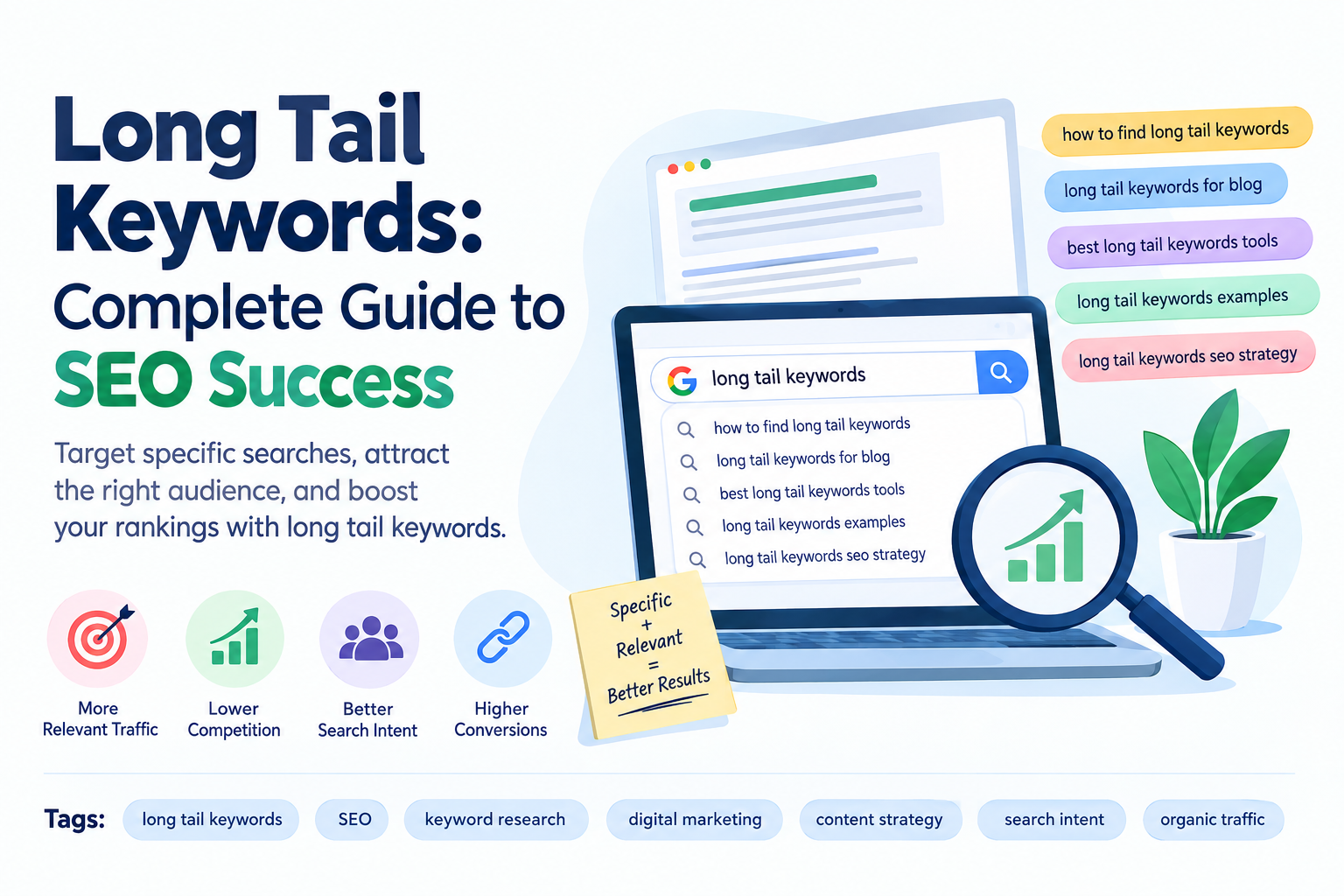
Start typing a broad topic into Google and look at autocomplete suggestions. These suggestions can reveal phrases people commonly search for.
You can also check the “People also ask” section and related searches at the bottom of the results page. These areas can provide additional keyword ideas.
Use Keyword Research Tools
SEO tools such as Google Keyword Planner, Semrush, Ahrefs, and other keyword research platforms can help identify related search terms.
When researching keywords, look at factors such as:
- Search volume
- Keyword difficulty
- Search intent
- Relevance
- Competition
- Related keywords
Do not choose a keyword only because it has high search volume. A highly relevant keyword with lower competition may be more useful for a new website.
How to Choose the Right Long Tail Keywords
The best keyword is not necessarily the one with the highest search volume. It should match your content, audience, and purpose.
First, make sure the keyword is relevant to your website. Then consider what the searcher expects to find.
For example, if your article explains how to perform keyword research, a phrase such as “how to do keyword research for beginners” may be more relevant than a broad term like “SEO.”
Also consider keyword difficulty. If your website is new, targeting extremely competitive terms may be challenging. Building content around more specific topics can help you cover smaller search opportunities while developing your website’s overall topical relevance.
How to Use Long Tail Keywords in a Blog
Once you have selected a keyword, use it naturally throughout your content. Avoid repeating it excessively because keyword stuffing can make an article difficult to read and may create a poor user experience.
You can use your primary keyword in important areas such as:
- SEO title
- Meta description
- Introduction
- Relevant headings
- Main body content
- URL, when appropriate
- Image alt text, when descriptive and relevant
You should also include related keywords and variations naturally. Search engines can understand related concepts, so you do not need to repeat exactly the same phrase in every paragraph.
Long Tail Keywords and Voice Search
Specific search queries are also relevant to conversational searches. People using voice assistants may ask complete questions instead of typing short phrases.
For example, instead of searching “best SEO tools,” someone might ask, “What are the best free SEO tools for beginners?”
Creating content that answers natural-language questions can help your website address these types of searches.
Common Mistakes to Avoid
One common mistake is choosing keywords only because they have high search volume. High volume does not automatically mean high-value traffic.
Another mistake is forcing a keyword into every paragraph. Your content should be written primarily for readers.
It is also important not to target unrelated keywords simply because they appear to have low competition. Every keyword should have a clear connection to your topic.
Finally, avoid creating many pages that target almost identical search terms without adding unique value. Instead, organize related topics carefully and use internal linking to connect useful content.
Final Thoughts
Long tail keywords are an important part of a practical SEO strategy, especially when you want to target specific search intent. Their longer and more detailed nature can help you create focused content for users looking for particular answers.
Instead of focusing only on search volume, consider relevance, competition, search intent, and the value your content provides. Use keyword research tools, Google suggestions, related searches, and competitor research to discover useful phrases.
When used naturally alongside strong content, internal linking, technical SEO, and other optimization techniques, long-tail search terms can become a valuable part of your overall SEO strategy.